The Gym Owner's Guide to Mat Cleaning Chemicals: Tatami, Puzzle and Rollout Surfaces
Educational information only – read the full notice
Share
If you run an academy, you have probably learned the hard way that a mat is not just a mat. The tatami in your competition area, the jigsaw squares in the kids' corner, and the heavy vinyl rollout you drag out for wrestling all behave like completely different materials the moment a chemical touches them. Grab the wrong bottle off a cash-and-carry shelf and you can spend hundreds replacing matting that a cheaper, gentler product would have protected for years.
I founded Combat Sports Hygiene because I train, and because I got tired of watching good gyms wreck their own floors with the wrong cleaner or, worse, dodge cleaning altogether because the "proper" chemicals were too aggressive to use around members. This is the guide I wish someone had handed me: how the main mat surfaces actually respond to cleaning chemicals, the hidden paperwork trap most commercial floor products drag in with them, and what a professional formulation should look like on the label.
Section 1: Your surface decides your chemical, not the other way round
Before you compare a single product, you need to know what you are cleaning. The three surfaces you will meet in a combat gym each have a different weakness, and matching the chemistry to the material is the whole game.
EVA jigsaw and puzzle matting
The interlocking foam tiles most academies start with are made from EVA (ethylene-vinyl acetate). They are light, cheap and forgiving underfoot, but the surface is slightly porous and the joins between tiles are a maze of seams. That means moisture, skin cells, body oil and cleaning residue all get drawn down into the material and trapped along the edges where a quick mop never reaches. If you are hunting for the best BJJ mat cleaner for puzzle mats, the priority is not raw strength, it is a formula that lifts oils and rinses clean without leaving a tacky film in the seams for grime to cling to. A residue-heavy product on EVA actively makes your hygiene problem worse over time.
Vinyl rollout mats
Vinyl rollouts are the workhorse of wrestling and MMA rooms. The surface is seamless and non-porous, which is exactly what you want for wiping down, but there is a catch that a lot of gym owners discover too late. Vinyl stays supple because of the plasticisers built into it, and harsh solvents, strong alcohols and high-pH degreasers strip those plasticisers out. Once that happens the vinyl dries, hardens and starts to crack, usually right along the high-traffic centre line. Most aggressive wrestling mat cleaning products are sold on how hard they hit, which is the opposite of what a vinyl surface needs. Here you want something that cleans effectively while staying chemically gentle on the material itself.
Traditional tatami
Competition tatami has that firm, textured finish that grips a gi and holds a throw. That texture is brilliant for training and a nuisance for cleaning, because sweat and body oil settle into the grain rather than sitting on top where you can wipe them off. Tatami does not need brute force, it needs emulsification: a surfactant that gets under the oil, breaks it up and floats it off the textured surface so it mops away instead of smearing around. Strip-and-shine floor chemicals do nothing useful here and can leave the surface slick.
Three surfaces, three different failure modes, and yet most gyms try to cover all of them with one random bottle. The good news is that the right formulation genuinely can do all three safely. The trap is that most of the products marketed as a commercial gym floor cleaner are built for a warehouse, not a room full of barefoot athletes.
Section 2: The COSHH hazard trap nobody warns you about
Here is the part that catches new gym owners out. A huge share of the industrial floor cleaners and disinfectants sold to businesses carry hazard classification under CLP, the EC 1272/2008 hazard-classification regulation. In plain terms, that means the label wears one or more of those orange-and-white warning diamonds: corrosive, irritant, harmful, or the dead-tree-and-fish environmental symbol.
Those symbols are not just decoration. The moment you bring a classified hazardous product onto your premises to use at work, it falls under COSHH (Control of Substances Hazardous to Health). That is a legal duty, and it means real admin: you have to hold the Safety Data Sheet, complete a written COSHH assessment for the product, store it correctly and often away from public access, provide the specified personal protective equipment (PPE) such as gloves or eye protection, and train whoever uses it. Skip any of that and you are carrying a genuine liability, both for your staff and for an insurer or inspector who asks to see your paperwork.
For a gym, this is a nightmare in practical terms too. You cannot hand a corrosive degreaser to a teenage helper to run over the mats before the evening class. You cannot leave an irritant-labelled drum in an unlocked cupboard next to the changing rooms. Every hazard symbol you bring through the door is another thing that has to be assessed, locked away and PPE'd up. Most owners either take on that burden without realising the scale of it, or quietly stop cleaning as thoroughly as they should because the "serious" product is such a faff to use safely.
The facts, from the Safety Data Sheet
- pH 7, perfectly neutral so it will not strip or degrade vinyl and EVA mats
- No hazard labelling under CLP and no specialist PPE required
- Not restricted for transport (ADR, IATA, IMDG) so no special storage
- UK-made by a regulated manufacturer, clear low-odour cotton profile
Section 3: The anatomy of a professional formulation
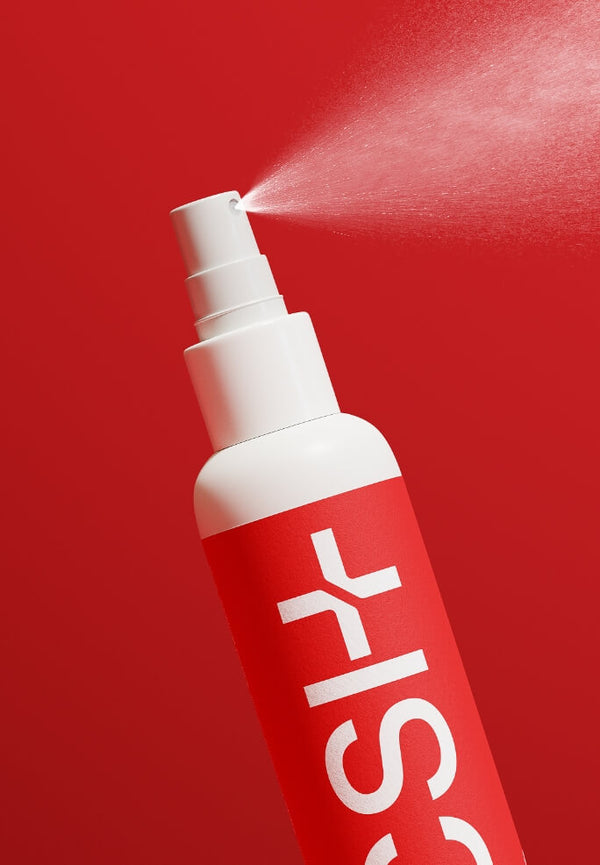
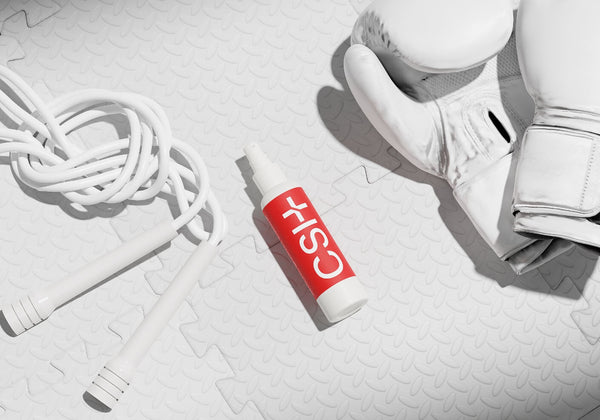
So what does a product built for a combat gym rather than a factory floor actually look like on paper? This is exactly what we set out to make with the CSH Mat & Gym Floor Cleaner, and it comes down to three things that show up plainly on the Safety Data Sheet.
No hazard classification. The formula is not classified as hazardous under CLP, the EC 1272/2008 regulation. There are no hazard symbols, no risk phrases and no PPE requirement, which means there is no COSHH burden hanging off it. Anyone on your team can safely use it before class without gloves, goggles or a written assessment. It sits at pH 7, perfectly neutral, so it cleans without stripping the plasticisers out of your vinyl or degrading your EVA. The same neutral chemistry that is kind to your mats is what keeps it off the hazard list in the first place.
A clean, low-odour cotton profile. This sounds like a small thing until you have tried to run a class in a room that reeks of pine disinfectant or bleach. The cleaner is a clear liquid with a light, low-odour cotton scent, so you can wipe the mats down at six and hold a beginners' session at seven without your members' eyes watering. There is no lingering chemical fug, which matters enormously for how your gym feels to a new visitor.
Zero residue. The formulation is built around a primary alcohol ethoxylate surfactant, which is the workhorse that dissolves body oils and sweat, plus a tetrapotassium pyrophosphate water conditioner that stops hard water leaving marks. It lifts the oil off EVA seams and tatami grain, floats it away and dries film-free. No tacky layer for grime to build on, no slippery shine on your tatami. On the bacterial side, it is a bactericidal surface cleaner: it is formulated to reduce bacteria on the mat and floor surfaces it is used on, formulated to kill 99.9% of germs, including gym-based and mat-borne bacteria, and to conform to recognised European surface standards (EN1276, EN14476 and EN13697). Every claim there is about the surface, which is exactly where a mat cleaner should be doing its work.
That combination, quaternary ammonium compounds for the surface bactericidal action, a primary alcohol ethoxylate to lift body oils, and a water conditioner to keep it drying clean, is what a formulation designed around real training rooms looks like. It is made in the UK by a regulated manufacturer, so the batch consistency and the paperwork behind it are the real thing, not a re-badged bulk drum.
The £32.99 that covers your whole floor
Here is why one bottle makes the maths easy. Because the CSH Mat & Gym Floor Cleaner is neutral, non-hazardous and residue-free, the same product works safely across your puzzle mats, your heavy vinyl rollouts and the front-of-house hard floors in your reception and changing areas. You are not buying one aggressive degreaser for the entrance, one gentle cleaner for the vinyl and one specialist product for the tatami. One product, £32.99, covers the lot, with no PPE to buy, no COSHH assessment to write and nothing that needs locking in a hazard cabinet.
Set that against the cost of replacing a set of cracked vinyl rollouts because you cleaned them with something too harsh, and the value is obvious. A cleaner that protects the material it is used on pays for itself long before it runs out.
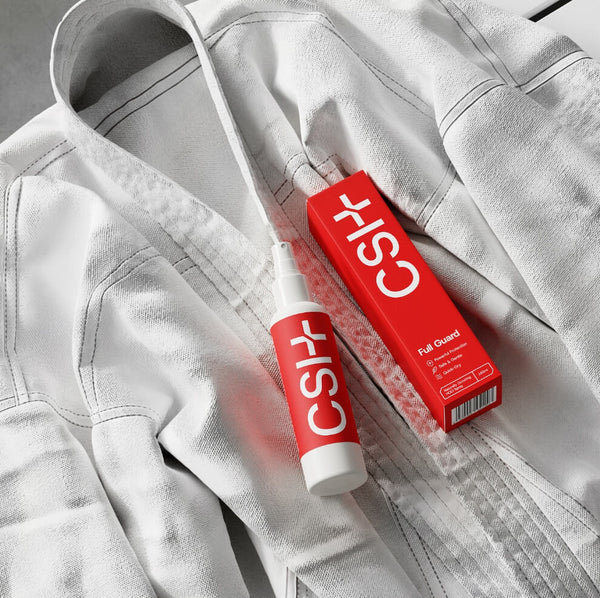
Every order also includes two free Full Guard sprays for your members. Full Guard is a rinse-free cosmetic skin cleansing spray that freshens the skin and lifts sweat and impurities, for use on the skin after training. It is a separate cosmetic product from the mat cleaner, and it is a nice thing to have on the shelf by the door for members to use once they step off the mats you have just cleaned properly.
If you want the business case for all of this rather than the chemistry, read the companion piece on how gym hygiene dictates your academy's profitability. Clean mats are not just a maintenance job, they are a retention tool.
A surface and floor cleaner for mats and training areas. For external hard-surface use only, not for use on skin. Always use as directed on the product label.