Dirty Gear, Stressed Skin: How Rashguards and Gloves Affect Your Complexion
Educational information only – read the full notice
You can be meticulous about washing your face and still break out along your jawline, your forehead, the backs of your shoulders. If you train in contact sport, or grind through hard gym sessions in the same well-loved kit, the culprit is often not your skin at all. It is your gear. Every rashguard, glove and pad is a sponge for stale sweat, and unless you manage it, that sweat presses straight back onto your skin the next time you suit up.
I'm Eddie, founder of Combat Sports Hygiene and a combat sports athlete, and I have learned this one the hard way. There were seasons where I could not work out why one side of my face seemed grumpier than the other, until I realised it was the side mashed every round into a collar that had not been washed often enough. Once I sorted the kit, the skin followed. This is not just a grappling problem, though. Anyone who reuses a sweat-soaked gym top, straps on cycling gloves day after day, or lives out of a packed kit bag is dealing with the same mechanical transfer. Here is how it works, and how to keep it under control.
Gear is a two-way street
We think of kit as something that soaks up our sweat and carries it away. It does, but only up to a point, and then it starts giving it back. Fabric and foam absorb the watery and oily parts of sweat during a session. Left unwashed, that material stays lodged in the fibres, and over hours in a warm, dark bag the organic content in it breaks down into the compounds you can smell. The next time you put the kit on, warm and damp again, all of that sits in direct, prolonged contact with your skin. The rashguard is not just carrying your sweat away, it is holding a concentrated dose of yesterday's against your complexion for the length of the round.
The zones that suffer most are where gear is tight and contact constant: the jaw and neck against a gi collar, the forehead under a headguard, the shoulders under a compression top, the hands inside gloves. These are exactly the places people complain about surface build-up and congested skin, and it is rarely a coincidence.
Why tightly packed gear is worse

How you store kit matters as much as how often you wash it. A glove or rashguard stuffed into a sealed bag the moment you finish training never gets the chance to dry. It stays damp and warm for hours, which is the ideal environment for stale sweat to develop its full character. Pull it out two days later and it is not just unpleasant to smell, it is loaded with far more residue than it would have carried if you had aired it out straight away.
Foam is the real offender. Gloves, shin pads and headguards are built from porous foam under leather or synthetic, and foam holds moisture deep inside where airflow cannot reach and a quick wipe cannot touch. That trapped dampness is why heavily used sparring gear develops a smell fabric alone never quite does, and why the insides of gloves become a main route for stale sweat and excess sebum to end up back on your hands and, if you touch your face, everywhere else.
Two fronts: refresh the gear, refresh the skin
Keeping your complexion happy means working both sides. Clean the gear so it stops re-depositing yesterday's sweat, and cleanse the skin so nothing that gets through has a chance to settle in.
On the gear side
- Wash what can be washed, every session. Rashguards, compression tops, gi, shorts. No skipping, no wearing it twice because it does not look dirty. Damp and clean-looking still means loaded with residue.
- Get everything out of the bag the moment you are home. The single biggest win for anything with foam. Open gloves wide, pull pads apart, give it airflow.
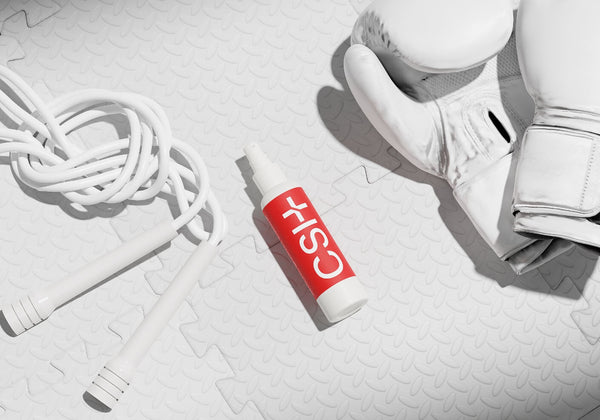
- Mist the insides of what cannot go in the machine. A light, rinse-free HOCl cleanser inside gloves, pads and headguards helps clear the stale sweat and odour compounds rather than sealing them in under a fragrance. Because it is fragrance-free and air-dries, you are not adding a sickly cover-up scent.
- Never store anything damp. Dry fully before the next session. A glove that goes away wet is a glove that comes out worse.
On the skin side
- Clear the contact zones straight after training. Jaw, neck, forehead, hairline, shoulders, hands. A rinse-free cleanse over exactly the places your gear pressed hardest, before the mat grime and stale sweat have time to settle.
- Do not scrub harder to compensate. Aggressive washing strips the skin's moisture barrier and usually makes congested, friction-stressed skin worse. Gentle and non-stripping wins.
- Top up when a full wash is not on. Between rounds, on the drive home, at a comp with no showers, a quick mist keeps the contact zones fresh until you can wash properly.
Where a rinse-free mist earns its place

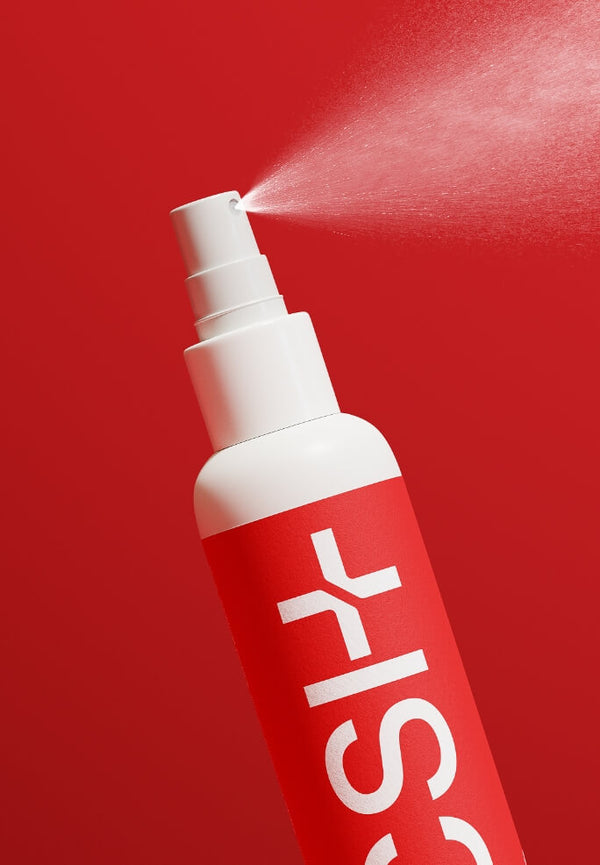
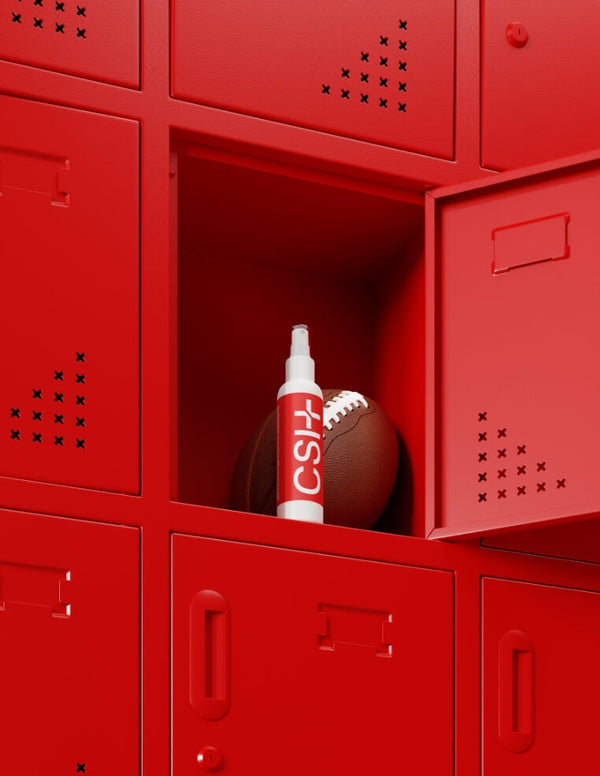
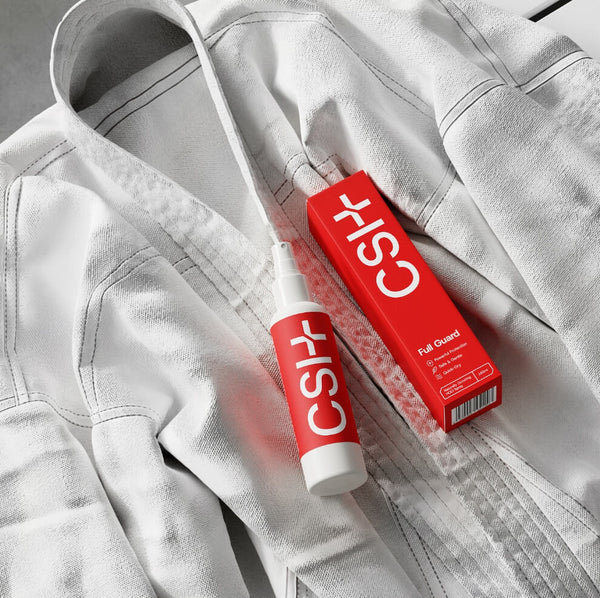
The reason a HOCl mist suits this job on both fronts is that the same gentle cleanser works on gear and skin alike. Hypochlorous acid is a molecule your own white blood cells make as part of normal function, which is why a well-formulated cosmetic version is so kind on skin while still lifting stale sweat and surface build-up. Our Full Guard is built to that spec: a registered cosmetic spray at 200ppm of 95% pure HOCl, pH 5.5 to 6.5, rinse-free, air-drying in around sixty seconds. One bottle covers both your gloves and your skin, and because it is non-stripping it will not leave friction-stressed skin tight or flaky.
One caution on the gear side: mist, do not soak. Drowning gloves or pads in liquid breaks down the foam and warps the shape. The aim is a light mist plus proper airflow, which does far more for both the smell and your skin than any dousing.
A weekly rhythm that keeps skin clear
You do not have to overhaul your life. A light, consistent rhythm keeps kit from ever pushing back on your complexion.
- After every session: washables in the wash, foam gear out of the bag and aired, insides misted, contact zones on your skin cleansed.
- Mid-week: check nothing is still damp from a hard session and re-air anything that is.
- Weekly: empty the kit bag completely, air it out, and wipe it down. The bag itself is where damp gear does its worst.
- Seasonally: in humid months, give foam gear longer to dry, or use a glove dryer, so nothing goes back into rotation half-wet.
Do that and the transfer problem largely disappears. Clean, dry gear has nothing to give back, and skin cleansed at the contact points stays clear rather than congested.
Beyond the mat
None of this is unique to combat sport. The office worker who re-wears a gym top, the cyclist whose gloves never fully dry, the traveller whose kit bag has been sealed since the airport: all are dealing with the same transfer of stale sweat back onto skin. The fix is identical. Wash what you can, air what you cannot, and keep a rinse-free cleanser on hand for the gear and the skin that meets it. There is more on the facial side in the guide to a post-workout face mist, and the full picture sits in our combat sports skin care guide.
FAQ
Can dirty gear really affect my complexion?
Kit that has not been washed or dried holds stale sweat and excess sebum, and presses it back against your skin at the exact contact points. Managing your gear is one of the most overlooked parts of keeping training skin clear.
Why do my gloves smell worse than my rashguard?
Gloves are built from foam that holds moisture deep inside where airflow cannot reach, and they are more enclosed, so they stay damp far longer. That is why they need the most airing and are a prime route for build-up back onto your hands.
Can I put my gloves and pads in the washing machine?
No. Soaking foam gear breaks down the padding and warps the shape. Use a light rinse-free mist and proper airflow instead, and save the machine for fabric.
Is scrubbing my skin harder the answer?
No. Over-washing strips the skin's moisture barrier and tends to make congested, friction-stressed skin worse. A gentle, non-stripping cleanse at the contact zones does more.
Keep reading
- The complete combat sports skin care guide, our full pillar on training-skin hygiene.
- Face and body cleansing for boxing, MMA and Muay Thai, gear-to-face contact up close.
- The post-workout face mist, refreshing your face after a session.
Want the full picture on Full Guard? See what makes our hypochlorous acid spray different, for sport and for skin.
Full Guard is a cosmetic skin cleansing spray registered under the UK Cosmetic Products Regulation. It is not intended to treat, cure, prevent or diagnose any condition. For any skin concern, speak to a GP, pharmacist or dermatologist.

Our HOCl mist
Full Guard Hypochlorous Acid Spray
An ultra-pure, fragrance-free HOCl mist made in the UK. Rinse-free, no alcohol and no sting, it dries in a minute or two and leaves skin feeling clean and fresh, the perfect freshen-up when a shower isn't happening yet.
- 95% pure hypochlorous acid, skin-friendly pH 5.5-6.5
- Fragrance-free and non-stripping, kind to sensitive skin
- Rinse-free, dries fast, fits any bag or desk drawer
- UK-made to ISO 22716 (GMP) standards