Is the Team Ice Bath Safe? The Hidden Bacterial Risks of Shared Recovery
Educational information only – read the full notice
The team ice bath is a fixture of elite rugby recovery - and a genuine bacterial transmission risk that most clubs manage poorly. Cold water does not kill bacteria. PVL-producing Staphylococcus aureus, streptococcus, and other pathogens survive at low temperatures and transfer readily through water onto abraded or broken skin. This post covers what the actual risks are, who should never get in a shared plunge, and what safe shared use looks like in practice.
Why Cold Water Does Not Make an Ice Bath Safe
There is a widespread assumption that cold water - especially with ice - is inherently cleaner than warm water. It is not. Bacterial growth is slower at low temperatures, but survival is not impaired in the same way. Staphylococcus aureus, including methicillin-resistant strains, remains viable in cold water for extended periods. What the cold does is slow replication - it does not eliminate a pathogen load already present in the water.
A shared ice bath used by a squad of 30 players over the course of an hour can accumulate a significant bacterial load from skin flora, open abrasions, and nasal carriage (MRSA carriage in the nasal passages is common in contact sport populations). The water is not chlorinated like a swimming pool. It is an untreated shared bath.
PVL-MSSA: The Specific Threat Worth Understanding
Panton-Valentine Leukocidin (PVL) is a toxin produced by certain strains of Staphylococcus aureus. PVL-producing strains cause distinctively aggressive infections: deep, painful boils, skin abscesses, and in severe cases necrotising pneumonia. Sports medicine literature has documented outbreaks of PVL-MSSA (methicillin-sensitive, PVL-positive) in contact sport settings, with communal water exposure as a likely transmission route alongside skin-to-skin contact.
The mechanism in a shared ice bath is direct: an asymptomatic carrier with nasal colonisation or a minor skin break enters the water. Bacteria transfer into the water. A second player with abraded skin - very common in rugby - enters the same water and is exposed to a bacterial load at sites where the normal skin barrier is compromised. For more detail on staph in rugby specifically, read our guide to rugby staph, boils and MRSA.
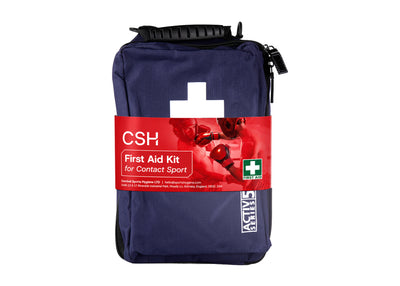
The kit-bag essential
CSH Personal First Aid Kit · £26.99
Shared ice water and open grazes do not mix. Check and cover every cut before the plunge - which only works if there is something in the bag to cover it with.
A first aid kit of CE/UKCA marked wound-care items, not a medicine. Anything spreading, hot or not settling needs a pharmacist or GP.
Who Should Never Use a Shared Ice Bath
There are clear exclusion criteria for shared plunge use. Any player with the following should not enter a shared ice bath:
- Open cuts, abrasions, or lacerations - including fresh stud marks and facial cuts from a match
- Active skin infections of any kind: impetigo, folliculitis, a draining boil, ringworm, or any undiagnosed rash
- Broken blisters on hands or feet
- Any area of compromised skin from a recent wound or surgical site
This is not overly conservative. Open skin in contaminated water is a direct bacterial entry route. A player who would be permitted to train with a covered cut should still not use a shared ice bath - waterproof dressings do not maintain their seal reliably when submerged.
Rules for Safe Shared Ice Bath Use
If your club uses a shared plunge, the following protocol is the minimum standard for acceptable practice:
Shower with soap before entry. Rinsing removes surface bacteria and reduces the load you introduce into the shared water. This protects other users, not just you.
Change the water between team sessions. The same water should not be used across multiple groups in a day. If your club runs a first XV and a second XV through the same ice bath on the same afternoon, the water should be changed and the container wiped down between them. This is operationally inconvenient - it is also non-negotiable if you are taking contamination risk seriously.
Clean the container itself. Biofilm builds up on the walls and base of ice bath containers and tubs. A wipe-down with a suitable disinfectant cleaner between uses is required. Standing water and a damp plastic surface is a biofilm environment.
Shower with soap immediately after. Get out and shower. The point of the cold plunge is the thermal stimulus - the bacteria that may now be on your skin are not part of the therapy.
Limit simultaneous occupancy. Fewer bodies means less bacterial load introduced per session. If your ice bath is designed for two, do not put six players in it.
Individual Plunge Options vs Shared Systems
Individual cold plunge systems - or simply filling a household bath with cold water and ice - eliminate the shared contamination risk entirely. For clubs where post-match recovery is a priority, individual or sequential (one at a time, water changed) plunge use is meaningfully safer than a shared communal tub.
Cold showers as a partial substitute are also worth considering. They deliver a vasoconstriction stimulus, are individual by nature, and carry none of the shared water exposure risk. They are not identical to a cold plunge, but for a club without a properly managed recovery system, they are safer than a poorly managed shared bath.
When to Refuse to Use a Shared Ice Bath
If you arrive at the plunge and the water is visibly dirty, discoloured, or has not been changed since the previous group, refuse it. If there is no shower available before entry, refuse it. If another player with an open wound or active skin infection has already used it, refuse it. The recovery benefit of a cold plunge does not outweigh a skin infection that puts you out of training for two weeks. See our guide on rugby locker room infections for the broader context of skin risk in club environments.
Clubs that take recovery seriously enough to invest in ice bath facilities should take the hygiene side of that investment equally seriously. A contaminated shared plunge is worse than no plunge at all.
Related Guides
- The Ultimate Rugby Kit Bag Hygiene Checklist
- Rugby Staph, Boils and MRSA: What Players Need to Know
- Impetigo in Rugby: Treatment and Return to Contact
The information in this article is for educational purposes only and does not constitute medical advice. Any player with symptoms of a skin condition or infection should consult a GP, pharmacist, or healthcare professional before returning to training or competition.
Rugby Hygiene
Good hygiene is the best foundation for healthy rugby. Explore the everyday hygiene routine, kit and guides for rugby players, all in one place. Explore the Rugby hygiene hub →
Before your next session
Sort the kit tonight, not after the sore shows up
Every guide on this site ends the same way: sweat off fast, broken skin covered, gear dry, towel your own. That takes kit you carry, not kit you mean to buy. If any of these six is missing from your bag, this is the one to fix before you train again.
CSH Personal First Aid Kit
Washproof and hydrocolloid plasters, saline wipes and tape, in your bag
£26.99
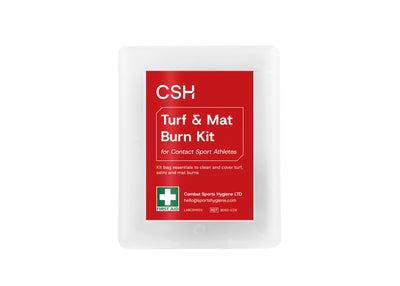
The Ultimate Mat & Turf Burn Treatment Kit
Built for the grazes that let infection in
£14.89
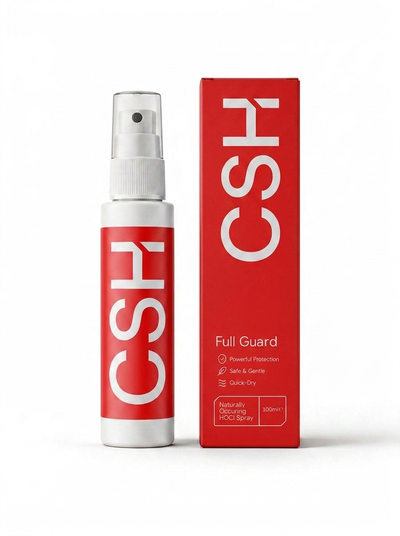
Full Guard V2
Rinse-free skin cleansing for the gap between training and the shower
£16.49
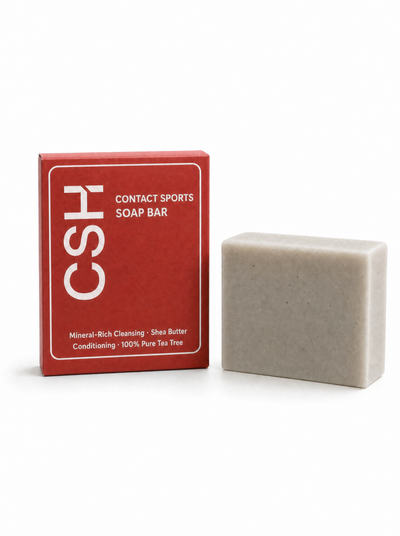
Athlete Soap Bar
The post-training shower, done properly
£8.49
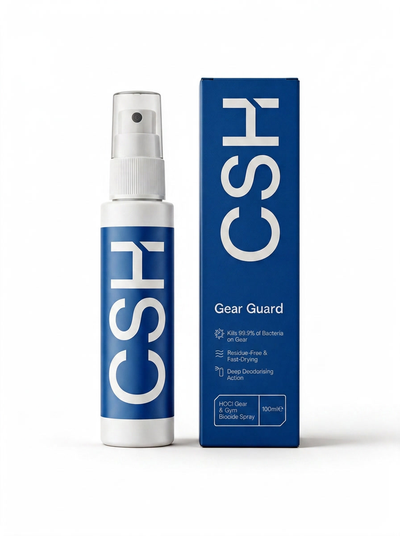
Gear Guard
For headgear, gloves, pads and the bag itself
£16.49
Moisture Wicking Sports Towel
Your own, washed after every session
£3.99
Get the full kit → See everything in the rugby hygiene and first aid collection
Full Guard and the soap bars are cosmetics for cleansing the skin. First aid kits are CE/UKCA marked wound-care items, not medicines. Gear Guard is an equipment cleaner; use biocides safely and read the label. Nothing here prevents or treats a skin infection: if you think you have one, see a pharmacist or GP.