How to Tell the Difference Between a Rugby Boil, Staph, and MRSA
Educational information only – read the full notice
Not every lump under your skin after a hard training week is the same thing - and getting the distinction wrong can cost you. A blocked hair follicle is an inconvenience. A staph abscess needs medical attention. MRSA can hospitalise you. Rugby players, particularly forwards, get skin trauma constantly: turf burns, stud marks, friction abrasions. Any of these can become an entry point for bacteria. This guide walks through the clinical differences between minor folliculitis, a staph abscess, and community-acquired MRSA - so you know what you are dealing with and when to act.
TL;DR
- A blocked follicle, a staph abscess and MRSA sit on the same road but at very different mileposts.
- Warning signs that mean escalate: growing size, spreading redness, heat, real pain, fever or feeling unwell.
- Never squeeze or lance anything yourself. It can push infection deeper.
- Rapid spread, fever or red streaking is A&E territory. Slower, smaller and local is a GP appointment.
Boil vs Staph vs MRSA: Quick Comparison
These words get used as if they mean different illnesses. They don't, quite. One describes what you can see, one names a bacterium, and one describes a resistance pattern.
| What it means | What it looks like | How it's confirmed | What to do | |
|---|---|---|---|---|
| Folliculitis | Inflamed or infected hair follicles, often caused by bacteria | Small red spots or white-headed pimples around hairs | Usually by looking | Keep it clean, don't shave over it, and see a GP if it spreads or gets painful |
| Boil (furuncle) | A deep infection of a single hair follicle, usually caused by staph | A hard, painful lump that fills with pus, often starting as a tender spot | Usually by looking. A swab if it won't clear. | Warm compresses, and don't squeeze it. See a GP if it hasn't improved in 2 weeks. |
| Carbuncle | Several boils joined together | A larger, painful lump with more than one head | By a clinician | See a GP |
| Staph abscess | A collection of pus under the skin caused by staph | Red, swollen, warm, painful. It may leak pus. | By a clinician. It may need draining. | See a GP promptly, and urgently if it's spreading |
| MRSA infection | Staph that resists some commonly used antibiotics | Exactly like an ordinary boil or abscess: painful, swollen, warm, leaking pus | Only by a swab sent to a lab | See a GP, and mention you play a contact sport |


What the NHS says to do with a boil: hold a clean cloth soaked in warm water on it for 10 minutes, 4 times a day. Don't pick, squeeze or pierce it. Keep it covered, and stay away from gyms and pools until it has cleared, so it doesn't spread. Get urgent help if a boil is on your face, or the skin around it is hot, painful and swollen and you feel unwell.
Sources: NHS: boils and carbuncles; NHS: MRSA
Is a Boil a Staph Infection?
Usually, yes. That's why "boil vs staph" is less of an either-or than it sounds.
Dermatologists describe a boil as a deep form of bacterial folliculitis: an infection of a hair follicle. The bacterium usually found in it is Staphylococcus aureus, or staph. So most boils are a staph infection, described by how they look.
Where MRSA fits: MRSA is a type of staph. The NHS explains that it usually lives harmlessly on the skin, and most people carrying it have no symptoms at all. It only becomes a problem when it gets into the body, for example through broken skin, and causes an infection. Because an MRSA boil looks exactly like any other boil, the only way to know is a swab. DermNet advises taking a swab when boils fail to clear up, in case resistant staph is involved.
Real-world case: when boils won't clear
In 1993 to 1994, a run of skin infections went through a high school wrestling team in southern Vermont. 7 of the 32 team members tested positive for MRSA, and the same strain was found in 6 people in the local community who didn't wrestle. The investigators' message to doctors was simple: suspect MRSA when there's an outbreak of boils among contact sport athletes that doesn't respond to standard antibiotics. The team brought in skin checks before matches and kept infected wrestlers off the mat until they'd been treated.
Source: Lindenmayer JM et al. Arch Intern Med 1998;158:895-9
Sources: DermNet: boil; NHS: MRSA
Minor Folliculitis: The Blocked Follicle
Folliculitis is an inflammation of the hair follicle, usually caused by Staphylococcus aureus bacteria entering a follicle through a minor abrasion or friction. In rugby players, it typically appears on the thighs, neck, and lower back - anywhere kit rubs repeatedly or skin meets turf.
What it looks like:
- Small red bumps or white-headed pimples clustered around hair follicles
- Mild tenderness or itch - not significant pain
- No significant surrounding redness spreading beyond the immediate area
- No fever, no swelling of lymph nodes, no systemic symptoms
Minor, isolated folliculitis can reasonably be managed at home: keep the area clean, do not squeeze or pick, wear loose-fitting kit to reduce further friction, and monitor closely for 24-48 hours. If it is not improving or begins to spread, step up to medical care. The key word is minor. Once you have any doubt about whether it fits that description, it is no longer self-manage territory.
Folliculitis vs MRSA: Why Shaving Matters
Folliculitis is common, usually mild, and often shows up after shaving or friction from kit. Most of the time it settles on its own. What turns a "shaving rash" into something to watch is when a spot stops behaving like the others.
| Usually just folliculitis | Time to see a GP |
|---|---|
| Lots of small, similar spots around hairs | One spot that grows much bigger than the rest |
| Mild itch or tenderness | Increasing pain, heat and swelling |
| Settles once you stop shaving or rubbing that area | A hard lump that fills with pus |
| No change in how you feel | Spreading redness, fever or feeling unwell |

Real-world case: shaving and MRSA on a college football team
In 2003, a college American football team in Connecticut had 10 players with MRSA skin infections, and 2 were admitted to hospital. When public health investigators looked for patterns, players who shaved their bodies were about 6 times more likely to be infected, and players with turf burns about 7 times more likely. Of the 4 players with infections on areas covered by kit (hips and thighs), 3 had shaved that exact area. The investigators recommended educating players about the risks of cosmetic body shaving.
The practical takeaway for contact sports: shaving leaves tiny nicks and irritated follicles. Try not to shave areas that take contact right before a match or a heavy training session, and don't play on skin with an angry, growing spot.
Staph Abscess: When It Escalates
A staph abscess forms when bacteria - most commonly Staphylococcus aureus - establish themselves deeper in the skin and the body walls off the infection with pus. This is a clinical step-change from folliculitis and should not be treated at home.
What it looks like:
- A raised, firm, clearly defined lump - often described as a boil or furuncle
- Warm and noticeably painful to the touch
- Surrounding skin that is red and may be spreading outward
- A visible pus-filled head, or a fluctuant (soft, fluid-filled) centre
- Possible fever, fatigue, or generally feeling unwell
A staph abscess needs a GP, not a pair of tweezers and some antiseptic. Do not train on an active abscess - the skin contact of rugby is a direct transmission route to other players.
What NOT to Do: Do Not Squeeze or Self-Lance
This point is worth stating explicitly because the temptation is real, particularly for players who want to get back to training quickly. Squeezing or attempting to lance a suspected staph abscess at home is dangerous. The skin acts as a barrier that contains the bacterial load in a localised pocket. Breaking that barrier without sterile technique and proper drainage can drive bacteria into the surrounding tissue, causing a spreading cellulitis, or introduce the infection into deeper tissue planes where it is much harder to treat. In worst-case scenarios, squeezing an abscess can introduce bacteria directly into the bloodstream, increasing the risk of systemic infection. A GP will drain an abscess under sterile conditions if incision and drainage is appropriate - this is the correct route, not self-management with improvised tools.
Community-Acquired MRSA: The Serious End
Methicillin-resistant Staphylococcus aureus (MRSA) is a strain of staph that has developed resistance to many standard antibiotics. Community-acquired MRSA (CA-MRSA) is increasingly seen outside hospital settings and has been documented in contact sport environments, particularly American football and wrestling - but rugby carries the same risk factors.
What distinguishes MRSA from a standard staph abscess:
- Rapid, aggressive spreading cellulitis - the redness expands visibly over hours, not days
- Lesions that start to resemble spider bites - deep, necrotic centres with significant surrounding inflammation
- High fever, chills, and systemic illness that appear quickly
- Failure to respond to a standard antibiotic course started by a GP (if the infection is not improving after 48-72 hours on antibiotics, this is a red flag)
MRSA cannot be reliably distinguished from ordinary staph by visual inspection alone - laboratory culture of a wound swab is required. This is another reason why attempting to self-manage a spreading or worsening skin infection is not safe.
Incubation Timelines: Why When It Appeared Matters
The timeline between skin exposure and the appearance of infection can give you useful diagnostic context, though it is not definitive. Folliculitis typically appears within one to three days of the triggering exposure - a hard session on artificial turf, a friction rash from kit, or a dirty breakdown. The inflammation is close to the surface and responds quickly to bacterial presence.
A staph abscess develops more slowly. The bacteria need time to establish themselves deeper in the tissue, stimulate an immune response, and generate enough pus to form a defined pocket. Most staph abscesses present four to ten days after the initial skin breach. If you are noticing a new painful lump a week after a bad turf burn, a staph abscess is a plausible explanation.
MRSA can appear on a similar timeline to ordinary staph, but the distinguishing factor is not when it starts - it is how fast it escalates. An infection that appears and then worsens rapidly over 24 to 48 hours, despite basic hygiene measures, should be treated as potentially MRSA until proven otherwise. The severity classification used clinically - mild, moderate, or severe, based on whether the infection is purulent or non-purulent and how far it has spread - determines whether oral antibiotics are sufficient or whether IV treatment and hospital admission are needed. That assessment belongs with a clinician, not a first aider on the touchline.
When to Go to A&E vs Your GP
Use this as a rough decision framework:
Go to A&E immediately if:
- The infection is spreading rapidly (visible change in redness/swelling within hours)
- You have a high fever (above 38°C), rigors (uncontrollable shivering), or feel severely unwell
- The infection is on the face, near the eye, or near the groin
- You are immunocompromised, diabetic, or have other significant health conditions
- A prescribed antibiotic course is not working after 48-72 hours
See your GP the same day if:
- You have a painful, warm abscess or boil that has a pus head
- There is any surrounding redness (cellulitis) beyond the immediate bump
- You have mild systemic symptoms alongside a skin infection
- You are unsure whether what you have is minor folliculitis or something more serious
Monitor at home (24-48 hours maximum) if:
- It is genuinely minor folliculitis: small, not spreading, no pain beyond mild tenderness, no systemic symptoms
- It is improving with basic hygiene measures
When in doubt, get it checked. GPs would far rather see a minor skin infection that turns out to be nothing than have a player leave A&E with sepsis because they tried to manage MRSA with hot compresses.
Watch: the doctor's version
Dr Asoka Wijayawickrama on how staph gets past the skin barrier in contact sport: friction damage, close contact and shared surfaces.
Transmission in the Rugby Environment
Staph bacteria - including MRSA - spread through direct skin contact and through contaminated surfaces. In a club rugby environment, the risk points are:
- Shared kit and towels
- Communal changing room floors and benches
- Contact at the breakdown and in the scrum
- Sharing medical tape, wound dressings, or treatment equipment
Any player with a confirmed or suspected staph or MRSA infection should be stood down from contact until they have medical clearance. See The Ultimate Rugby Kit Bag Hygiene Checklist for practical steps at squad level to reduce shared-surface risk.
Common questions
How do I tell a harmless boil from something serious?
Track direction, not just appearance. A small, stable, mildly annoying lump behaves differently from one that is growing, hot, increasingly painful or surrounded by spreading redness. Change for the worse is the signal that it needs a clinician.
Should I squeeze it or drain it myself?
No. Squeezing or self-lancing can push infection deeper into the tissue and turn a contained problem into a spreading one. Draining an abscess is a clinical procedure for a reason.
When is it A&E rather than the GP?
Rapidly spreading redness, red streaks tracking away from the lump, fever, or feeling properly unwell mean same-day urgent care. Something smaller, slower and local is a GP appointment, booked promptly rather than eventually.
Related Guides
- What is Scrumpox? Symptoms, Treatment, and Rugby Return Rules
- Impetigo in Rugby: When Can You Safely Return to Full Contact?
- Cauliflower Ear Hygiene: How to Clean and Protect Without Infection
The information in this article is for educational purposes only and does not constitute medical advice. Any player with symptoms of a skin condition or infection should consult a GP, pharmacist, or healthcare professional before returning to training or competition.
Rugby Hygiene
Good hygiene is the best foundation for healthy rugby. Explore the everyday hygiene routine, kit and guides for rugby players, all in one place. Explore the Rugby hygiene hub →
Before your next session
Sort the kit tonight, not after the sore shows up
Every guide on this site ends the same way: sweat off fast, broken skin covered, gear dry, towel your own. That takes kit you carry, not kit you mean to buy. If any of these six is missing from your bag, this is the one to fix before you train again.
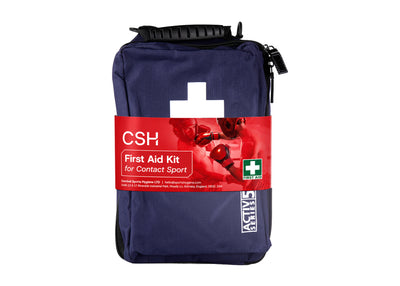
CSH Personal First Aid Kit
Washproof and hydrocolloid plasters, saline wipes and tape, in your bag
£26.99
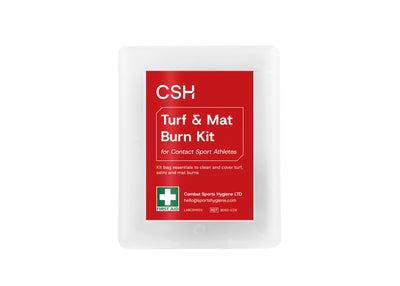
The Ultimate Mat & Turf Burn Treatment Kit
Built for the grazes that let infection in
£14.89
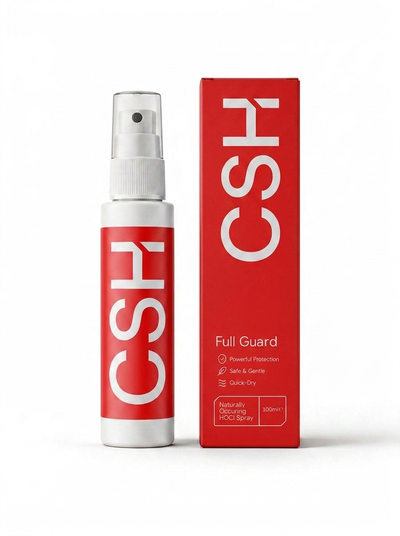
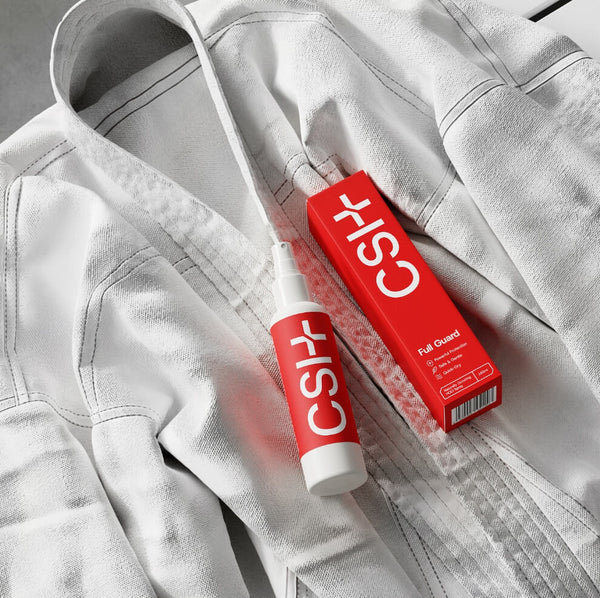
Full Guard V2
Rinse-free skin cleansing for the gap between training and the shower
£16.49
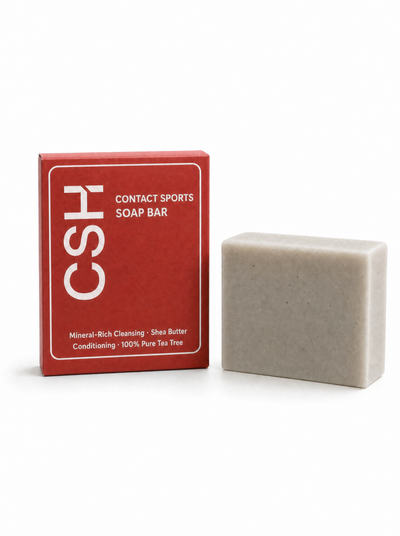
Athlete Soap Bar
The post-training shower, done properly
£8.49
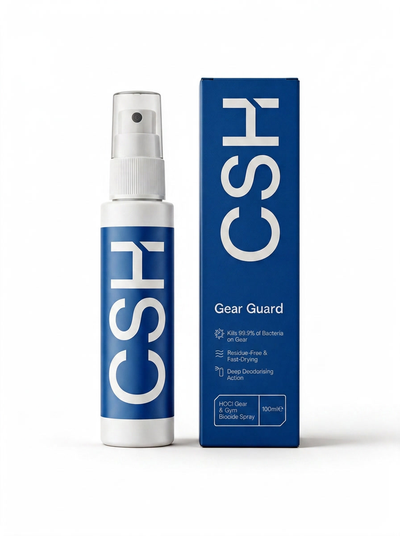
Gear Guard
For headgear, gloves, pads and the bag itself
£16.49
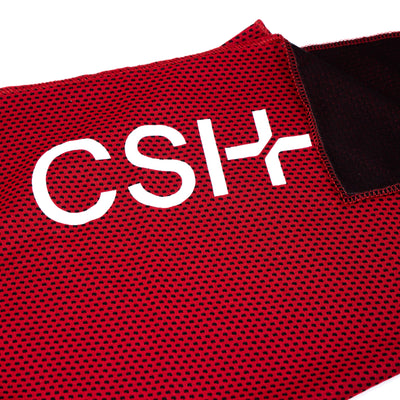
Moisture Wicking Sports Towel
Your own, washed after every session
£3.99
Get the full kit → See everything in the rugby hygiene and first aid collection
Full Guard and the soap bars are cosmetics for cleansing the skin. First aid kits are CE/UKCA marked wound-care items, not medicines. Gear Guard is an equipment cleaner; use biocides safely and read the label. Nothing here prevents or treats a skin infection: if you think you have one, see a pharmacist or GP.