How to Clean Cauliflower Ear: Aftercare and Infection Warning Signs
Educational information only – read the full notice
Cauliflower ear is a badge of honour in some rugby circles, but the dead space created by an undrained auricular haematoma is a bacteria breeding ground. Left uncleaned and unmonitored, a haematoma can become infected - and ear infections that reach the cartilage move fast and cause permanent, painful damage. Whether your ear is freshly swollen or permanently reshaped from years of scrummaging, here is how to keep it clean, what infection looks like, and exactly when you need to stop managing it yourself.
How Cauliflower Ear Happens
The outer ear (the auricle) gets its shape and rigidity from a thin piece of cartilage. That cartilage has no blood supply of its own - it relies on the perichondrium, a tight layer of tissue wrapped directly around it, to deliver oxygen and nutrients.
When the ear takes repeated blunt compression - from scrum binding, rucking contact, or being driven into the ground - blood accumulates between the perichondrium and the cartilage. This is an auricular haematoma. The blood cuts off the cartilage from its nutrient supply. If the haematoma is not drained promptly (ideally within 48-72 hours), the body begins to lay down fibrous tissue as it organises the clot. Over time, this hardens into the irregular, lumpy contour that gives cauliflower ear its name.
The problem for infection risk is the dead space inside an undrained haematoma. Pooled blood is warm, protein-rich, and poorly perfused - ideal conditions for bacteria introduced through nearby skin abrasions to multiply.
Why Infection Risk Is Higher Than Most Players Realise
The rugby environment adds layers of risk that would not apply to a boxer who trains in a clean gym with their own gloves. In rugby:
- Turf abrasions and stud marks regularly break the skin close to the ear
- Shared headguards and scrummage caps sit directly over the ear and trap moisture, sweat, and skin bacteria
- Post-match communal showers expose healing skin to other players' skin flora
- Ear defenders and headguards are frequently not washed between sessions
Bacteria - including Staphylococcus aureus and Pseudomonas aeruginosa - can colonise the haematoma space and cause perichondritis: an infection of the perichondrium itself. This is not a minor infection. Perichondritis can progress rapidly, destroys cartilage, and in severe cases requires surgical debridement. It needs prompt antibiotic treatment, typically oral or intravenous depending on severity.
How to Clean the Ear Correctly After Training
Whether your ear is an acute haematoma, a healing post-drainage ear, or a long-standing cauliflower, the same cleaning principles apply:
- Rinse with saline: A sterile saline solution (available from any pharmacy) used to gently rinse the outer ear after training is the safest option. It clears sweat, debris, and surface bacteria without damaging the skin barrier.
- Never put anything inside the ear canal: The cleaning focus is the outer ear - the auricle and the area around it. Cotton buds in the ear canal cause more harm than good and are not relevant to cauliflower ear hygiene.
- Pat dry, do not rub: Use a clean, personal towel to gently pat the ear dry. Rubbing can aggravate a haematoma or reopen healing skin.
- Do not share headgear: Scrummage caps, headguards, and ear guards should be personal items, washed regularly. A headguard that sits over an infected ear and is then worn by another player is a direct transmission route.
- Keep fingernails short and hands clean: Players who unconsciously prod or pick at their ears after training introduce hand bacteria directly to a vulnerable area.
Haematoma vs Perichondritis: Know the Difference
These two conditions look superficially similar but are clinically very different and require different responses:
Auricular haematoma:
- Swelling appears shortly after impact - within hours
- Fluctuant (soft, fluid-filled) to the touch
- Skin colour may be normal or slightly reddened from the trauma itself
- Painful at the site of impact, but pain should not be escalating over days
- No fever
Perichondritis (infected ear):
- Increasing pain - pain that gets worse over 24-48 hours rather than settling
- Spreading redness that moves beyond the area of the original swelling
- Warmth that feels disproportionate to any trauma
- Swelling that is firm rather than fluctuant
- Possible discharge or weeping from the skin surface
- Fever or feeling systemically unwell
If you have any of the perichondritis signs, particularly escalating pain and spreading redness, see a GP the same day. Do not wait it out. Cartilage necrosis can occur within days if perichondritis is not treated promptly with appropriate antibiotics.
Acute Haematoma: The Drainage Window
If you take a hit to the ear during a match or training session and it begins to swell, you have a short window - roughly 48 to 72 hours - in which a GP or A&E clinician can drain the haematoma with a needle or small incision. This prevents the fibrous tissue from organising and significantly reduces long-term deformity.
Draining an auricular haematoma is a medical procedure. It needs to be done under sterile conditions with appropriate technique, and typically a compression dressing is applied afterwards to prevent re-accumulation. Do not attempt to drain it yourself. Players who drain their own ears with non-sterile equipment are introducing bacteria directly into the dead space and causing exactly the infection problem this article is about.
After drainage, the ear needs to be protected from further trauma while it heals. A well-fitted, clean headguard is appropriate - a shared, unwashed one is not.
When to See a GP or ENT
See your GP promptly if:
- You have an acute haematoma within the 48-72 hour drainage window
- Pain, redness, or swelling is increasing rather than settling
- You notice warmth or discharge that suggests infection
- You develop a fever alongside ear symptoms
- The ear is not healing normally after a previous drainage procedure
If your GP suspects perichondritis or cannot manage it at practice level, they will refer to ENT. Do not delay that referral - perichondritis treated within the first 24-48 hours has a dramatically better outcome than one left for a week because the player thought it would settle.
For broader advice on keeping kit, shared equipment, and training gear hygienic to reduce infection risk across the squad, see The Ultimate Rugby Kit Bag Hygiene Checklist.
Related Guides
- How to Tell the Difference Between a Rugby Boil, Staph, and MRSA
- What is Scrumpox? Symptoms, Treatment, and Rugby Return Rules
- Impetigo in Rugby: When Can You Safely Return to Full Contact?
The information in this article is for educational purposes only and does not constitute medical advice. Any player with symptoms of a skin condition or infection should consult a GP, pharmacist, or healthcare professional before returning to training or competition.
Keep reading
- Cauliflower ear: what it is and why it happens – the background read on how the ear gets that shape in the first place.
- Rugby locker-room infections – the wider picture on what does the rounds in a changing room.
- How to wash a scrum cap – the kit that sits on your ears deserves the same attention.

Keep the essentials on hand: instant cold pack, sterile saline wipes and dressings in a gym-bag-sized ripstop case — the CSH Personal First Aid Kit covers ear knocks and everything else training throws at you. Shop the kit — £26.99 →
BJJ Hygiene
Good hygiene is the best foundation for healthy training. Explore the everyday hygiene routine, kit and guides for BJJ athletes, all in one place. Explore the BJJ hygiene hub →
For the rest of match-day injury management — blood bins, impacts and the recognise-and-remove concussion rule — see our full guide to rugby first aid.
The Post-Drainage Window: Where Ears Are Won or Lost
Drainage is not the finish line — the days after are when a drained ear either heals flat or becomes an infected one. Perichondritis, infection of the cartilage itself, is the outcome that turns a cosmetic problem into a medical one.

Be clear about one thing first: drainage belongs with a medical professional. The gym-bag syringe job is how cartilage infections happen — non-sterile needles into a hematoma sitting millimetres from avascular cartilage. If cost or access tempts you toward DIY, weigh it against months of treatment if it goes wrong.
Aftercare that protects the result
- Hands clean before any contact with the ear — every time, no exceptions.
- Keep it clean and dry: gentle daily washing around (not into) the ear, patted dry; fresh pillowcase every night that week.
- Compression as advised by whoever drained it — it is what stops the fluid returning.
- No mat time until cleared. Friction on a healing ear refills it and re-opens the door to infection.
- Know the red flags: increasing pain, heat, spreading redness, fever, or the ear becoming exquisitely tender — that is same-day medical care, not a wait-and-see. MedlinePlus covers auricular hematoma at medlineplus.gov.
Before your next session
Sort the kit tonight, not after the sore shows up
Every guide on this site ends the same way: sweat off fast, broken skin covered, gear dry, towel your own. That takes kit you carry, not kit you mean to buy. If any of these six is missing from your bag, this is the one to fix before you train again.
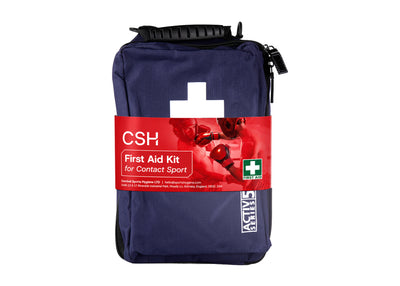
CSH Personal First Aid Kit
Washproof and hydrocolloid plasters, saline wipes and tape, in your bag
£26.99
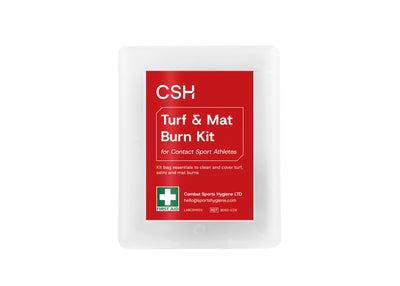
The Ultimate Mat & Turf Burn Treatment Kit
Built for the grazes that let infection in
£14.89
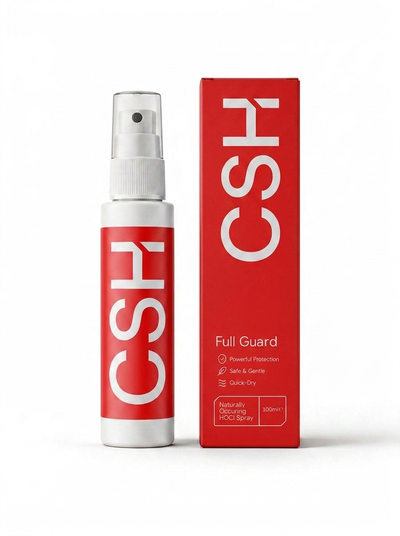
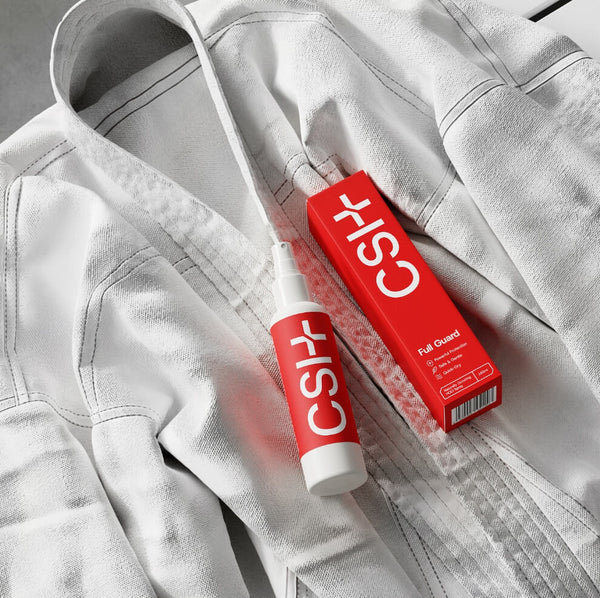
Full Guard V2
Rinse-free skin cleansing for the gap between training and the shower
£16.49
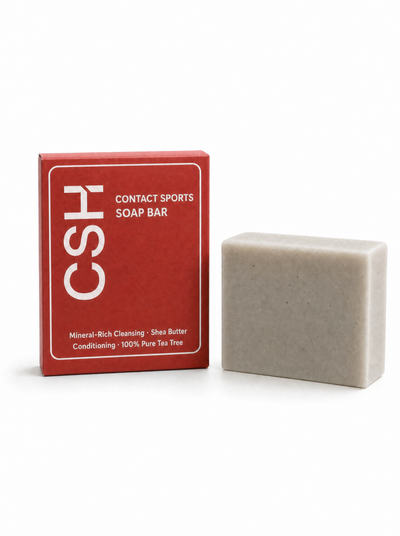
Athlete Soap Bar
The post-training shower, done properly
£8.49
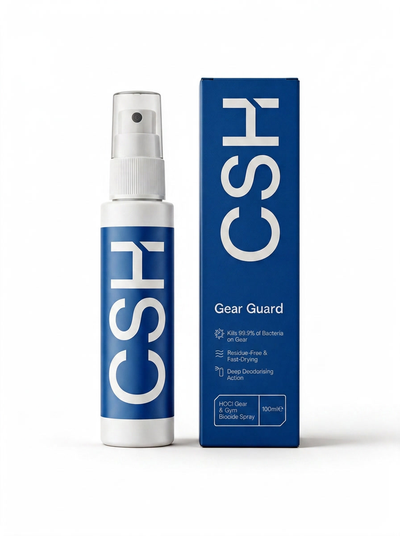
Gear Guard
For headgear, gloves, pads and the bag itself
£16.49
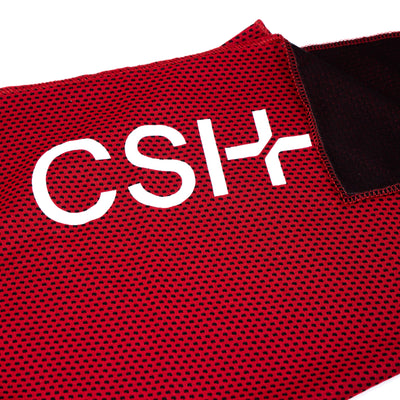
Moisture Wicking Sports Towel
Your own, washed after every session
£3.99
Get the full kit → See everything in the rugby hygiene and first aid collection
Full Guard and the soap bars are cosmetics for cleansing the skin. First aid kits are CE/UKCA marked wound-care items, not medicines. Gear Guard is an equipment cleaner; use biocides safely and read the label. Nothing here prevents or treats a skin infection: if you think you have one, see a pharmacist or GP.