Mat Burns and Gi Friction: How to Keep Stressed Skin Clean and Comfortable
Educational information only – read the full notice
Mat Burns and Gi Friction: How to Keep Stressed Skin Clean and Comfortable
⚡ 60-Second Summary
- What it is: mat burn, gi burn and turf burn are all friction injuries. The top layer of skin is scuffed away, leaving a raw, tender patch.
- Keep it simple: gentle cleansing, no scrubbing, no new actives or exfoliants on a freshly scuffed patch.
- Prevent the next one: rashguards, spats and well-fitting kit beat treating the damage afterwards.
- Red flags: blistering, spreading, weeping, a defined ring, or anything not settling. That is a GP or pharmacist question, not a skincare one.
Anyone who has spent time on the mats knows the feeling of a fresh gi burn. That hot, raw patch across the neck, the tops of the feet or the back of the hand, the kind that reminds you it is there every time your collar shifts. I learned this the hard way early in training, when I would finish a session, throw on a hoodie and completely ignore the skin that had just spent an hour being dragged across canvas and cotton. By the next morning it always felt tighter and angrier than it needed to.
As the founder of Combat Sports Hygiene and a combat sports athlete, I have come to see friction-stressed skin as its own category. It is not the same as everyday grime, and it does not respond well to the same aggressive products. This guide is about keeping that stressed skin clean and comfortable, in a way that works just as well for a grappler as it does for a runner with chafing or anyone dealing with the daily rub of a rucksack strap.
What is actually happening to friction-stressed skin

Mat burns and gi friction are, at their core, a mechanical problem. Repeated rubbing lifts and roughens the very top layer of the skin. Grappling adds heat, moisture and the coarse weave of a gi, so the surface gets scuffed, reddened and sensitised. Boxers and wrestlers see it under headgear straps. Rowers and cyclists see it wherever the seat or the oar meets skin. Even a long-haul flight in a stiff collar can leave a raw line on the neck.
The reason this matters for your routine is simple. When the outer layer is roughened, the skin's natural moisture barrier is compromised. That barrier is what normally keeps water in and everyday impurities out. Stressed, scuffed skin loses moisture faster, feels tighter, and reacts more sharply to whatever you put on it next. So the goal is not to attack that skin. The goal is to keep it clean and calm while it settles on its own.
Why harsh products make friction feel worse
Here is the mistake I see most often, and the one I used to make myself. You come off the mats, the skin feels grubby, so you reach for the strongest thing in the cupboard. A heavily fragranced body wash. An alcohol-based wipe. A sharp astringent toner. On intact skin these might feel bracing. On friction-stressed skin they tend to sting, and that sting is a signal.
Alcohol-based formulas evaporate quickly and pull moisture out of the surface as they go. On skin that has already lost part of its barrier, that is the last thing you want, because it leaves the area drier and tighter and slower to feel comfortable again. Strong fragrances and essential oils are common sources of irritation for sensitised skin, and a scuffed patch is far more likely to react to them than healthy skin would. Foaming cleansers with harsh surfactants can strip away the natural oils that stressed skin is relying on to stay supple.
None of these products are villains in normal use. The problem is the mismatch. Friction-stressed skin needs the gentlest possible cleanse, not the most aggressive one. If you want to go deeper on how the barrier works and why sensitivity spikes after training, our guide to HOCl and the skin barrier for sensitive skin walks through it in more detail.
A gentler way to keep scuffed skin clean

This is where hypochlorous acid, or HOCl, earns its place in a combat sports kit bag. HOCl is a molecule your own body already makes. White blood cells produce it as part of the skin's natural housekeeping, which is part of why a well made HOCl mist sits so comfortably on stressed skin. From a cosmetic point of view, it lets you cleanse without any of the sting that comes with alcohol or strong fragrance.
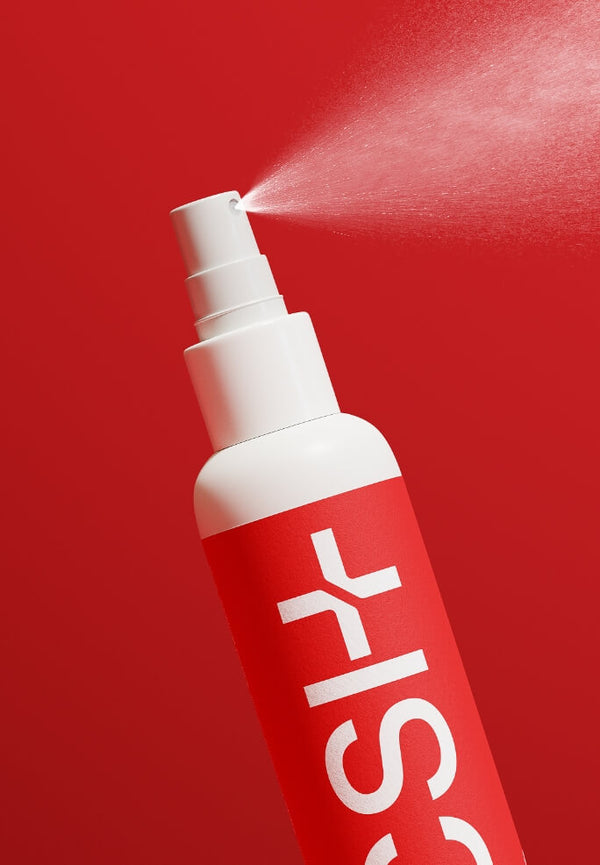
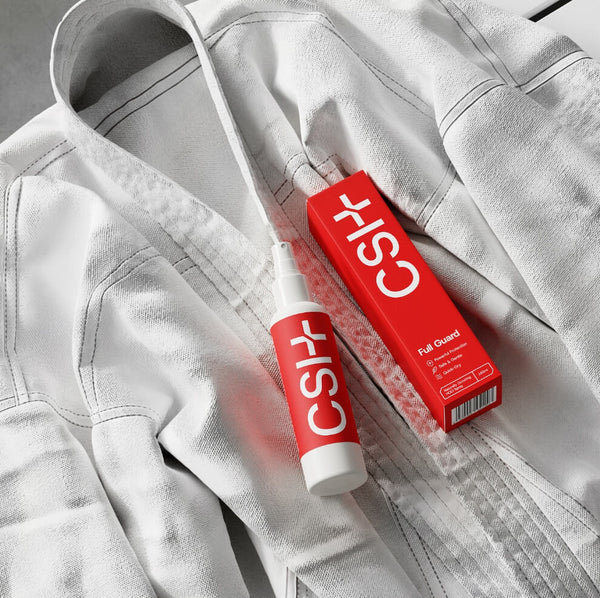
Full Guard is a registered cosmetic spray built around this idea. It is a fine mist of 200ppm of 95 percent pure HOCl, held at a skin-friendly pH of 5.5 to 6.5, which is close to the skin's own. It is rinse-free and air-dries in around 60 seconds, so you can mist a raw patch on your neck without rubbing, without scrubbing and without a trip to the sink. There is no alcohol to draw out moisture and no perfume to set off a reaction on skin that is already sensitised.
In practice that means you can lift away stale sweat and mat grime from a scuffed area while it stays comfortable rather than stinging. The point is to keep the surface clean and fresh so the skin can get on with settling naturally. It is a cleanse, not a repair. That distinction matters, and I will come back to it.
A simple post-training approach for stressed patches
- As soon as you are off the mats, mist friction-stressed areas lightly rather than wiping hard. Let the spray do the work so you are not dragging across an already roughened surface.
- Give it the 60 seconds or so it needs to air-dry. No towelling, no rubbing.
- Follow up, once the skin is dry, with a plain fragrance-free moisturiser to support the moisture barrier while it recovers.
- Keep clothing loose over the area where you can. Less rubbing means a more comfortable settle.
This same sequence works far beyond the gym. A gym-goer with a chafed patch from a weight belt, a hiker with a scuffed heel, or someone dealing with everyday friction from tight seams can all use the same gentle mist-and-moisturise routine. It is not a contact-sport trick. It is just a kinder way to care for skin that has been physically stressed.
Mat burn, gi burn and turf burn: the same friction problem in different clothes
Dealing with the burn itself rather than the daily routine? The CSH Turf & Mat Burn First Aid Kit (£14.89) covers the clean, cool and cover steps: sterile saline, burn gel, non-adherent dressings and tape in one gym-bag box. A first aid kit for minor friction burns, not a medicine - anything spreading or not settling needs a pharmacist or GP.
The names follow the surface that caused them. Mat burn comes from skin dragging across the mat. Gi burn comes from the collar, sleeves or a partner's jacket rubbing during grips and passes, which is why it turns up on the neck, jawline and forearms so often. Turf burn is the outdoor cousin from artificial pitches, and it is the roughest of the three because the surface adds debris to the friction.
All three are friction injuries: the top layer of skin is scuffed away, leaving a patch that is red, raw, warm and tender. The care principles that follow apply across the set, though anything with grit or debris in it needs a proper flush first, which is covered in the guide to treating turf burns from 3G pitches.
Face and neck friction: the awkward spots
Gi burn on the face and neck is its own annoyance, partly because it is visible and partly because the skin there is thinner and more reactive than on a forearm. A few things make a real difference.
- Keep the area clean and leave it alone. Scuffed facial skin does not want scrubbing, exfoliating acids or a new active ingredient introduced on top of it. Simplify the routine while it settles.
- Skip shaving over the patch until it has calmed down. Dragging a blade over freshly scuffed skin restarts the whole process.
- Mind the collar next session. Recurrent gi burn in the same spot usually means a stiff collar and heavy grip fighting rather than bad luck. A softer, well-broken-in gi and trimmed nails help.
- Watch for a pattern that keeps returning in the same place, since persistent friction irritation in one spot is worth mentioning to a pharmacist or GP rather than accepting as normal.
Anything that blisters, spreads, weeps, forms a defined ring or is not settling as expected is no longer a friction question. That is a clinician's call, not a skincare one.
Preventing the next one
Friction damage is largely preventable, and the fixes are equipment-level rather than skincare-level. A rashguard under the gi cuts skin-to-fabric drag on the torso and arms. Spats do the same job for the legs in no-gi. Well-fitting kit that does not bunch reduces the repeated rubbing that creates hot spots, and keeping your nails short protects everyone else's skin as much as your own. Where a spot chafes session after session, treating the cause with kit is far more effective than treating the effect with products afterwards.
Keeping expectations honest
I want to be clear about what a cosmetic mist does and does not do, because honesty is the whole point of how we do things at CSH. Full Guard is a cleansing spray. It keeps friction-stressed skin clean, fresh and comfortable. It is not a wound product, and it is not there to speed anything up or fix damage. Its job is to remove the day's build-up gently so your skin is not sitting in stale sweat while it settles on its own.
And a genuine safety note, from someone who has trained through plenty of scrapes. Broken skin is a different situation from a superficial scuff. If you have skin that is actually broken, weeping, spreading or simply not settling down over a few days, that is a conversation for a pharmacist or your GP, not something to manage with a cosmetic spray. Cleanliness and comfort are what a mist offers. Anything beyond that deserves proper advice.
For the bigger picture on building a full routine around training, our complete combat sports skin care guide ties all of this together, from friction to sweat to recovery. Look after friction-stressed skin gently, keep it clean without stripping it, and give it room to settle. Your future self, the one not wincing every time the collar moves, will thank you.
Want the full picture on Full Guard? See what makes our hypochlorous acid spray different, for sport and for skin.
Full Guard is a cosmetic skin cleansing spray registered under the UK Cosmetic Products Regulation. It is not intended to treat, cure, prevent or diagnose any condition. For any skin concern, speak to a GP, pharmacist or dermatologist.
Friction skin FAQs
How long does a mat burn take to heal?
A shallow scuff that is kept clean and left alone usually settles within several days, with any pink mark fading over the weeks that follow. Deeper friction damage, or a patch that gets re-abraded every session, takes considerably longer because it never gets an uninterrupted run at healing. If something is not improving as you would expect, or looks worse rather than better, have it looked at.
Should I train with a fresh mat burn?
That depends on where it is and whether it is broken skin. Broken skin needs covering before contact, both for your sake and your partners', and anything actively weeping is a sit-out rather than a strapping job. Training straight back onto the same patch is also the reason so many mat burns take weeks instead of days.
Can I put a normal moisturiser on gi burn?
On intact, scuffed skin a simple, fragrance-free moisturiser is usually well tolerated and helps with the tight, dry feeling. What to avoid on a fresh patch is anything active: acids, retinoids, strong fragrance or scrubs. On broken skin, that is a first-aid question rather than a skincare one, and a pharmacist is the right person to ask.

Our HOCl mist
Full Guard Hypochlorous Acid Spray
An ultra-pure, fragrance-free HOCl mist made in the UK. Rinse-free, no alcohol and no sting, it dries in a minute or two and leaves skin feeling clean and fresh, the perfect freshen-up when a shower isn't happening yet.
- 95% pure hypochlorous acid, skin-friendly pH 5.5-6.5
- Fragrance-free and non-stripping, kind to sensitive skin
- Rinse-free, dries fast, fits any bag or desk drawer
- UK-made to ISO 22716 (GMP) standards

The gym-bag essential
CSH Personal First Aid Kit
Mat burn care is simple: clean it, cover it, keep training. The CSH kit packs hydrocolloid dressings that cushion friction-damaged skin like a second skin, plus everything else a grappler's week throws up.
- How to treat mat burn – the treatment side: modern wound care, dressings and taping for training.
- ✔ 16 hydrocolloid plasters for mat burn & blisters
- ✔ Nosebleed care — 10 nasal plugs + petroleum jelly
- ✔ Instant cold pack + pro-grade 6" Tuff Cut shears
Shop the First Aid Kit — £26.99
Packed in a water-resistant ripstop Activ 2 case · contents individually restockable
Keep reading
- Acne mechanica: friction breakouts - when rubbing shows up as spots rather than burns.
- Turf burn treatment - the outdoor version, healing stages included.
- Skin barrier basics for athletes - why broken skin is a bigger deal in contact sport.
This guide covers the comfort and cleansing side of friction-stressed skin. For the acute injury itself — cleaning a fresh mat burn, dressing it so it survives training, and knowing when a graze needs more — see our guide to BJJ first aid on the mats.