Contact Dermatitis from Mats and Cleaning Chemicals
Educational information only – read the full notice
Share
Not every rash from training is an infection. Sometimes it's simply your skin reacting to something it touched - friction, sweat, or the chemicals used to clean the mats. That's contact dermatitis, and telling it apart from an infection matters, because the two are handled completely differently. General information here, not medical advice, and not about any product we sell, and fact-checked against trusted sources and the doctors we work with.
What it is
Contact dermatitis is skin inflammation caused by contact with an irritant or an allergen. The NHS describes redness, itching, dryness, and sometimes blistering or cracking, usually where the skin met the trigger (NHS: Contact dermatitis). The single most useful thing to know up front: it isn't contagious. That's a real difference from infections like ringworm, and it changes how you think about training with it.
Triggers in a gym
- Residue from strong mat disinfectants that weren't rinsed or left to dry properly before training.
- Friction and sweat against synthetic kit, particularly where it's tight.
- Reactions to detergents or fabric softeners left in washed kit.
- Tape adhesives, grip chalk and other bits and pieces that sit against the skin.
That disinfectant point is worth keeping in mind when you clean mats - see how to clean and disinfect training mats for getting contact times and drying right, so the surface people roll on isn't left coated in residue.
How to recognise it
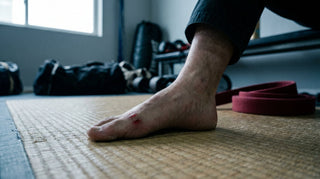
Two clues do a lot of the work. The first is location: contact dermatitis usually maps to where the trigger touched - a band where a strap sat, the patch a damp rashguard covered, the parts of you that meet the mat. The second is timing: it often flares after a specific exposure and eases when that exposure stops. Irritant reactions can come on fairly quickly, while allergic ones sometimes take a day or two to appear, which can make the culprit harder to spot. None of this is a substitute for a proper look - it just helps you describe the pattern to whoever you ask.
How it differs from infection
Contact dermatitis stays put and doesn't pass between people. Infections behave differently: they can appear, spread, and travel from person to person. The catch is that these things overlap visually, and an irritant rash can look a lot like the early stages of something else - see ringworm vs eczema for how easily lookalikes fool the eye. So "it's probably just irritation" is a reasonable working thought, not a diagnosis.
What helps
The core move is to identify and avoid the trigger where you can - switch to a non-bio detergent, rinse mats properly, sort out the bit of kit that's rubbing. If you suspect your washing routine, an extra rinse cycle to clear detergent residue is a cheap thing to try. Beyond that, treat the skin gently and support your skin barrier, since irritated skin both reacts more readily and recovers more slowly. A pharmacist can advise on soothing mild irritation and whether anything more is needed.
Common questions
Is contact dermatitis contagious?
No - that's the key difference from an infection. It's your skin reacting to something it touched, so you can't pass it to a training partner. That said, if you're not certain it's irritation rather than something infectious, treat it cautiously until it's confirmed.
Could it be the mat cleaner?
It can be, especially if a strong disinfectant wasn't rinsed or left to dry before training. If a rash maps to the parts of you that meet the mat and improves when the cleaning routine changes, that's a clue worth mentioning to whoever cleans the mats - and to a pharmacist or GP.
Should I stop training?
Mild irritation that isn't broken or weeping usually isn't a reason to stop, but removing the trigger matters. If the skin is broken, blistered or you're unsure what it actually is, get it checked before rolling.
How long should it take to settle?
Once you remove the trigger, simple irritant contact dermatitis often starts to calm down over days rather than hours, though skin that's been cracked or blistered takes longer to repair. If it's not improving after you've taken away the obvious suspects - the new detergent, the under-rinsed mats, the bit of kit that rubs - that's a sign it's worth getting checked rather than waiting it out, because it may not be simple irritation after all.
When to see a doctor
See a pharmacist or GP if a rash is severe, spreading, blistering, recurring, or you simply can't pin down the cause. If it's not settling once you've removed the obvious suspects, that's a sign it's worth a proper look rather than more guesswork.
This article is general educational information and not medical advice, and it isn't about any Combat Sports Hygiene product. If you're worried about your skin, contact a GP, pharmacist or dermatologist.
BJJ Hygiene
Good hygiene is the best foundation for healthy training. Explore the everyday hygiene routine, kit and guides for BJJ athletes, all in one place. Explore the BJJ hygiene hub →