Ringworm in BJJ: How to Spot It Early (and What to Do)
Educational information only – read the full notice
I've trained at Gracie Barra Harrogate, and ringworm is the skin issue I've seen do the rounds more than any other in a BJJ gym - on new starters, on competitors hoping it'll just settle on its own, and once, early on, on me. So here's the straightforward version: what ringworm actually is, how to spot it early, and what to do about it. It's general information, not medical advice, and it's not about any product we sell. We fact-check our health content with the dermatologists and ringside doctors we work with, but your own skin still needs a real clinician's eyes, not a blog's.
⚡ 60-Second Summary
- Ringworm is a common, very transmissible fungal skin infection in grappling sports. It is nothing to do with worms.
- Early sign: a small, slightly raised, often itchy ring or patch. Plenty of lookalikes exist, so get it checked.
- Think you have it? Cover it, stop training on it, and see a pharmacist or GP promptly.
- Clean kit every session, prompt showers and not training through it are what keep it out of a gym.
What ringworm actually is
Despite the name, there's no worm involved. It's a common fungal skin infection - doctors call it tinea corporis - caused by dermatophyte fungi, the same broad family behind athlete's foot and jock itch. The NHS describes it as a fungal infection that causes a ring-like rash on the skin (NHS: Ringworm).
It spreads through direct skin contact and through contaminated surfaces and items - mats, shared towels, headgear and the like. In grappling, the close, repeated contact is exactly why it gets passed around a gym so easily.
How to spot it early
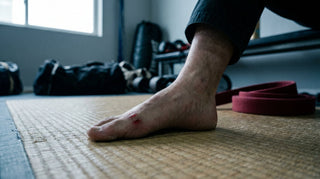
The textbook sign is a roughly circular patch with a raised, scaly edge and clearer skin in the middle - the "ring." Early on, though, it can just look like a small, pink, slightly flaky patch, and it doesn't always form a neat ring. Dermatology references note the lesions are often itchy and can appear anywhere skin makes contact (DermNet: Tinea corporis). For grapplers, the common spots are the forearms, neck, face, scalp line and torso.

Mat side
Stop taking chances on hygiene.
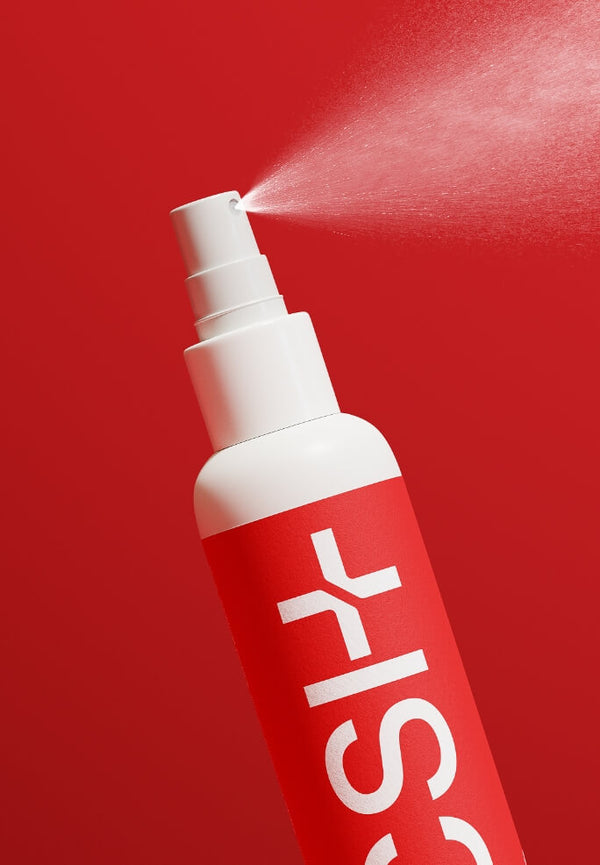
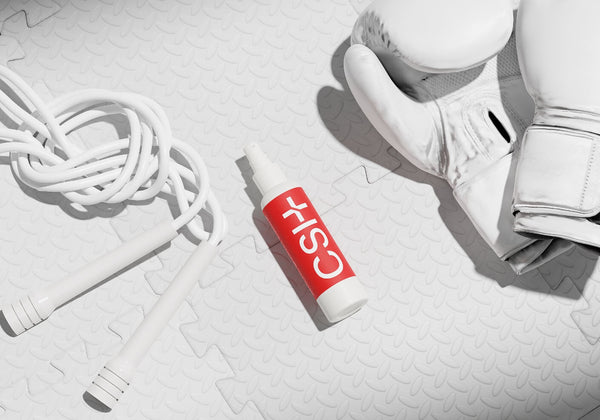
Kills 99.999% of bacteria and fungi dead. Mats, kit and skin, covered.
Trusted by Aspinall BJJ · UKBJJA · Safe MMA · British Wrestling · English MMA

A few things that should put it on your radar:
- A new round or oval patch that's scaly at the edge and clearer in the centre.
- Itchiness that doesn't settle.
- It's spreading outward over a few days, or you notice more than one patch.
- A training partner has recently had a similar-looking patch.

Here's the honest part, and the dermatologists we work with say the same: plenty of other things look similar - eczema, a contact rash from the mats, even other infections. You can't reliably tell them apart by eye. We cover that overlap in ringworm vs eczema, but the short version is that naming it is a job for a clinician, not the group chat.
Ringworm or Mat Burn? Telling Them Apart
On a Tuesday night after hard rounds, a red patch on your forearm could be either. The difference usually comes down to timing and the edge.
| Mat burn | Ringworm | |
|---|---|---|
| When it appears | During or straight after a session | Usually days to a couple of weeks after contact |
| Shape | Follows the line of the rub, often an irregular graze | Round or oval, often with a raised edge and a paler middle |
| Surface | Raw, shiny, may weep | Dry and scaly, especially at the edge |
| How it feels | Stings, especially in the shower | Itches |
| Over the next week | Gets smaller and heals if you protect it | Slowly gets bigger, or new patches appear |
| What helps | Clean it, cover it, let it heal (how to treat mat burn) | Antifungal treatment from a pharmacist, and off the mats until you've started it |


The catch: mat burn and ringworm can happen in the same place. Broken skin from a mat burn is easier for fungus to get into. If a mat burn stops healing and starts itching, or develops a scaly edge, get it checked.
Sources: NHS: ringworm
Molluscum and Folliculitis: Two Bumps Often Mistaken for Ringworm
Not every spot that appears after training is ringworm. These two turn up in grappling gyms all the time.
| Molluscum contagiosum | Folliculitis | |
|---|---|---|
| Caused by | A virus | Usually bacteria, sometimes friction or shaving |
| What it looks like | Small, firm, raised dome-shaped bumps, about 2 to 5mm, with a shiny dimple in the middle | Small red or white-headed spots around individual hairs |
| Where on grapplers | Anywhere skin touches skin: arms, torso, thighs | Areas you shave, and where kit rubs |
| Itchy? | Sometimes | Can be itchy or tender |
| How long | The NHS says it usually clears within 18 months without treatment | Mild cases often settle within days once the irritation stops |
| Full guide | Molluscum contagiosum in grapplers | Folliculitis from grappling |


Molluscum gets passed around combat sports too. Doctors have published a case in a mixed martial arts fighter under the name "molluscum gladiatorum". It spreads through direct skin contact, so don't squeeze or scratch the spots, and don't share towels.
Sources: NHS: molluscum contagiosum; Lee SK. J Cutan Med Surg 2013;17:151-2
What to do if you think you have it
Two priorities: get it looked at, and stop spreading it.
Get it assessed. A pharmacist is a great first port of call in the UK and can advise on whether a minor case is something you can manage yourself or whether you need a GP. See a GP if it's on your scalp, if it's widespread, if it's not improving, or if you're unsure what it is. This article can't diagnose you - only a healthcare professional can.
Stay off the mats until you have the all-clear. Training with an active, uncovered infection risks passing it to everyone you roll with. We go into the etiquette in when to stay off the mats and pre-competition skin checks. Tell your coach - a good gym, mine included, would much rather you spoke up than spread something around the room.
Reducing the risk in the first place
You can't make mat sports risk-free, but basic hygiene meaningfully lowers exposure. Public-health guidance for contact-sport athletes points to the same habits every time (CDC: Ringworm):
- Shower as soon as you can after training - there's a simple routine in the post-training shower routine.
- Wash your kit after every session and dry it fully; damp gear is a fungal paradise.
- Don't share towels, and keep your own off the shared bench.
- Keep mats clean - clubs should have a routine, which we outline in how to clean and disinfect training mats.
- Cover any broken skin and keep an eye on new patches.
Can You Get Ringworm From the Gym?
Yes. Where in the gym you pick it up says a lot about how likely it is.
The NHS says ringworm spreads through close contact with an infected person or animal, and through infected objects such as towels and bedsheets. In a grappling gym you get all of that at once. In a weights-and-cardio gym, the realistic routes are more limited.
| Where | How ringworm could spread | What to do |
|---|---|---|
| Mats | Skin-to-skin contact with an infected partner, and the mat surface itself | Mats cleaned every day, and no training with an untreated rash |
| Shared towels | A classic route named by the NHS | Your own towel, always |
| Benches and equipment | Bare skin on a surface someone else has just sweated on | A towel between you and the bench |
| Changing room floors and showers | Warm, damp floors (more of an athlete's foot risk) | Flip-flops in the showers, and dry your feet properly |
| Kit bags | Damp kit sealed in a bag for hours | Get kit out and into the wash the same day |
Real-world case: a national wrestling squad in Germany
Over about two years, ringworm kept coming back in children and teenagers training with the national wrestling squad in Leipzig. When dermatologists tested them, the fungus responsible (Trichophyton tonsurans) was found in 21 of 25 young wrestlers, plus a trainer. It was also grown from samples taken from the mats and floors in the training centre.
Real-world case: a school wrestling team in Mexico
In a school fighting team in Mexico, doctors found the same fungus in 4 of the 7 team members they tested. Two had visible ringworm, but two had no rash at all and were carrying it anyway. The fungus was also found on one of the four training mats they sampled.
That second case is the one to remember: not everyone passing ringworm around knows they have it. That's why daily mat cleaning, clean kit and your own towel matter even when nobody at the gym has an obvious rash.

How common is it in wrestling-style sports generally? A 2022 review of studies on ringworm in wrestlers and other contact athletes found reported rates varying hugely, from 2.4% of athletes up to 100% in some outbreak settings. That range is exactly why awareness in the gym matters.
Sources: NHS: ringworm; Zalewski A et al. J Clin Med 2022;11:4066
Where ringworm shows up on grapplers (and why)
Ringworm follows contact, so the map of common sites is basically a map of where you touch other people and the mat. Forearms and wrists lead the list, followed by the neck and collar line, the face and hairline, and the torso. Legs see it too, especially in no-gi where more skin is exposed. Scalp involvement is its own category, called tinea capitis, and it is a straight-to-the-GP situation rather than a pharmacy one, particularly in kids' classes where it spreads easily.

Gi versus no-gi changes the pattern a little rather than the risk a lot. A gi covers more skin but holds sweat against it for the whole session, while no-gi exposes more skin to direct contact. Either way the same habits do the work, which is why the prevention list above does not change by ruleset.
The ringworm timeline: from exposure to all-clear
Two timing facts save a lot of confusion. First, there is a lag between picking the fungus up and seeing anything: signs commonly appear one to two weeks after exposure, sometimes longer. So the patch you notice on Friday may trace back to a session you have half forgotten, and a training partner who looks clear today is not necessarily in the clear.
Second, treatment takes longer than improvement. Antifungal creams from the pharmacy are typically used for a period of weeks according to the product's instructions, and clinicians consistently warn against stopping the moment the patch looks better, because cutting the course short is how it comes straight back. Follow the instructions on the product and the advice of the pharmacist or GP who recommended it, right to the end.
The return-to-training date is a separate decision from the "it looks better" date, and it belongs to your clinician and your gym's policy, not to how the patch looks in the changing-room mirror.
What good clubs do when ringworm goes round
When a gym has a flare-up, the difference between a one-week nuisance and a recurring problem is almost always process, not luck. The clubs that shut it down quickly tend to do the same things: they make reporting easy and blame-free, so people speak up on day one instead of hiding a patch under tape; they tighten the mat-cleaning routine, covered step by step in how to clean and disinfect training mats; they wash any loaner kit between users; and they quietly check skin at the door during the flare, the same way competitions do.
If you run a gym, the full playbook is in preventing ringworm and staph in a BJJ gym. If you train at one, the single most useful thing you can do during a flare is boring: keep your own hygiene tight and report anything suspicious early.
When to see a doctor
Speak to a pharmacist or GP if a patch is spreading, not improving after appropriate care, on your scalp or face, weeping or painful, or if you're simply not sure what it is. If skin around an area becomes hot, swollen, increasingly painful or you feel unwell, seek medical advice promptly, as that can point to a different or more serious problem. Our Chief Medical Officer, Dr Asoka Wijayawickrama - a GP and a ringside doctor for Cage Warriors - gives the same bottom line we always do: when in doubt, get it seen.
The bottom line
Ringworm is common in BJJ, usually recognisable once you know the signs, and very manageable when you catch it early and get the right advice. The two best things you can do are simple: keep your hygiene tight, and get any suspicious patch checked rather than guessing. Do that consistently and you turn ringworm from a recurring gym-wide nuisance into the occasional minor inconvenience.
This article is general educational information, written by a grappler and fact-checked against trusted public-health and dermatology sources. It's not medical advice and it's not about any Combat Sports Hygiene product. If you're worried about your skin, contact a GP, pharmacist or dermatologist.
Common questions
How common is ringworm in BJJ?
Common enough that most gyms will see it sooner or later. A warm room full of skin contact is exactly the environment the fungus likes, which is why early spotting matters more than embarrassment.
What does early ringworm look like?
Typically a small, slightly raised, often itchy ring or round patch that slowly grows outward. Several other conditions look similar, so a pharmacist or GP is the right person to confirm it, not the gym group chat.
When can I go back to training?
Follow your clinician's advice and your gym's return policy. Going back too early is precisely how it does the rounds of a whole academy.
Does washing my gi actually help?
Washing kit after every session, showering promptly and keeping mats clean all reduce the risk meaningfully. Nothing takes the risk to zero in a contact sport, which is why spotting and sitting out matter too.
Can ringworm survive on mats and kit?
Yes, dermatophyte fungi can persist on surfaces and fabric for a long time, which is why a gym's cleaning routine and your own kit-washing habits both matter. Washing kit after every session, drying it fully and keeping mats on a proper cleaning schedule all cut the surface side of the risk, and none of it replaces the golden rule of not training with an active patch.
Should I tell my training partners?
Yes, and it is less awkward than it feels. A quiet word to your coach and to recent partners means they can check their own skin early, when it is easiest to deal with. Everyone who has trained long enough has been on both ends of that conversation. Normalising it is precisely what keeps a gym's outbreak small.
Keep reading
- Ringworm vs eczema – the lookalikes, and how a clinician tells them apart.
- Preventing ringworm and staph in a BJJ gym – run a gym? The mats-and-members side of the same problem.
- When to stay off the mats – the return-to-training call, made properly.
BJJ Hygiene
Good hygiene is the best foundation for healthy training. Explore the everyday hygiene routine, kit and guides for BJJ athletes, all in one place. Explore the BJJ hygiene hub →