When to Stay Off the Mats with a Skin Issue
Educational information only – read the full notice
Every grappler faces this call eventually: there's something on your skin, you've got training tonight - do you go? This is a responsible, plain-English guide to thinking it through. It's general information, not medical advice, and it isn't about any product we sell; ultimately a clinician decides what's safe for you and the people you train with. It's a question our ringside doctors deal with constantly - our CMO, Dr Asoka Wijayawickrama, among them.
⚡ 60-Second Summary
- The default: if in doubt, sit out. It is one session against the risk of passing something to the whole room.
- Clear stop signs: blistering, weeping, crusting, spreading, or anything new you cannot identify.
- Covering is not clearance: tape over a lesion is not a reliable barrier and does not make training safe.
- Cleared means cleared: a clinician says so, not that it looks better in the mirror.
The default: if in doubt, sit out
Skin conditions common in grappling - ringworm, impetigo, herpes gladiatorum, staph and others - spread through exactly the contact training involves. When you don't know what something is, the responsible move is to stay off until it's identified, both for your own sake and your partners'. Most experienced grapplers have either spread something or had something spread to them, and nobody enjoys being the source of a gym-wide outbreak.
Clearer reasons to stay off
- An open, weeping, crusting or blistering sore.
- A new, spreading or undiagnosed rash.
- Anything a clinician hasn't yet looked at that could be contagious - the golden crust of impetigo, or a ring-like patch that could be ringworm, for instance.
- You feel unwell or feverish alongside a skin problem.
The grey areas
Not every mark means sitting out. A healed scar, a long-standing patch of eczema you know well, or a closed-over graze usually isn't a problem. The difficulty is the in-between: a new spot you "think" is just a pimple, a faint patch that "might" be nothing. The honest test is simple - if you can't say with confidence what it is and that it isn't contagious, treat it as a reason to pause and check rather than a reason to roll. Covering a questionable patch with tape isn't a free pass; it reduces but doesn't remove the risk, and for several conditions it doesn't help much at all.
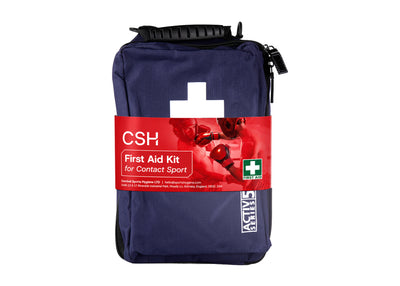
The kit-bag essential
CSH Personal First Aid Kit · £26.99
Half the sessions people sit out are coverable injuries. The difference between training and watching is usually whether you can clean and cover it properly at the gym - washproof plasters, dressings and tape, in your own bag rather than the gym's dusty communal box.
A first aid kit of CE/UKCA marked wound-care items, not a medicine. Anything spreading, hot or not settling needs a pharmacist or GP.
Get it identified, then cleared
See a pharmacist or GP, get a diagnosis, and follow their advice on when it's safe to return. "It looks better" isn't the same as "a clinician said it's no longer contagious" - some conditions keep spreading after they start to look like they're healing, and some need a defined layoff before you're clear. Rushing back early to save a couple of sessions is exactly how one person's problem becomes the whole room's.
Do the decent thing
Tell your coach - it's basic gym etiquette, and a good gym respects it rather than judging you for it. The same standards apply at competitions, where officials run skin checks precisely to stop infections spreading through a venue. Speaking up early protects your training partners, your reputation, and frankly the sport you've taken up.
A decision checklist for tonight
When you are standing in the kitchen at six o'clock trying to decide, work down this list in order. The first "yes" is your answer.
- Is it blistering, weeping, crusting or leaking anything? Stay off and get it assessed.
- Is it spreading, growing or getting more painful over the last day or two? Stay off and get it assessed.
- Is it new and you genuinely do not know what it is? Stay off until someone qualified has looked at it.
- Has anyone at the gym recently had something similar? Treat that as a strong reason to check before training.
- Do you feel unwell, feverish, or have swollen glands near it? That is a same-day medical question, not a training question.
- Is it a known, diagnosed, non-infectious thing that is stable and behaving as it always does? That is usually fine, and your clinician's advice governs.
- Is it a simple graze or mat burn on intact-ish skin that can be cleaned and securely covered? Usually fine to train, covered, if it is not weeping.
Notice what the list does not include: how important tonight's session is, whether you have a competition coming up, or whether you feel embarrassed. Those are the factors that push people into the wrong call, and they are exactly the ones to ignore.
What "cleared to train" actually means
Cleared is not the same as "it looks better", and this is where most premature returns happen.
In practice, cleared means a clinician has identified what it is, any recommended course has been completed or has reached the point they said was safe, and they have told you it is no longer transmissible or that it can be managed appropriately for contact training. For several common conditions that point arrives days after the skin looks fine to you, which is precisely why the visual test fails.
Your gym may also have its own policy on top of that, and competition organisers certainly do. Skin checks before matches are routine in wrestling and BJJ, and an unhealed or suspicious lesion can mean being pulled on the day regardless of what you or your coach think. Turning up to a competition hoping a patch goes unnoticed is a poor plan for you and an unfair one for your opponent. The competition side is covered in pre-competition skin checks.
Telling your coach without making it awkward
This is the part people dread, and it is far less of an event than it feels. A quiet word before class does it: what you have noticed, that you are getting it looked at, and that you are sitting out contact until you know. You do not owe anyone a detailed medical history, and a decent coach will not ask for one.
Say it early rather than after a week of hoping. It lets the coach keep an eye on cleaning and quietly mention it to recent partners, which is how a gym stops one case becoming six. If you have rolled with specific people while it was developing, telling them is a kindness, not an admission of guilt. Everyone who trains long enough ends up on both sides of that conversation.
One thing worth naming plainly: if a gym makes people feel that speaking up costs them standing or mat time, that gym will have more skin problems, not fewer, because everything gets hidden. Reporting has to be blame-free to work.
Staying sharp while you sit out
The reason people train through things they should not is usually the fear of losing progress, so it helps to know a week off contact is not a week off training. Drilling solo, positional study, video review, mobility, strength work and conditioning are all available depending on what you have and where it is, and none of them put anyone else at risk. Ask your coach what they would work on; most will happily point you at something useful.
Then use the time on the boring fixes that prevent the next one: wash kit properly and dry it fully, reset the gym bag, replace the towel that has been in there since March, and get your nails cut. Coming back a few days later than you would like costs you very little. Coming back too early and passing something to half the room costs everyone considerably more.
The mistakes people make
Most bad calls here come from one of a few familiar places, and they're worth naming so you can catch yourself making them:
- "It's probably nothing." The optimism that talks you onto the mat because you don't want to miss a session. If you're having to reassure yourself, that's usually your answer.
- "It looks better, so I'm fine." Treating an improving appearance as the all-clear, when several conditions stay contagious well after they start to fade.
- The tape fix. Covering a patch and assuming that makes it safe - which, for many conditions, it simply doesn't.
- Saying nothing. Keeping a private judgement call to yourself instead of telling the coach, which turns one person's risk into the whole room's problem.
The fix for all four is the same: when you're genuinely unsure, get it identified and cleared before you roll, not after. That costs you a session or two at worst, versus potentially seeding something across the whole gym.
Common questions
Can I train if I cover it up?
Covering a lesion reduces risk but doesn't reliably remove it, and for several contagious conditions it isn't enough on its own. If something is undiagnosed or could be catching, the safe answer is to get it checked first rather than tape over it and roll.
How long do I have to stay off?
It depends entirely on what it is - there's no single number. That's exactly why getting a diagnosis matters: a clinician can tell you when you're no longer contagious, which is the only answer worth acting on.
What if I'm not sure it's anything?
Then treat "not sure" as your answer and check it before you train. A quick visit to a pharmacist is a small price next to passing something around the room.
My coach said it's fine - is that enough?
Coaches know grappling, but they're not clinicians, and an undiagnosed or contagious-looking issue still needs a medical eye. By all means tell your coach - that's the etiquette - but "the coach had a look" isn't the same as being cleared by a pharmacist or GP for something that might spread.
When to see a doctor
Any undiagnosed, spreading, painful or weeping skin problem should be assessed before you return to training. If you feel unwell with it, seek advice promptly or call NHS 111.
Related reading: impetigo in wrestling and molluscum contagiosum in grapplers.
This article is general educational information and not medical advice, and it isn't about any Combat Sports Hygiene product. If you're worried about your skin, contact a GP, pharmacist or dermatologist.
BJJ Hygiene
Good hygiene is the best foundation for healthy training. Explore the everyday hygiene routine, kit and guides for BJJ athletes, all in one place. Explore the BJJ hygiene hub →
Many of the skin issues above start life as an untreated knock or graze — our complete guide to contact sports first aid covers treating wounds properly at the time, which is the best way to avoid this article's decision tree altogether.