MRSA in Contact Sports: What the Evidence Says
Educational information only – read the full notice
Share
MRSA gets talked about in fearful, almost mythical tones, and it deserves to be understood calmly and accurately instead. It's a genuine consideration in contact sports, but it's also manageable with sensible habits and prompt medical care. This is general information only, not medical advice, and it's not about any product we sell. Antibiotic resistance is genuinely a specialist subject, so we fact-check posts like this one with the medical team we work with, including our infectious-diseases and microbiology adviser, Dr Jen Mae Low.
What MRSA actually is
MRSA stands for meticillin-resistant Staphylococcus aureus. In plain terms, it's a form of the common staph bacterium that has become resistant to some of the antibiotics normally used against it, which makes infections harder to treat. The NHS explains that, like ordinary staph, it can live harmlessly on the skin or in the nose, and only causes problems if it gets into the body through a break in the skin (NHS: MRSA). So MRSA isn't a different, exotic disease - it's the same staph infection picture, just with fewer easy treatment options.
Watch: the doctor's version
Dr Asoka Wijayawickrama on why staph gets a foothold in grappling gyms, and why it is not simply a question of dirty mats.
Why contact sports come up in the conversation
Skin-to-skin contact, shared equipment and the minor skin breaks that come with grappling are why clusters of skin infections - including resistant ones - have been reported among athletes in close-contact sports. The risk factors are completely ordinary: it's the sheer volume of contact and the shared surfaces, not anything unusual about the people involved. That's also why it isn't cause to panic, just a reason to take any skin infection seriously rather than shrug it off.
How an MRSA skin infection can look
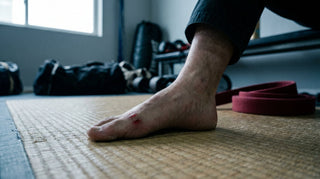
There's nothing that lets you visually label an infection as "MRSA" rather than ordinary staph - that's a job for a clinician, sometimes with a swab to check. What you can recognise is a skin infection that needs attention: a red, swollen, painful lump or sore, often warm to the touch and sometimes full of pus, that's getting worse rather than better. People sometimes mistake an early abscess for a spider bite. The point isn't to identify the exact bug yourself; it's to notice "this needs a doctor."
The single most important point
Never try to manage a suspected skin infection with leftover antibiotics, a mate's old prescription, or by squeezing and draining it yourself. With a potentially resistant infection that approach is worse than useless: it can drive the infection deeper, help it spread, and inappropriate antibiotic use is part of how resistance develops in the first place. If a sore is hot, painful, spreading or full of pus, that's a clinician's call - full stop.
Reducing the spread
The practical habits are the familiar ones, and they matter more, not less, when something resistant might be circulating:
- Cover cuts, grazes and mat burns until they've healed.
- Don't share towels, razors, bar soap or water bottles.
- Shower promptly after training and wash your kit between sessions.
- Keep shared equipment and surfaces clean - see towel and equipment hygiene and how to clean and disinfect training mats.
- If someone in the room has a confirmed infection, take any coach guidance on cleaning and sitting out seriously.
Common questions
Is MRSA always serious?
Not necessarily - many MRSA skin infections start as the same ordinary-looking boils and sores as other staph infections. The reason it's taken seriously is that resistance makes it harder to treat if it does take hold, which is an argument for prompt medical care, not for panic. The worst outcomes tend to follow people self-treating or ignoring something that's clearly getting worse.
How would I know if it's MRSA and not normal staph?
You wouldn't, by eye - and you don't need to. Telling them apart is a clinician's job, sometimes with a swab. What you can do is recognise a skin infection that needs attention and get it seen, rather than trying to work out the exact bug yourself.
Can I keep training with a covered sore?
An open, weeping or undiagnosed sore is a reason to pause and get cleared, not to tape over and carry on - see when to stay off the mats. Covering a wound is sensible, but it isn't a substitute for getting an active infection properly assessed.
Does hand sanitiser or a body wash protect me from MRSA?
Good general hygiene - washing promptly, not sharing kit, covering cuts - lowers your exposure, but no wash or sanitiser makes you immune, and none of it is a substitute for medical care once an infection has started. Think of hygiene as reducing the odds, not as a shield.
When to see a doctor
Get any painful, spreading or pus-filled sore checked, and seek prompt advice if you feel unwell or feverish, or the redness is advancing quickly. Tell the clinician you train contact sports - that context genuinely helps them weigh things up - and mention it if you've previously had a skin infection that was slow to clear. If you're unsure how urgently to act, NHS 111 can help you decide.
This article is general educational information and not medical advice, and it isn't about any Combat Sports Hygiene product. If you're worried about your skin, contact a GP, pharmacist or dermatologist.
BJJ Hygiene
Good hygiene is the best foundation for healthy training. Explore the everyday hygiene routine, kit and guides for BJJ athletes, all in one place. Explore the BJJ hygiene hub →