The Best Moisture Wicking Towel for Training: What to Look For
The towel is the most overlooked item in a training bag, and the one that touches your skin the most.
Most people train with whatever came out of the airing cupboard: a full-size cotton bath towel that soaks up half a litre of water, takes a day and a half to dry, and lives permanently damp in a holdall between sessions. It is heavy, it is bulky, and by Wednesday it smells.
A proper training towel solves a genuinely different problem to a bathroom towel. Here is what actually matters when choosing one, why microfibre behaves so differently to cotton, and how to keep it in the condition that makes it worth owning.
⚡ 60-Second Summary
- Why not cotton: a bath towel holds water rather than releasing it, so it stays damp in a bag all week.
- What to look for: microfibre, quick-drying, packs small, big enough to actually dry with, and light enough that you carry it every session.
- The rule that matters most: your own towel, every session, washed after every use. Never a shared one.
- Care: wash warm with a normal detergent dose, skip the fabric softener entirely, and dry it fully before it goes back in the bag.
Why a bath towel is the wrong tool for training
Cotton towelling is built to be absorbent and plush, which is exactly right beside a bath and exactly wrong in a gym bag. Cotton holds moisture inside the fibre itself, so a used towel stays genuinely wet for hours. Fold it into a bag straight after a shower and it is still wet when you get home, still damp the next morning, and by the third session it has developed the smell everyone recognises.
Size makes it worse. A full bath towel takes up most of a small holdall, which means it either does not come with you or something else gets left behind. Plenty of people end up in the worst possible position: no towel at the gym, so they either skip the shower or use whatever is hanging up in the changing room. Both of those are worse than the towel problem you started with.
Microfibre works differently. The fibres are very fine and the structure moves water across the surface of the fabric rather than trapping it deep in the pile, so it absorbs quickly and then releases that moisture into the air far faster than cotton. In practice that means a towel you can wring out, hang up, and find dry in a couple of hours rather than a day.
What to look for in a training towel
- Genuinely quick-drying. This is the whole point. The test is simple: after use, does it dry before your next session, or does it travel home damp?
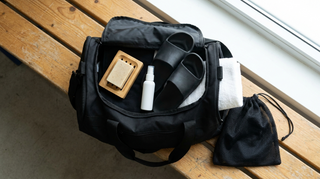
- Packs small and light. A towel you resent carrying is a towel you leave at home. It should disappear into a bag pocket rather than dominate the main compartment.
- Big enough to be useful. There is a limit to how small is sensible. A face-cloth-sized square will not dry you after a shower. Look for something that covers you properly while still packing down.
- Smooth against the skin. Skin that has just spent an hour on the mats or under a base layer does not want a rough weave dragging across it.
- Easy to wash and quick to dry at home. The whole system only works if the towel is back in the bag clean before the next session.
- Cheap enough to own two. One in the bag, one in the wash, is the arrangement that actually solves the problem. That is much easier at a few pounds each than at premium prices.
One thing to be sceptical about: any towel making claims about preventing skin problems. A towel is a textile. What protects you is the habit of using your own, washing it after every session, and drying it fully. That is the mechanism, and it does not require anything exotic in the fabric.
The habit that matters more than the towel
Choosing a good towel is the easy part. The habit is what does the work, and it comes down to three rules.
Your own towel, always. Shared towels move whatever is on one person's skin onto the next person's, and in a contact sport that is a route worth closing permanently. Communal towels in a changing room, a mate's spare, the one hanging by the sink at the gym: all the same problem. Bring your own and the question never arises. There is more on this in towel and equipment hygiene.
Wash it after every session. Not every few sessions. A towel that has dried you once is used kit, exactly like a rashguard, and it goes in the wash on the same schedule. This is where owning two makes the difference between a system and an intention.
Out of the bag when you get home. A damp towel sealed in a holdall overnight undoes everything else, and it will pass its smell to whatever is in there with it. Out, hung up, dried fully, then back in the bag clean.
Get those three right and the towel stops being the grim item at the bottom of the bag. It also fits neatly into the wider post-training routine covered in the post-training shower routine, where drying thoroughly, especially between the toes, is one of the steps people most often rush.
How to wash a microfibre training towel
Microfibre rewards slightly different treatment to cotton, and one mistake in particular ruins it.
- Never use fabric softener. This is the big one. Softener works by coating fibres, and coated microfibre stops absorbing. A towel that has been through softener a few times feels lovely and no longer dries you, which is the entire job gone.
- Use a normal detergent dose, not a heaped one. Excess detergent leaves residue in the fibres, which does the same thing as softener at a slower pace and traps odour along the way.
- Wash warm rather than hot, following the care label. Very high temperatures can damage synthetic fibres over time.
- Wash it with kit rather than with fluffy cotton towels. Microfibre attracts lint, and a load of cotton towelling is the fastest way to make it fluffy and less effective.
- Air dry, or tumble on low if the label allows. High heat is hard on synthetics, and microfibre dries so fast that the dryer is rarely necessary.
If a towel has become less absorbent, it is usually residue rather than age. A wash with a normal detergent dose and no softener, or the stripping method in laundry stripping for sports kit, often brings it back. The full routine for towels specifically is in how to wash a microfibre training towel.

For your bag
CSH Moisture Wicking Sports Towel
A quick-drying microfibre training towel that packs down small enough to live in your bag permanently. Cheap enough to own two, so there is always a clean one ready for the next session.
- Quick-drying microfibre, not water-holding cotton
- Packs small, light enough to carry every session
- Smooth against skin that has taken a session's worth of contact
- £3.99, and included free with the Full Guard 3-bottle bundle
Common questions
How often should I wash a gym towel?
After every single use. A towel that has dried you once is used kit and belongs in the wash with the rest of it. The practical way to make that realistic is to own two, so one is always clean and in the bag while the other is being washed.
Is microfibre better than cotton for training?
For a training bag, yes, and the reason is drying time rather than absorbency. Cotton holds water in the fibre and stays damp for hours in a bag; microfibre releases it and dries quickly. For a bathroom at home, plush cotton is lovely. For kit that lives in a holdall, it is the wrong material.
Why has my microfibre towel stopped absorbing?
Almost always fabric softener or too much detergent. Both coat the fibres and stop them taking up water. Wash it with a normal detergent dose and no softener, and if it has had months of build-up, a stripping soak usually restores it.
What size training towel do I need?
Big enough to dry yourself properly after a shower, small enough that you carry it without thinking. Very small towels pack beautifully and then leave you damp, which is how people end up back at the changing-room towel rail.
Can I share a towel if I fold it?
No. Folding does not create a clean side in any meaningful sense, and shared towels are one of the easiest routes to close in a contact sport. Bring your own; it costs a few pounds and removes the question entirely.