Zinc Oxide Finger Tape for BJJ: How to Use It (and How It Differs from Kinesiology Tape)
Educational information only – read the full notice
Walk into any BJJ gym and you will see half the room with taped fingers.
Grip fighting puts repeated load through small joints, and over a few years most grapplers end up with fingers that ache, click or object to being jammed into a collar. Tape is what people reach for, and zinc oxide tape is the one that has been in kit bags for decades.
Here is what zinc oxide tape actually is, how it differs from the colourful kinesiology tape you see on shoulders and knees, how to use it on fingers, and the hygiene side that almost nobody talks about.
⚡ 60-Second Summary
- What it is: a rigid, non-stretch cotton tape with a zinc oxide adhesive. It limits movement rather than stretching with you.
- Not the same as kinesiology tape: that one is elastic and designed to move with the skin. Different tape, different job.
- Common uses: buddy taping two fingers together, or wrapping a single joint for support during grip-heavy training.
- Hygiene: clean dry hands, fresh tape every session, never over broken skin, and off at the end of training.
- Important: tape is support, not treatment. Persistent pain, swelling or loss of movement is a physio or GP question.
What zinc oxide tape actually is
Zinc oxide tape is a rigid cotton tape coated with an adhesive containing zinc oxide. The two things that define it are that it does not stretch and that it sticks firmly, which is exactly what you want when the point is to limit how far a joint travels.
It has been standard issue in combat sports, climbing and team sports for a long time, mostly because it is simple, cheap and it stays put through sweat better than most alternatives. The rigidity is the feature: a tape that stretches under load would let the joint go exactly where you were trying to stop it going.
For fingers, the practical version usually comes in a narrow width, commonly around 1.25cm, because a wide strip on a finger just bunches up and peels off in the first round.
Zinc oxide tape vs kinesiology tape: which do you need?
These get used interchangeably in conversation and they are built for opposite purposes.
| Zinc oxide tape | Kinesiology tape | |
|---|---|---|
| Stretch | Rigid, essentially none | Elastic, designed to move with the skin |
| Purpose | Restrict movement and support a joint | Allow movement while providing feedback on the skin |
| Wear time | One session, then off | Often worn for days at a time |
| Typical use | Fingers, thumbs, ankles, wrists | Larger muscle groups, shoulders, knees |
For finger taping in grappling, rigid tape is what the job calls for. Searching for "kinesio finger tape" usually turns up people who actually want the rigid kind, because the elastic sort will not hold a joint where you are trying to hold it. Neither tape is a treatment for an injury, and neither is a substitute for getting a painful finger properly assessed.
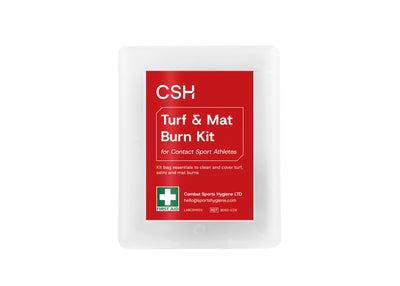
Goes with the tape
CSH Turf & Mat Burn First Aid Kit · £14.89
The taping technique in this guide pairs with the rest of the patch-up: sterile saline, burn gel and non-adherent dressings live alongside tape in the CSH Turf & Mat Burn First Aid Kit.
A CE/UKCA marked first aid kit for minor friction burns, not a medicine. Anything spreading or not settling needs a pharmacist or GP.
How grapplers tape fingers
Two methods cover most of what you will see on the mats.
Buddy taping. Two adjacent fingers are taped together so the stronger one supports the other. Wrap around both fingers between the knuckles, above and below the middle joint, leaving the joints themselves free to bend. Keep it snug rather than tight, and make sure both fingertips stay a normal colour.
Single-joint wrapping. Tape is wrapped around one finger either side of a joint, sometimes in a figure-of-eight or X pattern across the joint itself, to limit how far it extends. This is the common approach for a joint that objects to being loaded in a collar grip.
Whichever you use, a few rules apply. Tear or cut strips before you start, since fiddling with a roll mid-round is a nuisance. Do not wrap so tightly that you get throbbing, numbness, tingling or a colour change; if that happens, take it off and redo it looser. Leave the knuckle creases free enough to make a fist. And take the tape off at the end of the session rather than leaving it on overnight.
The hygiene side nobody mentions
Tape sits against your skin for a whole session, gets sweated into, touches the mat, the gi and your training partners, then usually gets stuffed back in a bag.
- Fresh tape every session. Peeling off yesterday's tape and reusing it is not the economy it appears to be.
- Clean, dry hands before taping. Tape traps whatever is on the skin underneath it, and it sticks far better to clean dry skin anyway.
- Never tape over broken skin or an unidentified patch. Cover a graze with an appropriate dressing rather than sticking rigid tape straight onto it, and if you are unsure what a patch is, that is a reason to get it checked rather than to hide it under tape. Our guide to when to stay off the mats covers that call.
- Tape off, hands washed, at the end. The skin underneath has been warm and damp for an hour and wants air and a proper wash.
- Keep the roll clean. A roll rattling loose in the bottom of a kit bag picks up everything in there. Keep it in a pocket or a small case.
- Never share a part-used roll that has been handled with mat hands all session.
- Keep your nails short. Taped or not, nails are what open up your partners' skin, and it is the cheapest courtesy in the sport.
When tape is not the answer
Tape supports a joint for a session. It does not fix anything, and it is very good at letting you ignore a problem that is getting worse.
If a finger is painful at rest, swollen for days, visibly deformed, will not bend or straighten properly, or if you are taping the same joint every single session for months, that is the point to see a physiotherapist, GP or hand specialist rather than buying more tape. Grip-sport hands take genuine wear, and the athletes who keep training into their forties are generally the ones who got assessed early rather than the ones who taped over it for two years.
For your bag
CSH Zinc Oxide Finger Tape
Rigid zinc oxide tape in a finger-friendly width, for buddy taping and single-joint support through grip-heavy training. Cheap enough to use a fresh strip every session, which is exactly how tape should be used.
- Rigid, non-stretch cotton tape with a firm hold
- Narrow width made for fingers, not cut down from a big roll
- Stays put through a sweaty session
- £3.99, small enough to live in a bag pocket permanently
Common questions
What width tape is best for fingers?
A narrow tape, commonly around 1.25cm, is what most grapplers use. Wider tape bunches, creases and peels off a finger quickly, and cutting a wide roll down lengthways is fiddly and leaves ragged edges that lift.
Can I reuse zinc oxide tape?
No, and you would not want to. Adhesive that has been through a session is not going to hold properly, and tape that has been against sweaty skin and the mats is not something to stick back on the next day. Use a fresh strip each session.
Does tape stop finger injuries?
Tape provides support and limits how far a joint travels, which is why athletes use it, but it is not a guarantee against injury and it is not a treatment. If a finger keeps hurting, the honest answer is assessment by a physio or GP rather than more tape.
Should I tape before or after warming up?
Most people tape before training, on clean dry hands, and it is worth doing it before your hands get sweaty because tape sticks far better to dry skin. Check the fit after a few minutes of movement and redo it if it has gone too tight or too loose.
Can I tape over a graze or mat burn?
Do not put rigid tape straight onto broken skin. Clean the graze and cover it with an appropriate dressing first, and if it is weeping or you are not sure what it is, that is a reason to sit out contact and get it looked at rather than tape over it.
Finger tape is one item in a bigger loadout — see what needs to be in a grappler's first aid kit for the rest, and the BJJ & MMA first aid guide for treating the jammed fingers the tape is supporting.