Safer Healthcare in Contact Sports | The Campaign
We want one recognised standard for hygiene, safe training and medical cover across contact sports in the UK. We've been working on this since 2024 with athletes, coaches and medics, and with the governing bodies we partner with.
Why we're doing this
Every gym we speak to has the same stories. Half a beginners' class off with ringworm. A first aid kit with a triangular bandage in it and nothing else. A comp with no medic in the building. A lad carrying on with a cut that needed closing. Someone getting knocked and training the next day anyway.
Coaches care about this stuff. The problem is nobody has ever written down what good looks like, so every gym works it out on its own, usually after something has gone wrong. The sport has grown a lot faster than the bits around it.
So we've written it down. One standard any gym can adopt, governing bodies can recognise, and parents and members can actually understand. Hygiene, training safely, medical cover, and looking after athletes properly when things go wrong.
Why it's called Safer Healthcare
Back in the early 2000s the NHS went through a big shift on patient safety. Reporting incidents, using checklists, and accepting that most harm comes from how things are set up rather than one person being careless. The web address saferhealthcare.org.uk used to belong to a patient safety resource run with the BMJ. It now points here, and we think that's a decent home for it, because the same ideas work on a mat on a Tuesday night. We've written about that properly here: What Contact Sports Can Learn From Patient Safety.
The standard
1. Hygiene
A written hygiene policy up on the wall. Mats cleaned after every session with a tested product, on a rota someone actually follows. Shared kit cleaned on a schedule. Every new member told the rules on day one. Guides: how to clean BJJ mats, the post-training shower routine, hygiene etiquette for new white belts, how to clean boxing and MMA gloves.
2. Training safely
A skin policy everyone knows: if there's something on your skin you can't explain, get it looked at before you train, and nobody gives you grief for it. Coaches who know what to do with cuts, mat burns, sprains and blood on the mat. A concussion rule, which is if in doubt, sit out. Guides: BJJ and MMA first aid, rugby first aid injuries, football pitch-side first aid, turf burns: clean, cover, heal.
3. Medical cover
A named first aider at every session. A first aid kit that meets BS 8599-1, with the contents listed and checked once a month. Proper medical cover at every competition. The venue address and nearest A&E written up somewhere visible. Guides: the complete guide to contact sports first aid, what belongs in a grappler's first aid kit.
4. Athlete and patient safety
Skin checks as a normal part of training. A log of skin cases and injuries, even if it's a notebook, so the gym can spot patterns. Members told when there's been a case so they can check themselves. Proper safeguarding for kids' classes. This is the bit that comes straight from patient safety. Report it early, learn from it, fix the setup.
5. Getting it recognised
The standard adopted in writing and displayed. At least one accredited coach per gym. Gyms listed as signatories. Governing body recognition, so a safe gym means the same thing in Grimsby as it does in Guildford. The full checklist is here: Training Safely in Contact Sports: The Standard Every Gym Should Meet.
The Hygiene Library
All the guides and checklists behind this live in the CSH Hygiene Library. Skin health, first aid, kit care, mat cleaning, training safely. It's free and it's the page to send your members to. If you bookmark one thing from this campaign, make it that.
Who's behind it
We're hygiene partners of the UKBJJA, SAFE MMA, the British Wrestling Association and the English Mixed Martial Arts Association (EMMAA), and we build this campaign with the coaches, medics and athletes who use it.
"We kept seeing the same things go wrong in different gyms. Ringworm going round a class, lads training on with cuts, comps with nobody medical there. None of it is complicated to sort, it just needs a standard that everyone recognises. We've been working towards this since 2024 and it's about time it existed."
Eddie Bye, Co-founder, Combat Sports Hygiene
"Every coach I talk to would rather have a clear standard than guess at it. They just haven't had one, and they haven't had anyone making the kit and the training easy to get. Training safely is how you keep your best people on the mats all year. It's not a soft option, it's the sensible one."
Jack, Co-founder, Combat Sports Hygiene, gym partnerships
The kit and support
A standard is no use if the things it asks for are hard to get hold of, so we make them.
- First aid: the personal first aid kit for athletes and coaches, the turf and mat burn kit for pitch and mat sports, and a BS 8599-1 club kit for gyms (email us for that one).
- Coach accreditation: an online hygiene and safety course with a certificate coaches can share.
- Gym partnerships: products, signage, accreditation and content, delivered on a schedule. Details on the hygiene partners page.
- Cleaning: the mat and gym floor cleaner for mats, and Gear Guard for gloves, pads and equipment. Both tested to BS EN standards.
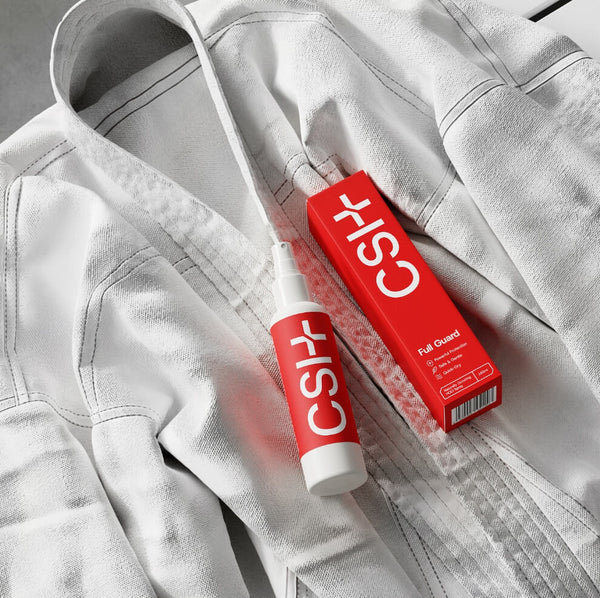
- Athlete hygiene: Full Guard, the cleansing spray to use after every session, and our guide to BJJ soap.
- Education: the Hygiene Library, free for every athlete, parent and coach.
Get involved
Gyms and clubs: adopt the standard and we'll list you as a signatory and send the printed policy, posters and kit checklist. Governing bodies and event organisers: we'd like to talk about recognition, and about medical cover at grassroots comps. Medics, physios and first aiders: tell us where we've got it wrong and help us make the protocols better. Email hello@sportshygiene.com and you'll get one of us.
The guides linked from this page are not medical advice. Skin problems, injuries and health concerns should be looked at by a pharmacist, GP or first aider. In an emergency call 999. Cosmetic products mentioned are for cleansing the skin and do not treat or prevent any condition.