The Complete Guide to Contact Sports First Aid: Protocols for BJJ, MMA, Rugby & Football
Educational information only – read the full notice
Contact sports have a deal built into them. You get the intensity, the physicality and the community, and in exchange you accept that skin tears, noses bleed and ankles roll. Most of the injuries that happen on mats and pitches every week in the UK are minor. What separates a two-day recovery from a two-week layoff is usually not the injury itself. It is what happens in the first few minutes after it.
This guide covers the sports trauma management basics every grappler, fighter and player should know: how to assess an injured athlete, how to deal with blood properly in a shared training space, how to treat the everyday stuff from a personal first aid kit, and how to recognise the situations where you stop playing amateur medic and get professional help.

Why the first few minutes matter
Pitch-side and mat-side care exists because injuries are time-sensitive. A cut that gets cleaned and closed early stays a cut. Left open, sweated into and rubbed against someone else's gi for another three rounds, it becomes a possible entry point for the bacteria that cause staph infections. A sprain that gets offloaded and cooled straight away swells less, which means it moves sooner. Swelling is not healing; it is traffic. The less of it you allow in the first hour, the faster everything else gets to the scene.
"After a decade of ringside work the pattern never changes. The injuries themselves are rarely the problem — it is the ten minutes afterwards. The athlete who controls the bleed, covers the wound and gets cold on the swelling is usually back training within days. The one who trains on and 'has a look at it later' is the one I see again."
Dr Asoka Wijayawickrama, MRCGP · Ringside Medic
The universal principles: DRABC first, everything else second
Before you reach for a plaster, run the sequence that every first aid course in the country teaches, because it works:
- Danger — make the area safe. On mats, that means stopping the rounds around you. On a pitch, it means play stops before treatment starts.
- Response — talk to the athlete. A player who answers you clearly has told you a lot already.
- Airway — check nothing is obstructing it, including a dislodged mouthguard.
- Breathing — look, listen and feel. Winded is common in rugby and football; not breathing is a 999 call and CPR.
- Circulation — control any serious bleeding with direct pressure.
If any step fails, you do not move on to sorting out mat burn. You call 999. St John Ambulance publishes clear, free walkthroughs of the primary survey and it is worth every coach's time to read them at sja.org.uk.
Blood in a shared training space
Every combat gym and rugby club runs on shared surfaces: mats, pads, scrum machines, benches. Blood on any of them is a hygiene event, not just an injury. The routine is the same everywhere:
- Gloves on before you touch anyone else's blood. No exceptions, however well you know them.
- Direct pressure with sterile gauze until bleeding stops, then clean and cover with a dressing that fully seals the wound.
- The athlete does not return to contact until the wound is covered and the bleeding has actually stopped — the same logic behind rugby's blood replacement rule.
- Blood on the mat gets cleaned and disinfected before anyone rolls over it. Kit with blood on it comes off and gets washed hot.
This is not squeamishness. Blood-to-broken-skin contact is one of the routes for serious infection, and shared surfaces are exactly how MRSA moves through contact sports. If your club does not have a written blood protocol, the skin infection education hub is a good place to start building one.
Cuts, grazes and burns: the treatment sequence
For the everyday wounds — split lips, brow cuts, mat burn, turf burn — the sequence barely changes:
- Stop the bleed. Direct pressure, several minutes, no peeking every thirty seconds.
- Clean it. Saline wipe or eyewash pod, working from the wound outwards. Grit and rubber crumb come out now, not tonight.
- Cover it. Non-adherent pad or hydrocolloid plaster, taped so it stays put through sweat. A dressing that falls off mid-round protects nobody.
- Watch it. Increasing redness, heat, swelling or pus over the next 48 hours means a GP or NHS 111, not another training session. The NHS guidance on cuts and grazes covers the warning signs.
An open wound is also a two-way door. If you train with one uncovered, you are exposing yourself and donating to everyone else. Know when a skin issue means staying off the mats — it is shorter than the layoff an infection buys you.
Nosebleeds: undramatic, if you know the drill
Noses bleed in every contact sport, and most people were taught the wrong technique by a well-meaning PE teacher. The current version: sit the athlete down, lean them forward (not back — swallowed blood upsets stomachs and hides how much is being lost), and pinch the soft part of the nose, just below the bony bridge, firmly and continuously for ten minutes. No checking at minute three. Cold on the bridge of the nose helps. Once it stops: no nose-blowing, no immediate return to grappling with the face, and if sparring must continue, a nasal plug does the holding work.
Escalate when a nosebleed will not stop after 20 to 30 minutes of proper pressure, follows a significant head impact, or comes with a nose that is clearly a new shape. The first two need medical attention today; the third can be assessed within a few days, but it needs assessing.
Watch: the doctor's version
Dr Asoka Wijayawickrama on what actually belongs in a contact sports first aid kit.
Blisters, torn calluses and the skin you left on the equipment
Gripping sports manufacture calluses; calluses tear at the worst moments. Bars, gis, and ring ropes all collect their share. The management is quick: trim the loose flap with clean scissors (a ragged edge keeps catching and re-tearing), clean the raw patch, and cover with a hydrocolloid plaster that pads it through the next session. Intact blisters do better with the roof left on — it is a natural sterile dressing — cushioned by a blister plaster rather than popped in the changing room with whatever pin was available. A torn blister gets treated like the graze it is: clean, cover, monitor. Feet blister too, especially in new boots and on hot mats; the same rules apply, with extra attention because a broken-skinned foot in a communal shower is asking to meet athlete's foot.
Sprains and soft tissue: PRICE, and what has replaced it
Most athletes learned PRICE — Protection, Rest, Ice, Compression, Elevation — and it remains a sensible first-hour response. Modern sports medicine has moved the emphasis, though. The updated thinking (you will see it called POLICE, or PEACE & LOVE) keeps protection, ice and compression early but swaps prolonged rest for optimal loading: early, gentle, pain-guided movement once the acute phase settles. Total immobilisation for a week tends to produce a stiff, weak joint that re-injures.
First hour, keep it simple: off the pitch, cold pack wrapped in fabric for 15 to 20 minutes, compression bandage snug but not white-knuckle tight, foot up. After that, the NHS guidance on sprains and strains is the sensible reference for the following days. Fingers and toes in grappling get taped for support — the zinc oxide finger tape guide covers technique.
"Most of the sprains I assess were made worse in the first ten minutes, not by the tackle. Somebody insists on walking it off, finishes the half, and turns a five-day knock into a five-week one. Cold, compression and getting the weight off it early is boring advice. It is also the difference."
Dr Asoka Wijayawickrama, MRCGP · Ringside Medic

Strapping and taping: support, not armour
Tape has two honest jobs. Prophylactic taping supports a previously injured joint while it finishes rebuilding — a buddy-taped finger, a strapped ankle inside a boot. Acute taping stabilises a fresh minor injury enough to get someone comfortably off the pitch or through the last minutes of a session. What tape does not do is turn an injury that needs rest into one that does not; taping a joint so you can keep loading something torn is how small problems graduate. If a digit or joint needs tape to be tolerable for weeks on end, that is a message, and the message is "get it assessed".
Sport-by-sport: where the risks concentrate
BJJ and MMA
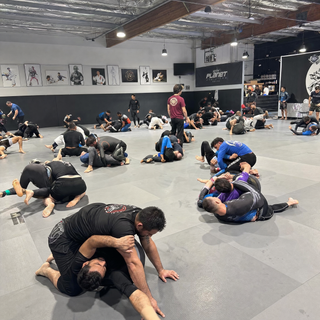
Grappling's signature injuries are friction and joint injuries: mat burn, split lips and brows, jammed fingers and toes, the occasional rolled knee, plus the ever-present skin infection risk of training skin-to-skin on shared mats. Competition adds skin checks — the IBJJF's medical rules will pull you from a bracket for visible infections, so read up on pre-competition skin checks and IBJJF skin rules before you register, and check the current IBJJF rule book for the season you compete in. The full protocol for treating mat burns in BJJ, cuts and sprains is in our dedicated guide: BJJ & MMA first aid: treating mat burns, cuts and sprains on the mats. For the day-to-day prevention side, the BJJ hygiene and MMA hygiene hubs cover routines that keep small wounds from becoming big problems.
Rugby
Rugby stacks impact on impact: heavy collisions, cauliflower ear, blood injuries with their own replacement rules, and scrums that pass skin infections around the front row with impressive efficiency. World Rugby's player welfare programme sets out concussion protocols every club should follow — see world.rugby — and our rugby first aid protocols guide covers the practical side: rugby first aid: managing blood bins, concussions and impact injuries. The wider rugby hygiene hub handles everything from scrum cap care to communal showers.
Football
Football's injury profile lives below the waist: inversion ankle sprains, knee knocks, studs raked down a shin, and turf burns from slide tackles on 3G surfaces. Head clashes happen too, and the FA's concussion guidance — "if in doubt, sit them out" — applies at every level, not just the Premier League. The pitch-side essentials are in pitch-side first aid for football: turf wounds, sprains and collisions.
Boxing and Muay Thai
Striking sports concentrate damage on the face and hands: nosebleeds, brow cuts, knuckle skin, shin abrasions from checked kicks. The corner-man basics — pressure, petroleum jelly, nasal plugs, cold — overlap heavily with the protocols above, and the boxing & Muay Thai hygiene hub covers glove and wrap hygiene, which is where most of the infection risk hides.
Cauliflower ear: the one you can prevent this week
Repeated friction and impact to the ear shears the cartilage from its blood supply; fluid fills the gap; untreated, it hardens permanently. The first aid version of the story is short: cold and compression straight after the session when an ear comes up hot and swollen, and professional drainage within the first few days if fluid has collected — after it sets, no kit in the world reverses it. An ear that becomes increasingly painful, hot and red days later may be infected, which is a medical appointment rather than a needle from a training partner who "has done loads of them". The full background is in cauliflower ear: what it is and care basics.
Mouths, teeth and the gumshield
A knocked-out adult tooth is one of the few sports injuries with a genuine countdown clock. Handle it by the crown only — never the root — and if the athlete is calm and it is clean, reimplant it straight into the socket and bite gently on gauze; otherwise store it in milk (not water, not a dry pocket) and get to a dentist within the hour. Reimplantation success falls fast after that. Chipped teeth are less urgent but still a dental appointment, and a tooth-through-lip laceration needs cleaning and often professional closure. Most of this section is preventable with a properly fitted mouthguard, which then needs its own maintenance — how to clean a mouthguard without ruining the fit covers it.
Eyes: flush, then decide
Gi lint, mat grit, rubber crumb and stray fingers all find eyes. A sterile eyewash pod handles the routine version: tilt the head, flush from the inner corner outwards, and let blinking do the rest — no rubbing, however strong the urge. The escalation triggers are non-negotiable: any change in vision, pain that persists after flushing, light sensitivity, visible blood in the eye, or anything embedded that a gentle flush does not lift. Those go to eye casualty or A&E the same day. The scratched-cornea feeling of "something still in there" after a clean flush also earns a professional look — corneas are quick to heal and miserable to ignore.
Head injuries: the one you never manage from a gear bag
Everything else in this guide is about handling minor injuries well. Head injuries are the exception, and the rule is short: any suspected concussion — dazed, unsteady, confused, memory gaps, vomiting, worsening headache — means the athlete stops immediately and does not return that day. No "run it off", no finishing the round. Follow your sport's protocol (World Rugby and the FA both publish them free), and treat deteriorating symptoms as an emergency. This is one area where being over-cautious has never once been the wrong call.
Gear bag or A&E? Knowing the line
Treat it from your bag: minor cuts and grazes once cleaned, mat burn and turf burn, blisters and torn calluses, nosebleeds that stop with pressure and a plug, mild sprains and jammed digits, bumps that respond to cold.
Get professional help: wounds that gape or will not stop bleeding, anything deep or with grit you cannot clean out, suspected fractures or joints that will not take weight, dental injuries, eye injuries beyond a flush, any suspected concussion, bites, and any wound that starts looking infected in the days after. When unsure, NHS 111 exists precisely for the grey area.
The point of carrying a contact sports first aid kit in your gear bag is not to replace medical care. It is to handle the 90% of incidents that never needed a waiting room, properly and immediately, and to keep the athlete stable and clean for the 10% that do. If you want a full breakdown of what belongs in that bag, read what needs to be in a grappler's first aid kit.
Competition day: first aid with a queue
Tournaments concentrate everything in this guide into one sports hall: more rounds, higher intensity, adrenaline masking pain, and one medical table serving three hundred competitors. Venue medics handle the serious cases — that is what they are there for — but the routine stuff comes back to your own bag: tape between matches, a plaster on the reopened knuckle, cold on the ear that took twenty minutes of cross-face. Arrive with skin already sorted (a visible infection fails the check and ends the day before it starts), keep dressings and tape where you can reach them between brackets, and remember that adrenaline is a terrible triage nurse — the knee that "felt fine" in the semi deserves an honest look before the final. The competition day checklist covers the between-matches skin routine to pair with it.
Coach's corner: a club protocol worth writing down
Individual athletes carry kits; clubs carry responsibility. A functioning club or gym protocol is neither long nor expensive, and it turns first aid from improvisation into routine:
- A named, qualified first aider for every session — a one-day First Aid at Work or sports first aid course is a modest ask for a coaching team.
- A written blood protocol on the wall: gloves, pressure, cover, clean the surface, hot-wash the kit. Ninety seconds of reading that saves arguments mid-crisis.
- A stocked club kit with an owner. Kits decay by borrowing; someone's name goes next to the restocking job, with a monthly thirty-second audit.
- An accident book. Unglamorous, occasionally legally important, and the only way patterns (that one mat join, that one drill) become visible.
- An emergency plan everyone knows: venue address for the ambulance call, who goes to the door, who stays with the athlete.
Gym owners will find the wider operational side — cleaning rotas, infection policy, member education — in the coach's guide to a gym hygiene policy. And for coaching teams who want structured training rather than a reading list, the CSH Coaches Hygiene Course covers the infection-control and club-protocol side of this guide end to end.
Kids in contact sports: same rules, lower threshold
Children's classes produce the same scrapes with two differences: everything gets escalated sooner, and parents are part of the protocol. A head knock in the kids' class means parents informed the same day, every time, with written concussion guidance in their hand — children's concussions are managed more conservatively than adults' at every level of sport. Wound care is identical but consent-aware: a first aider treats a child's cut with another adult present and the parent told. And the hygiene layer matters more, not less, because kids are less reliable about showers and covered wounds — the parent's guide to kids' BJJ hygiene is written for exactly this.
After the injury: the infection window
The job is not finished when the plaster goes on. Broken skin plus shared mats is the exact recipe behind most of the horror stories, so the days after an injury are when your hygiene routine earns its keep: shower promptly after every session (the post-training shower routine covers the details), keep dressings clean and changed, wash kit hot, and know what ringworm and staph actually look like so you catch them at day two rather than day ten. The CSH Hygiene Library collects every guide we have written on the prevention side.
Quick answers
How long should you ice a sports injury?
15 to 20 minutes at a time, always wrapped in fabric rather than straight on skin, repeated every couple of hours through the first day or two. Longer is not better — extended icing irritates skin and does nothing extra for the swelling underneath.
Do instant cold packs work as well as ice?
For pitch-side and mat-side use they are better in the way that matters: they exist where you are. An instant pack reaches a useful temperature in seconds without a freezer, holds it for the 15 to 20 minutes a treatment actually needs, and lives in a bag all season. Frozen gel packs run a little colder for a little longer, which suits the days-after routine at home — but the swelling you prevent in the first ten minutes is worth more than the extra chill you apply an hour later.
Can you train or play with stitches?
Contact training with fresh stitches is a bad trade: the wound reopens, heals worse, and shares itself with the room. Most closure sites want 10 to 14 days before contact, and the clinician who closed the wound is the right person to ask. If you do return, the site stays sealed under a proper dressing until fully healed.
Should mat burn be covered or left to air out?
Covered. The "let it breathe" instinct dates from before modern dressings: a hydrocolloid plaster keeps the graze moist, protected and healing faster than a scab that cracks open every session — and it keeps your raw skin off the shared mat, which is the part your training partners care about.
Is it OK to pop a blister?
Mostly no. The roof of an intact blister is a sterile dressing your body made for free — cushion it with a blister plaster and let the fluid settle. The exception is a large, tense blister that makes training impossible, and even then the job is done cleanly at the edge with the roof left in place and a proper dressing over the top, not an enthusiastic peel in the changing room. A blister that has already torn gets the standard graze treatment: clean, cover, and watch for the heat and redness that say infected.
How soon after a concussion can an athlete return?
Not that day, ever — then a graduated return over days to weeks guided by symptoms and your sport's protocol, with medical clearance for anything beyond the mildest cases. World Rugby's and the FA's published pathways are the reference points, and rushing this one has consequences no fixture justifies.
What belongs in a contact sports first aid kit?
Saline for cleaning, hydrocolloid and washproof dressings, gauze and non-adherent pads, tape, an instant cold pack, nasal plugs, gloves and shears — the reasoning behind each is in what needs to be in a grappler's first aid kit.
The short version
Learn DRABC. Respect blood. Clean and cover every wound, cool and compress every sprain, and never negotiate with a head injury. Keep your own kit in your own bag so none of this depends on finding the club kit — and make sure your gear bag is match-ready with the CSH Personal First Aid Kit for contact sports, built around exactly the injuries this guide covers.
This guide is general first aid information for minor sports injuries and is not a substitute for professional medical assessment, treatment or a certified first aid qualification. For serious injuries, suspected concussion, deep wounds or anything that concerns you, call 999 in an emergency or NHS 111 for urgent advice.
Written by Eddie Bye · Published 5 August 2026