How to Clean a Rugby Mouthguard (Without Ruining the Fit)
Educational information only – read the full notice
A mouthguard that goes straight from your mouth into a sealed case is growing bacteria, oral yeast, and biofilm between every session. Most players rinse theirs once in a blue moon and wonder why it smells like a changing room floor. The fix is simple, takes under two minutes, and will not warp your fit. Here is the full protocol.
What Actually Grows in a Mouthguard Case
Saliva contains a rich mix of bacteria - including streptococcus and staphylococcus strains - and when a warm, damp mouthguard goes into a sealed case immediately after training, it creates near-ideal conditions for growth. Over time, a biofilm develops: a structured layer of microorganisms that is significantly harder to shift than planktonic (free-floating) bacteria. Biofilm is not simply a collection of bacteria sitting on a surface - it is a structured community enclosed in a self-produced matrix that anchors it to the material. Once biofilm establishes in the surface microcracks that develop in mouthguard material over time, casual rinsing under a tap cannot dislodge it. Mechanical brushing is the only reliable regular disruption method, which is why the daily brush-clean is non-negotiable, not optional. You will notice established biofilm as a slimy residue on the surface of the guard.
Oral thrush (Candida albicans) is also a genuine risk for athletes who use inhaled asthma medication or have had recent antibiotic courses. A contaminated mouthguard reintroduces the same yeast repeatedly. For a piece of kit that sits against your gums for 80 minutes a match, the hygiene case is not trivial.
The Daily Cleaning Protocol
This is the routine for after every training session or match - it takes about ninety seconds:
- Rinse immediately with cold water. Do this the moment the mouthguard comes out - before it dries. Dried saliva is significantly harder to clean and begins to act as a substrate for biofilm within hours.
- Brush gently with a soft toothbrush. No toothpaste - many toothpastes are abrasive enough to scratch the surface of thermoplastic mouthguard material, and those micro-scratches harbour more bacteria over time. Plain cold water and a soft brush is sufficient for daily maintenance.
- Dry before storing. Pat dry with a clean cloth or leave on a clean surface for a few minutes. Closing a damp mouthguard into a case restarts the problem.
- Store in a vented case. If your case has no ventilation holes, replace it. The airflow matters - a sealed case with a damp guard is a petri dish.
What Not to Do
Two common mistakes that cause more problems than they solve:
- Hot water. Thermoplastic mouthguards - the type you boil and bite to fit - will begin to deform in water above around 60°C. A hot tap or a quick soak to "sterilise" it can subtly alter the fit over time. Cold water only.
- Alcohol-based cleaning solutions. Alcohol degrades the polymer matrix of most mouthguard materials over time, causing surface cracking and making the guard more porous. Mouthwash with high alcohol content falls into this category. If you want a rinse-based cleaner, use a low-alcohol or alcohol-free formulation, or go with denture tablets used as directed on the pack.
Quick-Clean When Time Is Short
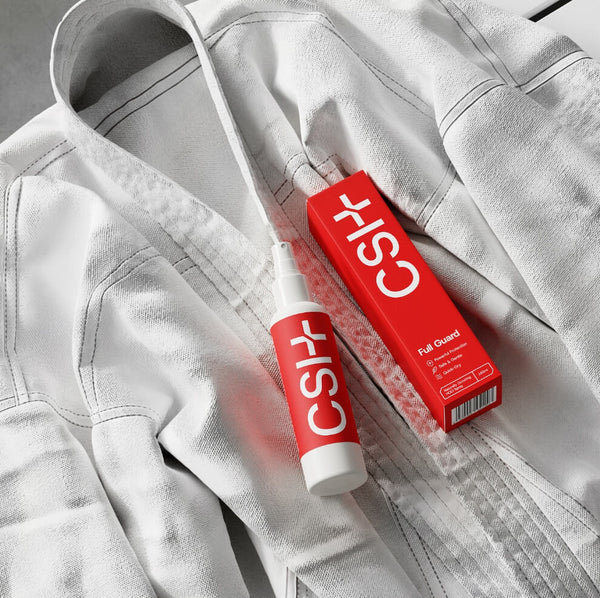
After a match or a training session where you are rushing to get away - a short mist of Full Guard HOCl Spray inside the case (not directly into the mouth) is a practical option when you cannot go through the full brush-and-dry routine. Full Guard is a registered cosmetic spray containing 200ppm of 95% pure hypochlorous acid, formulated at a pH of 5.5-6.5. It does not require rinsing off surfaces, leaves no harsh residue, and does not contain alcohol - so it is safe to use on surfaces that will subsequently contact the mouth once dry.
Let the case air for a minute before closing it. This is not a substitute for the daily brush-clean routine, but it is considerably better than nothing on the days when nothing is the alternative.
The Shared Mouthguard Problem
At junior level, parents and coaches sometimes allow a player to trial a loaner mouthguard - to check fit or get through a session when they have forgotten their own. This should never happen, even for a single training session. A mouthguard carries the complete oral flora of its owner: streptococcal bacteria, any oral yeast present, and potentially herpes simplex virus if the owner has ever had a cold sore. Transferring that directly into another player's mouth is not a trivial risk to take for the sake of convenience. If a young player does not have their own guard, they sit out contact until they do. Custom-fitted mouthguards typically cost £50-£100 from a dentist; the health case for every junior having their own is straightforward.
The dental health connection is also worth stating plainly. An unhygienic mouthguard held against the gums for 80 minutes a match, session after session across a season, increases the bacterial load at the gum line and raises the risk of gum disease and dental decay over time. For players who have invested £100 or more in a custom-fitted guard, the irony of letting poor hygiene undermine both the guard's longevity and their dental health is worth avoiding. A ninety-second clean after every session protects both.
Replacement Cycle
A custom mouthguard should last one to two seasons if properly maintained. A boil-and-bite guard has a shorter useful life because the material is less dense and degrades faster with repeated cleaning and contact.
Replace yours when:
- The fit has changed - gaps or looseness mean it is no longer providing meaningful protection
- The surface is visibly cracked or pitted
- It retains odour after thorough cleaning (indicates deep biofilm that surface cleaning will not shift)
- It has taken a significant direct impact
A mouthguard that no longer fits is not just a hygiene problem - it is not protecting your teeth either.
The Rest of Your Kit Bag
Mouthguard hygiene does not exist in isolation. If your kit bag is carrying contaminated gear, the clean mouthguard goes back into a dirty environment. See The Ultimate Rugby Kit Bag Hygiene Checklist for the full bag-level routine, and our guide on rugby boot odour if you have been ignoring that particular problem.
Related Guides
- The Ultimate Rugby Kit Bag Hygiene Checklist
- Why Your Rugby Boots Smell (And How to Actually Fix It)
- Scrum Cap Hygiene: How to Wash Protective Headgear Without Deforming It

For the gear that can't be washed
Gear Guard Equipment Cleaner Spray
A targeted HOCl surface spray for the kit no washing machine can help: gloves, pads, headgear, boots and bag linings. Spray until visibly wet, wait 60 seconds, wipe, and let it air dry.
- Independently tested surface biocide (BS EN 13727, BS EN 1650)
- One-minute contact time, then wipe and air dry
- No fragrance, dries clear, nothing left behind once dry
- 100ml fine mist, hundreds of targeted sprays, UK-made
Use biocides safely. Always read the label and product information before use. Gear Guard is for equipment, not skin. Fabric kit goes in the washing machine.
Rugby Hygiene Hub
The kit, the guides and the routines that keep rugby athletes clean and training, all in one place. Explore the Rugby hygiene hub →
The rugby bag, sorted
First aid kits built for grass and astro burns, a rinse-free cleansing spray for after training, handmade soap for the shower, and the spray for scrum caps and shared kit. For players, parents and clubs, with the season written up in order.
See the rugby hygiene and first aid collection →