How to Disinfect Rugby Shoulder Pads and Body Armour Safely
Educational information only – read the full notice
Rugby shoulder pads and body armour present a specific hygiene problem: the EVA foam padding that absorbs impact cannot be machine washed without destroying its protective properties, yet it absorbs sweat directly against the skin for an entire match. Most players either ignore them or throw them in the washing machine and wonder why the padding feels different next season. Here is the correct approach.
Why Shoulder Pads Are Harder to Clean Than Other Kit
The challenge is structural. Technical rugby body armour is built in layers - an outer fabric shell, typically a stretch polyester or nylon, bonded to EVA foam padding that sits in fixed zones over the shoulders, clavicles, and sometimes the sternum and ribs. The EVA foam is the protective element. It is also highly porous and absorbs sweat during contact directly.
Unlike a jersey or base layer, you cannot separate the foam from the shell in most consumer-level shoulder pads. And unlike a scrum cap - where the foam is accessible for direct cleaning - the foam in body armour is often enclosed behind the outer shell with only the inner surface exposed. That inner surface is what sits against your skin for eighty minutes.
What the Washing Machine Does to EVA Foam
EVA foam derives its impact-absorbing properties from a specific cellular structure - millions of tiny closed cells that compress on impact and return to their original geometry. Soaking in water degrades this structure over time by introducing water into those cells and disrupting the foam density when it dries under compression. A machine wash adds agitation and spin forces on top of water immersion, accelerating the process significantly.
The result is padding that feels and looks intact but has measurably reduced impact absorption. You will not notice it until you take a hit that would previously have been well-managed, and find it is not. This is not a hygiene risk - it is a safety one.
The Correct Cleaning Routine
Work in two stages: outer shell spot-clean, and interior foam maintenance.
Outer shell (every three to four sessions): Use a damp cloth with a small amount of mild soap to wipe down the exterior fabric. Focus on the underarm areas and any surface that contacts the ground in a tackle. Rinse the cloth and wipe again to remove soap residue. Allow to air dry before the next stage.
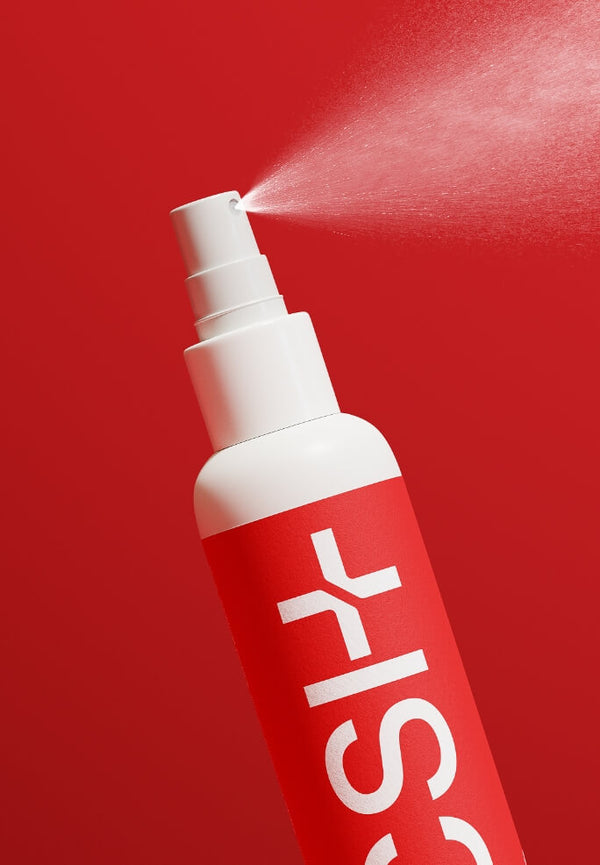
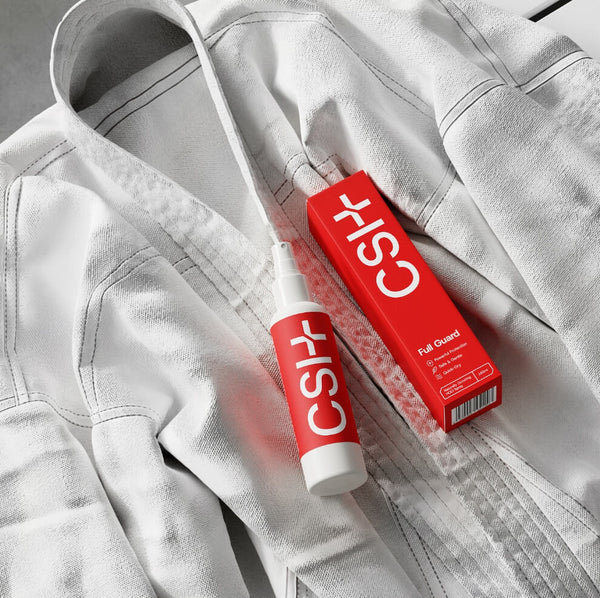
Interior foam (after every session): This is where Full Guard HOCl Spray earns its place in the kit bag. Full Guard is a registered cosmetic spray containing 200ppm of 95% pure hypochlorous acid, formulated at a pH of 5.5-6.5. Mist the interior foam surfaces - the areas that contact the shoulders and chest - and then leave the pads open and uncompressed to air dry completely before the next session. No rinsing required. No residue that would sit against your skin.
The critical detail is the drying step. Pads that go back into a kit bag while the foam is still damp from the mist are simply trapping moisture in a closed environment. Leave them open - on a kit room bench, a chair back, or a ventilated hook - for a minimum of a few hours, ideally overnight.
What to Avoid
Two categories of cleaning approach that cause more problems than they solve:
- Soaking in water. Even a bucket soak rather than a machine wash introduces water into the foam cellular structure. Over multiple soaks, foam density degrades. Spot-clean the shell; never fully submerge technical body armour.
- Harsh chemical sprays. Products designed for surface disinfection - particularly those with high alcohol content or strong oxidising agents - can leave residue in the foam that subsequently contacts skin under compression during a match. Skin irritation from foam residue is a genuine issue with some cleaning products used on body armour. Full Guard's pH profile (5.5-6.5, close to skin-neutral) and its leave-on design make it appropriate for surfaces that contact skin.
Annual Deep-Clean
At the end of each season, do a more thorough clean before storing:
- Hand wash the outer shell in a basin of cool water with mild detergent - submerging the full garment once per season is lower cumulative risk than repeated machine washing.
- While the shell is damp and accessible, mist all foam surfaces with Full Guard and work it into the surface with clean fingers.
- Press out excess water from the shell with a clean towel. Do not wring.
- Air dry flat for a full 24-48 hours before storing. The foam needs to dry completely - residual moisture trapped in stored padding over several months creates exactly the conditions you are trying to avoid.
When to Replace Rather Than Clean
Cleaning extends the useful life of shoulder pads, but it does not restore foam that has already degraded. Replace your body armour when:
- The foam padding has visibly compressed - areas that should be raised and resilient feel flat and dense under finger pressure.
- The foam surface shows cracking or surface breakdown.
- The pads retain a permanent odour after the annual deep-clean - this indicates bacterial load has penetrated beyond what surface cleaning can address.
- The outer shell fabric is torn or the bonding between shell and foam has failed in any zone.
Shoulder pads that have passed these thresholds are not protecting you adequately. The hygiene risk is secondary to the protective one.
The Rest of Your Protective Kit
The same foam-care logic that applies to shoulder pads applies to scrum caps - see our scrum cap washing guide for the parallel routine. And if you have been dealing with skin irritation around the shoulder or chest areas where pads contact skin, read our post on treating and cleaning turf burns - padded gear that sits over broken or irritated skin presents its own specific considerations. For the full kit bag routine, The Ultimate Rugby Kit Bag Hygiene Checklist covers every item end to end.
Related Guides
- The Ultimate Rugby Kit Bag Hygiene Checklist
- Scrum Cap Hygiene: How to Wash Protective Headgear Without Deforming It
- The 3G Pitch Guide: How to Treat and Clean Artificial Turf Burns Fast

For the gear that can't be washed
Gear Guard Equipment Cleaner Spray
A targeted HOCl surface spray for the kit no washing machine can help: gloves, pads, headgear, boots and bag linings. Spray until visibly wet, wait 60 seconds, wipe, and let it air dry.
- Independently tested surface biocide (BS EN 13727, BS EN 1650)
- One-minute contact time, then wipe and air dry
- No fragrance, dries clear, nothing left behind once dry
- 100ml fine mist, hundreds of targeted sprays, UK-made
Use biocides safely. Always read the label and product information before use. Gear Guard is for equipment, not skin. Fabric kit goes in the washing machine.
Rugby Hygiene Hub
The kit, the guides and the routines that keep rugby athletes clean and training, all in one place. Explore the Rugby hygiene hub →
The rugby bag, sorted
First aid kits built for grass and astro burns, a rinse-free cleansing spray for after training, handmade soap for the shower, and the spray for scrum caps and shared kit. For players, parents and clubs, with the season written up in order.
See the rugby hygiene and first aid collection →