Scrum Cap Hygiene: How to Wash Protective Headgear Without Deforming It
Educational information only – read the full notice
A scrum cap absorbs litres of sweat over a season and almost never gets washed. The foam padding becomes a reservoir for dead skin cells and bacteria that sit against your forehead, ears, and scalp session after session - and those are exactly the conditions that drive forehead acne, scalp irritation, and skin breakdown around the ears. Here is how to clean it properly without destroying the fit or the foam.
What Accumulates in a Scrum Cap
The interior foam padding in a scrum cap is designed to absorb impact energy. It is also highly effective at absorbing sweat. A single hard training session can deposit several hundred millilitres of sweat into the padding, along with skin oils, dead cells, and the bacteria that live on the scalp and forehead. Left untreated between washes, this becomes the kind of warm, moist environment in which skin-disrupting bacteria thrive.
The practical consequences are predictable: persistent forehead spots along the cap line, scalp irritation, and sometimes a rash or breakdown around the ear openings - areas where the cap creates occlusion against the skin for an extended period. Players often treat the skin without addressing the source. The cap is the source.
Why the Washing Machine Is the Wrong Answer
Most scrum caps are constructed with adhesive bonding between the outer shell and the internal foam layers. A machine wash - even on a delicate cycle - introduces two problems: agitation that can separate bonded layers, and heat from both the water temperature and the spin cycle that deforms foam geometry over time. Repeated machine washing shortens the protective life of the cap significantly.
The same logic applies to tumble drying. The combination of heat and mechanical movement will compress and crack foam padding that is designed to resist impact, not thermal stress.
The Correct Hand-Wash Method
This is the right approach for a thorough clean - aim to do this every three to four sessions:
- Fill a basin with cool water and add a small amount of mild soap or gentle sports wash. Nothing with bleach or strong solvents.
- Submerge and work the soap through gently - focus on the interior foam and the areas that sit against the hairline and ears. Use your fingers to work through the padding without twisting or wringing.
- Rinse thoroughly with cool water until the water runs clear. Soap residue left in the foam will irritate skin on the next session.
- Press out excess water with a clean towel - lay the cap on the towel, fold it over, and apply firm pressure. Do not wring or twist. That mechanical stress is what distorts the foam geometry.
- Air dry flat, away from direct heat. Do not hang it - hanging concentrates the weight of the water in one area and can pull the foam out of shape. Flat on a clean surface with good airflow, away from radiators or direct sunlight.
Between-Wash Maintenance: Every Session
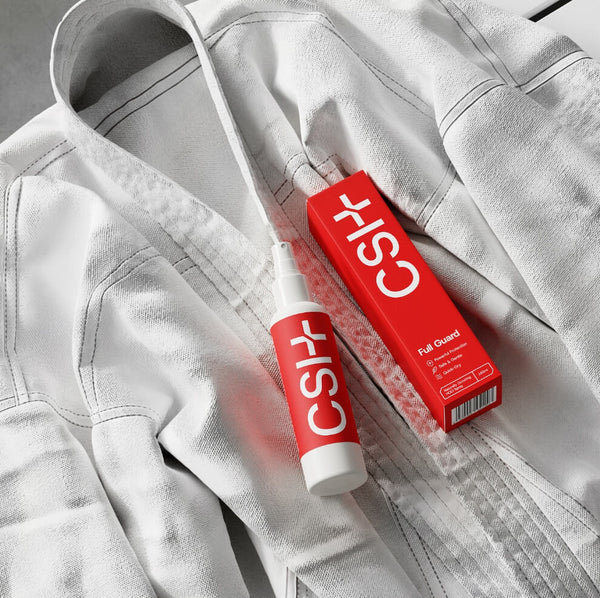
A full hand wash every three to four sessions is the deep-clean schedule. Between sessions, the goal is keeping the foam environment cleaner so that bacterial load does not compound. The simplest method is a light mist of Full Guard HOCl Spray on the interior immediately after training, followed by air drying before storing.
When you mist, direct it specifically at the interior lining fabric rather than just the outer surface. Most modern scrum caps have a moisture-wicking inner fabric layer that is separate from the structural foam beneath - this is the layer that sits against your skin for the full session and where the majority of bacterial colonisation occurs. The foam itself absorbs sweat, but the lining fabric is the direct contact surface, and that is where the between-session HOCl misting delivers the most benefit.
Full Guard is a registered cosmetic spray containing 200ppm of 95% pure hypochlorous acid, formulated at a pH of 5.5-6.5. It does not require rinsing, does not leave a residue that would sit against your skin, and contains no alcohol - so it will not dry out or degrade the foam over time. Mist the inside, leave the cap open on your kit bag overnight, and it will be dry and fresh for the next session.
Do not close a damp cap into a sealed bag. That just concentrates the problem.
Ear Padding: Allow Extra Drying Time
Scrum caps with ear protection cups - as required for under-age rugby in many formats - have significantly thicker foam in the ear sections than in the crown. That extra density takes longer to dry after washing. As a rule, allow at least 48 hours after hand-washing before wearing a scrum cap with ear cups again. Wearing a cap with damp foam against the ears creates a warm, humid environment around the outer ear canal that contributes to the conditions associated with outer ear infections. It is the same logic as not putting damp kit straight back on: the discomfort of waiting for it to dry is considerably less than dealing with an ear problem mid-season.
Storage and End-of-Season Care
At the end of a season, give the cap a thorough hand wash before storing it. Make sure it is completely dry before putting it away - any residual moisture in the foam over a summer of storage will lead to mould establishing in the padding, which no amount of washing will fully resolve. Store it in a breathable bag rather than a sealed plastic bag; the airflow matters even over months. A shelf or a ventilated drawer is better than a sealed container.
Inspect the foam padding at the start of each season. Run your fingers across it and look for areas that feel harder, denser, or have surface cracking. Impact-absorbing foam that has permanently deformed is not protecting you at the level it was designed to. At that point, replacement is the right call - not another clean.
The Wider Kit Bag Picture
A clean scrum cap is one part of a broader hygiene routine. If you are on top of the headgear but neglecting everything else in the bag, the effort is undermined on every session. See The Ultimate Rugby Kit Bag Hygiene Checklist for the full routine, and our guide on shoulder pads and body armour for the same foam-care logic applied to contact protection.
Related Guides
- The Ultimate Rugby Kit Bag Hygiene Checklist
- How to Disinfect Rugby Shoulder Pads and Body Armour Safely
- The 3G Pitch Guide: How to Treat and Clean Artificial Turf Burns Fast

For the gear that can't be washed
Gear Guard Equipment Cleaner Spray
A targeted HOCl surface spray for the kit no washing machine can help: gloves, pads, headgear, boots and bag linings. Spray until visibly wet, wait 60 seconds, wipe, and let it air dry.
- Independently tested surface biocide (BS EN 13727, BS EN 1650)
- One-minute contact time, then wipe and air dry
- No fragrance, dries clear, nothing left behind once dry
- 100ml fine mist, hundreds of targeted sprays, UK-made
Use biocides safely. Always read the label and product information before use. Gear Guard is for equipment, not skin. Fabric kit goes in the washing machine.
Rugby Hygiene Hub
The kit, the guides and the routines that keep rugby athletes clean and training, all in one place. Explore the Rugby hygiene hub →
The rugby bag, sorted
First aid kits built for grass and astro burns, a rinse-free cleansing spray for after training, handmade soap for the shower, and the spray for scrum caps and shared kit. For players, parents and clubs, with the season written up in order.
See the rugby hygiene and first aid collection →