Why Your Rugby Boots Smell (And How to Actually Fix It)
Educational information only – read the full notice
Rugby boots smell because anaerobic bacteria are breaking down the amino acids in your sweat and producing volatile sulphur compounds - the same compounds responsible for the smell of rotten eggs. A mud-soaked boot that goes into a bag straight after training is about as close to a perfect VSC factory as you can get. Here is the actual science behind it and the fixes that work.
Why Rugby Boots Smell Worse Than Other Footwear
The combination of factors specific to rugby boots is almost uniquely bad for odour:
- Mud seals in moisture. Dried mud forms a crust that traps residual moisture inside the boot long after the surface looks dry. That internal dampness is where the anaerobic bacteria do most of their work.
- Studs reduce airflow. A stud plate raises the outsole slightly, but the boot interior has almost no passive ventilation compared to a running shoe.
- Leather holds odour compounds. Full-grain leather is durable and comfortable, but it absorbs volatile sulphur compounds into the material itself over time. Masking sprays sit on top of the leather and do nothing to address what has been absorbed.
- They go straight into a bag. A warm, damp boot in a sealed kit bag with no airflow is ideal for accelerated bacterial growth overnight.
What Does Not Work
It is worth being direct about the category of "solutions" that do nothing beyond temporary masking:
- Odour masking sprays - these layer a synthetic fragrance over the VSC compounds. The fragrance fades in hours; the underlying compounds remain.
- Leaving them in the bag to "air out" - there is no airflow in a sealed kit bag. The boots continue producing VSCs in a low-oxygen environment.
- Baking soda without drying first - sodium bicarbonate is a legitimate odour absorber, but it cannot work if the boot interior is still damp. Absorbing moisture is its priority; odour comes second.
The Routine That Actually Works
Deal with the boots at the end of every session, not the next morning:
- Remove insoles immediately. Insoles absorb a disproportionate amount of sweat relative to their size. They need to air separately - not inside a closed boot where they trap moisture against the liner. If you train two or more times a week, consider keeping two pairs of insoles and rotating them between sessions. A single pair rarely dries completely in the time between an evening session and the next morning's training, especially in winter. Rotating means one pair is always fully dry and the boot interior is never sealed against a damp insole.
- Brush mud off before it dries. Mud that dries on boot uppers forms a seal that traps residual moisture inside the boot, dramatically slowing drying time and keeping the internal bacterial environment wet and active. Remove it while still wet - a soft brush and cold water (not hot, which can stress the glue bonding on synthetic uppers) takes two minutes at the end of training and makes a substantial difference to how quickly the boot can dry. A boot that dries properly overnight is a boot that smells better next session.
- Stuff loosely and leave in open air. Newspaper works but needs replacing. A ventilated boot rack or simply leaving them open in a room is better than anything closed.
- Cedar insoles or activated charcoal deodorisers. Once the boots are dry, cedar insoles or activated charcoal sachets placed inside will absorb residual VSCs passively overnight. These are the genuinely effective long-term options for managing ongoing odour - not a one-time fix, but a consistent tool.
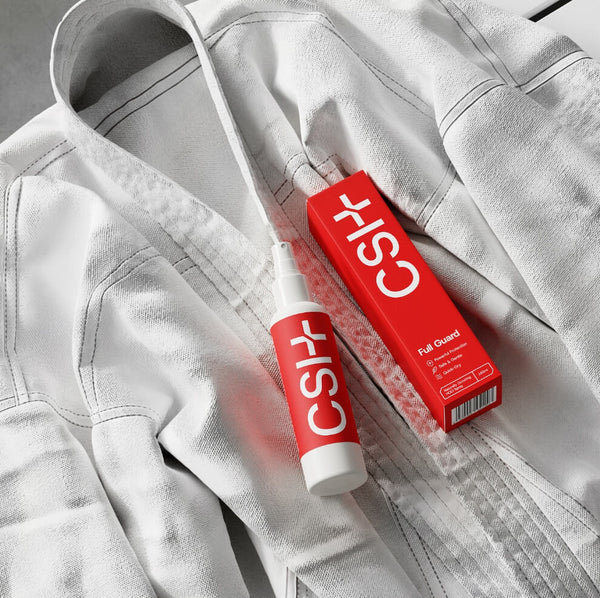
- Mist the interior with Full Guard HOCl Spray after airing. Once the boot is dry, a light mist inside addresses the bacterial layer that produces VSCs in the first place. Full Guard is a registered cosmetic spray containing 200ppm of 95% pure hypochlorous acid, formulated at a pH of 5.5-6.5 - and critically, it contains no alcohol. Alcohol-based sprays dry and crack leather lining over time. Full Guard does not. Let the mist dry for a minute before inserting cedar insoles or storing.
Boot Care by Material
The cleaning and care routine varies by upper material:
Leather uppers: After cleaning off mud and allowing to dry, apply a leather conditioner every four to six sessions. Leather that dries out without conditioning becomes brittle, cracks, and creates micro-pores that harbour bacteria more readily. A clean, conditioned leather upper is also easier to wipe down between sessions.
Synthetic uppers: Generally more breathable than leather, which helps with drying time. They do not require conditioning, but they are also less forgiving of harsh cleaning products. A damp cloth and mild soap on the upper is sufficient. The same internal misting routine applies - synthetic liners accumulate VSC-producing bacteria just as leather ones do.
Boot Storage and Transport
How you carry the boots matters as much as how you dry them. Muddy boots loose in the bottom of a kit bag contaminate everything they touch - jerseys, towels, spare kit - and the sealed bag environment gives them no airflow during the journey home. A separate ventilated mesh boot bag solves both problems: contamination is contained, and the mesh allows some passive airflow during transport so the boots are not sitting in their own warm, stale air for an hour after training. It is a small addition to the kit bag setup with a disproportionate impact on both hygiene and how the rest of your kit smells.
Lace Hygiene: The Part Everyone Forgets
Boot laces sit flat against the top of the foot through a full training session, absorbing sweat directly. They are rarely cleaned and are almost never replaced until they snap. Laces carry a significant bacterial load and contribute to the overall odour profile of the boot. They are also cheap. Remove them when you clean the boots, rinse them separately, and replace them at the start of each season or when they look worn. It is one of the most cost-effective hygiene improvements you can make to a pair of boots.
The Rest of Your Bag
Boot odour is usually the most obvious hygiene problem in a kit bag, but rarely the only one. A systematic approach to the whole bag prevents gear from cross-contaminating each other. See The Ultimate Rugby Kit Bag Hygiene Checklist for the full routine. If you are also dealing with shoulder pads that have developed a permanent odour despite airing, read our guide on cleaning rugby shoulder pads - the foam absorption problem is similar.
Related Guides
- The Ultimate Rugby Kit Bag Hygiene Checklist
- How to Disinfect Rugby Shoulder Pads and Body Armour Safely
- Scrum Cap Hygiene: How to Wash Protective Headgear Without Deforming It

For the gear that can't be washed
Gear Guard Equipment Cleaner Spray
A targeted HOCl surface spray for the kit no washing machine can help: gloves, pads, headgear, boots and bag linings. Spray until visibly wet, wait 60 seconds, wipe, and let it air dry.
- Independently tested surface biocide (BS EN 13727, BS EN 1650)
- One-minute contact time, then wipe and air dry
- No fragrance, dries clear, nothing left behind once dry
- 100ml fine mist, hundreds of targeted sprays, UK-made
Use biocides safely. Always read the label and product information before use. Gear Guard is for equipment, not skin. Fabric kit goes in the washing machine.
Rugby Hygiene Hub
The kit, the guides and the routines that keep rugby athletes clean and training, all in one place. Explore the Rugby hygiene hub →
The rugby bag, sorted
First aid kits built for grass and astro burns, a rinse-free cleansing spray for after training, handmade soap for the shower, and the spray for scrum caps and shared kit. For players, parents and clubs, with the season written up in order.
See the rugby hygiene and first aid collection →