The Complete Post-Roll Grappling Hygiene Protocol
Educational information only – read the full notice
Most skin problems in grappling are not caught on the mat. They are caught, or missed, in the hour after it. The roll ends, the adrenaline drops, and you are tired, sweaty and in a hurry to get home. That is exactly when the small things get skipped: the scrape you didn't look at, the shower that turned into tomorrow morning, the damp gi that spent the night zipped in a bag.
This is the whole post-training routine in the order it actually happens, from the moment you bow off the mat to the moment your kit is ready for the next session. Each stage links to a detailed guide if you want the full picture. It is general information, not medical advice, and anything that worries you belongs with a pharmacist or GP.
⚡ 60-Second Summary
- First 5 minutes: kit off, check your skin, clean and cover anything broken.
- First 30 minutes: shower properly, lather the contact zones, dry completely.
- Days 1 to 3: watch any wound or new patch. Getting worse, not better, means get it seen.
- Before the next session: wash the gi and rashguard, clean the gear, dry everything fully.
Immediate Mat-Side Care: The First 5 Minutes
The first job after training is not the shower. It is a thirty-second look at your own skin.

Get your gi or rashguard off as soon as the session ends rather than sitting around in damp kit. Then check the places that took the most contact: forearms, elbows, knees, the tops of the feet, the neck, the jawline and the forehead. You are looking for anything that was not there before the session started: raw patches, scrapes, small cuts, torn blisters and nail scratches.
Why so soon? A friction burn takes off the outer layer of skin, and that layer is your main barrier. Mats, kit and other people's skin all carry microbes, and broken skin gives them an easy way in. Spotting a raw patch now, while it is fresh, is far better than finding it in the shower twenty minutes later after it has spent that time pressed against a sweaty gi.
Not all friction damage is the same. Mat burn from vinyl behaves differently from the rougher, dirtier abrasions picked up on artificial pitches. If you are not sure what you are looking at, our guide explains the difference and the fast first steps for mat burn vs turf burn treatment.
For broken skin, the routine is short:
- Clean hands first. Wash them before you touch an open graze.
- Rinse it. Clean running water or sterile saline for a minute or two. Don't scrub.
- Pat it dry with clean gauze or your own clean towel.
- Cover it with a non-stick or hydrocolloid dressing that reaches past the edges of the wound.
Skip hydrogen peroxide and rubbing alcohol. They damage healing tissue and hurt far more than they help.
Gi burn has its own pattern: the raw stripe along the neck and jaw left by lapel grips and collar chokes. Red skin that is still intact can usually be left uncovered, while broken or weeping skin gets the same clean-and-cover treatment as any other graze. If your neck and lapel lines are raw, learn exactly how to treat gi burn from BJJ before you leave the gym.
None of this happens if the supplies are sitting at home. Make sure you have a stocked BJJ and MMA first aid kit in your gym bag, with saline, gauze, non-stick dressings and hydrocolloid plasters, so the first clean happens at the gym rather than in the car.
The Post-Training Shower Routine: The First 30 Minutes
Once an

y broken skin is dealt with, get washed. The aim is simple: get sweat, grime and whatever came off the mat off your skin, without scouring the skin itself.
Timing matters more than special products. The gap between rolling and washing is when everything that transferred during training is sitting on your skin with nothing to move it. Showering at the gym is ideal. If you can't, the same evening beats the next morning by a distance.
The routine that covers the essentials:
- Lather properly over the areas that took contact: hands, forearms, neck, face, ears and feet. Washing works mainly by physically lifting things off the skin, so thirty seconds of real lather does more than any ingredient.
- Warm, not hot. Very hot water and hard scrubbing strip the skin's natural oils and leave it tight and irritated, and comfortable, intact skin is part of your defence.
- Go easy on broken skin. Let soapy water run over a graze rather than scrubbing across it, then put a fresh dressing on once you are dry.
- Dry completely, especially between the toes and in skin folds, using a towel that is yours and nobody else's.
- Wear sliders in communal showers. Warm, wet shared floors are where foot fungus moves between people.
Follow our post training shower routine for the full five-minute version, including what to do when a shower genuinely is not possible.
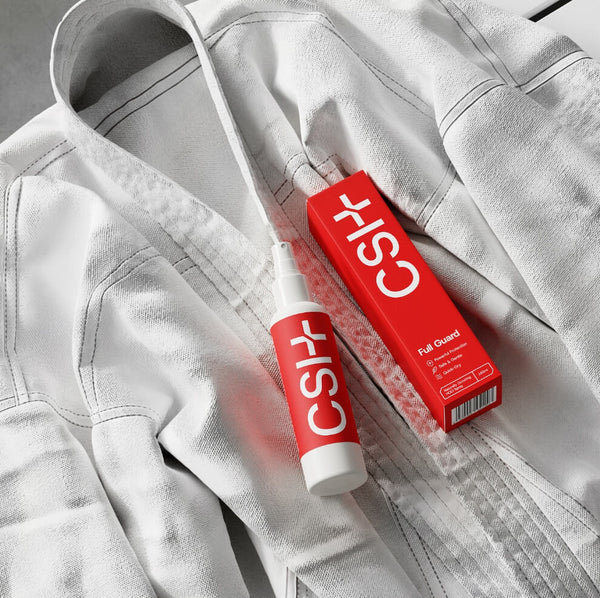
On products, the honest answer is that any decent soap or body wash, used properly, does the job. If you are choosing a bar specifically for training, look for something gentle that rinses clean without stripping the skin. Our guide to the best soap for BJJ covers what actually matters on the label. If you are weighing up the options on the UK shelf, we set them side by side in Full Guard vs Defence Soap in the UK.
Monitoring for Infections: Days 1 to 3
Most friction burns and small cuts heal without any drama. The next few days are about watching the direction of travel. A healing wound looks calmer each day. One that is getting worse needs a professional to look at it.
Change dressings daily, and any time they get wet or dirty, and look at the wound each time you do. See a GP or pharmacist promptly if you notice:
- Redness spreading outwards, or red streaks tracking away from the wound
- Warmth, swelling or pain that is increasing rather than easing after the second day
- Thick yellow or green discharge, or an unpleasant smell
- Fever, chills, feeling generally unwell, or swollen glands near the injury
- A wound that is not clearly improving after five to seven days
Red streaks, a fever or feeling unwell are not wait-and-see signs. Contact your GP the same day or call NHS 111.
Alongside wounds, watch for new patches of skin that were not there before. Three are worth recognising in any grappling gym. None of them can be reliably diagnosed by eye, which is exactly why the answer to all three is the same: stop contact training and get it checked.
A painful, warm, red lump that grows over a day or two is one of the classic signs covered in our guide to staph infections in grappling. Don't squeeze it. Cover it and get it seen.
If you spot a raised, itchy, ring-shaped rash, stop skin-to-skin training and read our guide to ringworm in BJJ, then show it to a pharmacist, who can tell you whether it can be managed at home or needs a GP.
Clusters of small fluid-filled blisters on the face or neck, often after tingling or burning in the same spot, need prompt medical attention, as we set out in herpes gladiatorum explained. Anything near the eyes needs advice the same day.
Two rules cover the rest. Covering a patch is not the same as being cleared to train, so tape is not a pass back onto the mats. And tell your coach. A quiet word early is how a gym stops one case becoming five.
Gear Maintenance and Storage: Before Your Next Session
A clean body is wasted on dirty kit. Pull on a gi that spent the night damp in a bag and you have put everything from today's session straight back onto your skin, including onto the graze you just carefully cleaned.
The rules are short, and they are the ones people skip:
- Kit out of the bag the moment you get home. A damp gi zipped into a holdall overnight is where the smell starts.
- One session, one wash. Gi, rashguard, spats and belt. Re-wearing kit because it doesn't smell too bad yet is the habit to break.
- Dry everything fully before it goes back in a bag or drawer, including the thick gi collar, which is always the last part to dry.
- Use your own towel, and wash it after every session.
Never leave your damp gi in a bag. Follow the proper steps on how to wash a BJJ gi to keep it fresh and stop mildew setting in.
Gloves, shin guards, pads and headgear are a different problem, because they can't go in the washing machine yet sit against sweaty skin just as closely. For a complete breakdown of how to clean the kit that can't be machine washed, read our guide on cleaning combat gear.
The Protocol on One Page
- Straight off the mat: kit off, then check your forearms, elbows, knees, feet, neck and face.
- Anything broken: clean hands, rinse, pat dry, cover with a non-stick dressing.
- Within the hour: shower, lather the contact zones, warm not hot, dry fully, sliders on.
- Days 1 to 3: change dressings daily and watch the trend. Worse, not better, means get it seen.
- A new patch or lump: no contact training until it has been checked, and tell your coach.
- At home: kit out of the bag, into the wash, and dried completely before it goes back.
Do it every session and it becomes automatic, which is the only way a hygiene routine ever actually works.
This guide is general educational information and not medical advice, and it cannot diagnose a skin problem. If you are worried about a wound or a change in your skin, contact a GP or pharmacist. For urgent advice call NHS 111, and in an emergency call 999.