Cleaning Combat Sports Gear That Cannot Go in the Washing Machine
Educational information only – read the full notice
Most training kit cannot go in a washing machine. Gloves, shin pads, headgear, wrestling shoes and the bag itself all absorb sweat, and almost none of it survives a machine cycle without falling apart or taking three days to dry. So they get ignored, and the smell builds up until the kit announces itself before you do. For the purpose-built answer, see Gear Guard, our HOCl equipment cleaner spray; the rest of this guide covers the full method for every piece of kit.
This is the system I use: wipe down, deep clean, dry, store. It is four steps, it takes about two minutes a session, and it is the difference between gear that lasts and gear you end up replacing.
Why gear goes bad in the first place
Sweat is mostly water, but the part that stays behind is salt, oil and skin. That residue sits in foam and in the seams of synthetic leather, and it does not evaporate when the water does. Bacteria feed on the residue. The odour is the by-product.
Which is why the single most useful principle in kit care is this: you are removing residue, not masking smell. Everything that works, works because it lifts residue out. Everything that fails, fails because it only covers it.

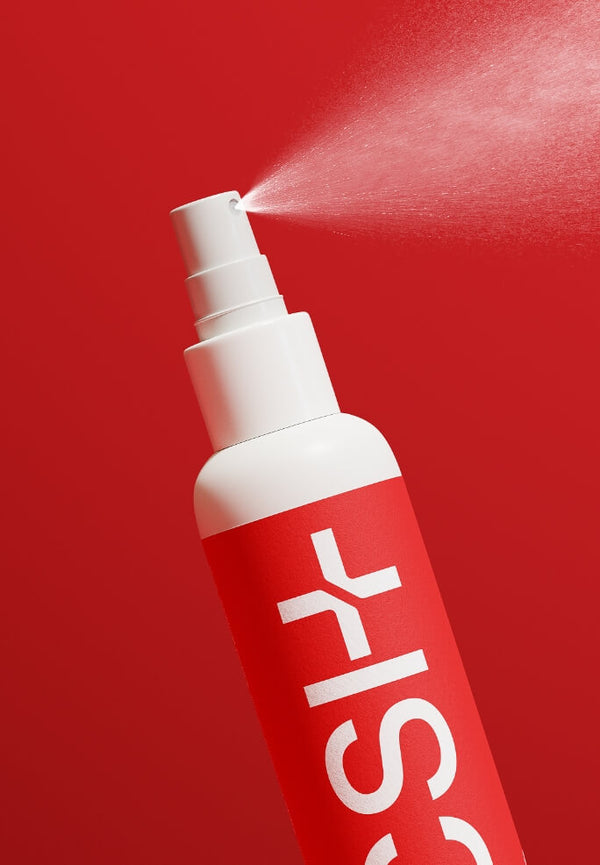
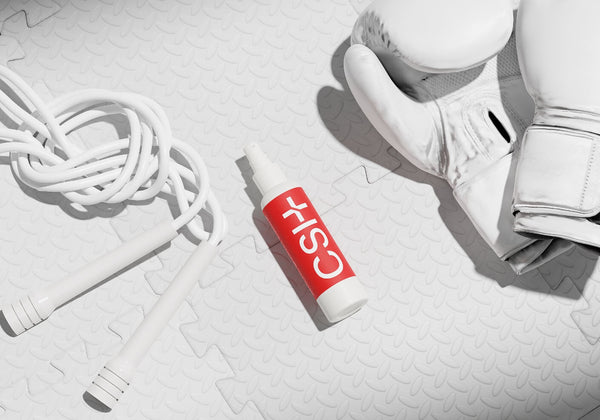
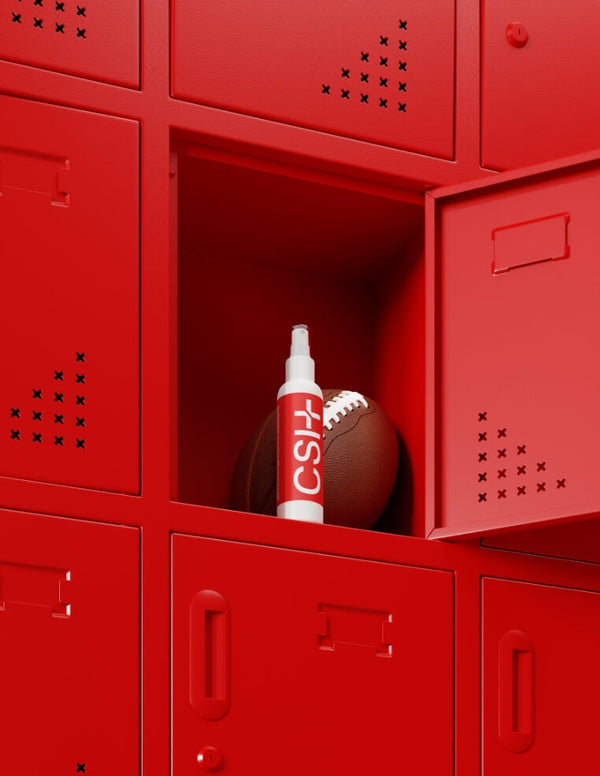
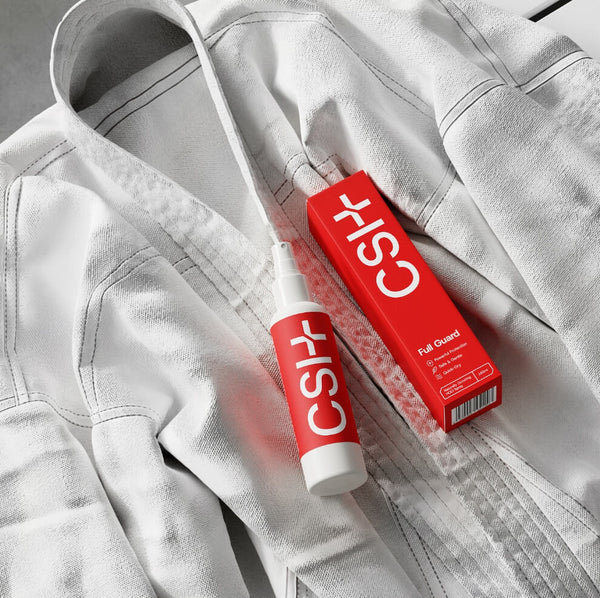
Gear Guard: the spray built for the kit that can't be washed
Kills 99.999% of bacteria and 99.99% of fungi in 60 seconds, tested to BS EN standards. No fragrance, no residue, kind to leather and foam. 100ml, UK made, £16.49.
Step one: the wipe down, every session
Do this in the changing room, not at home. Gloves and pads get wiped inside and out with a damp cloth or a cloth with a little mild detergent on it, then wiped again with plain water so you are not leaving soap in the lining. Headgear the same. Thirty seconds a pair.
The mistake is soaking them. Water that gets into the foam core has nowhere to go and will sit there for days. Damp cloth, not dripping.
Step two: the deep clean, fortnightly to monthly
If you are on the mats four or five times a week, once a fortnight. Once or twice a week, once a month.
- Synthetic leather (gloves, pads, most shin guards): warm water, a small amount of mild detergent or a dedicated gear cleaner, applied to a cloth rather than to the gear. Wipe, rinse the cloth, wipe again. Never submerge. Water gets past the stitching, into the foam, and takes a week to leave.
- Mesh and fabric panels (glove backs, shoe uppers, bag linings): these tolerate more moisture. A soft brush and soapy water lifts a surprising amount out of mesh. Blot with a towel afterwards to pull the water back out.
- Foam: the part you cannot really clean, only manage. Foam is a sponge: keep it as dry as possible and get it aired fast.
- Gumshields: cool water and a soft brush after every session, then a vented case. Boiling water, the dishwasher and a hot car all warp the fit, and the fit is the whole point.
- Hard plastic (gumshield cases, hard shin guard shells): the easiest thing you own and the most neglected. Soapy water, rinse, dry.
Hand wraps are the washable exception. They sit between your hand and the glove and take the most sweat, so machine wash them after every session, ideally in a mesh bag.
Step three: drying, which is the step everyone skips
Drying is not the same as leaving something in a corner. Kit needs moving air.
Open the gloves out so the wrist opening is wide. Stand them on end rather than laying them flat. Get them somewhere with airflow, a windowsill, an airing cupboard with the door open, near a radiator but never directly on one, because heat that intense makes synthetic leather crack. Glove and boot dryers that move room-temperature air are worth it if you train most days; skip anything that runs hot.
Air dry everything. No tumble dryer, ever, for gear with foam or padding.
Step four: storage, and the bag itself
Nothing damp goes back in the bag. That is the whole rule.
I left a gi and a pair of gloves in a bag in the boot of the car after a Friday session, because I was going straight out and thought I would sort it Saturday. It was a warm weekend. I opened that bag on the Monday in the car park before class and physically stepped back from it. The gi was salvageable after two washes. The gloves I threw out, because the smell had gone into the foam and nothing I did shifted it. Two days. That is all it takes.
Empty the bag after every session. Leave it unzipped and open at home so it airs. Wash the bag itself, if the label allows it, or turn it inside out and wipe the lining every few weeks. If your bag is the one people can identify blindfolded in the changing room, the bag is now the problem, not the kit inside it.
Myths and hacks that do not work
A couple of these are about washable clothing; the rest are squarely about this gear.
- Boiling water or the dishwasher on a gumshield. Heat warps the fit, and a warped gumshield does not do its job. Cool water and a soft brush, nothing hotter.
- Spraying disinfectant into a still-wet glove. That seals moisture into the lining rather than dealing with it. Any spray goes on gear that is already clean and dry.
- Cedar or silica inserts instead of airflow. They can pull a little moisture out, but they are an addition to open-air drying, not a replacement for it.
- Newspaper stuffed inside gloves. It soaks up a little surface moisture, then blocks the airflow the glove actually needs. Swap it out early or skip it.
- Freezing kit overnight. Popular, and useless. Cold does not remove residue. It goes in the freezer, comes out, warms up, smells the same.
- Soaking kit in vinegar for days. A short dilute soak has a place for washable synthetics, never for foam, leather or synthetic leather. Days of it is just marinating your gear.
- Deodorant or aftershave sprayed on kit. Adds oils and fragrance on top of the residue. Two smells now instead of one.
- Boil washes and 90 degree cycles to fix everything. That destroys elastane, warps padding and delaminates synthetic leather, and foam padded gear does not go in the machine at any temperature anyway.
- Neat bleach on technical fabric. It eats the fibres and the colour. There is no version of this that ends well, and never mix bleach with vinegar or any other cleaner.
Where a gear spray fits
Some kit cannot go through a wash cycle at all. A dedicated hypochlorous acid (HOCl) spray made for gear is a textile and equipment product for exactly those items: gloves, pads, headgear and bag interiors. Spray, allow to dry fully, and air the item as usual.
Two things to be clear about. It is not for use on skin: HOCl also appears in skincare products, but those are formulated for a completely different job and the two are not interchangeable in either direction. And it is one step in a routine, not a substitute for one: clean, dry, rotated kit remains the foundation.
Use biocides safely. Always read the label and product information before use.
The purpose-built option
If you'd rather not improvise with what's under the sink, this is the exact job Gear Guard was built for: a UK-made HOCl surface spray that kills 99.999% of bacteria and 99.99% of fungi in 60 seconds, without the alcohol that cracks leather or the fragrance that just papers over the smell. Spray, wait a minute, wipe, air dry. The full method and comparison is on the Gear Guard guide page.
Kit this guide does not cover
Some gear has its own rules. If you play rugby as well, we have separate guides for rugby shoulder pads and body armour and for scrum caps and rugby headguards, both of which have padding constructions that need slightly different handling.
And if you are thinking about the gym's kit rather than your own, mats, communal pads and towels, start with shared equipment hygiene.
FAQ
Can I ever put boxing gloves in the washing machine?
No. The drum will deform the padding, the water will saturate the foam core, and the gloves will take a week to dry and never quite recover. Wipe down and air dry is the only route.
How long should gloves take to dry?
Around 24 hours in a normal room with the cuffs opened out and some airflow. If they are still cold and damp inside the next day, they need better airflow, not more heat.
My gear still smells after a proper clean. Is it finished?
Usually it means the odour is in the foam rather than on the surface, and surface cleaning will not reach it. Give it a proper deep clean and a full dry cycle first. If it comes back within a session or two, the foam has gone and replacement is the honest answer.

For the gear that can't be washed
Gear Guard Equipment Cleaner Spray
A targeted HOCl surface spray for the kit no washing machine can help: gloves, pads, headgear, boots and bag linings. Spray until visibly wet, wait 60 seconds, wipe, and let it air dry.
- Independently tested surface biocide (BS EN 13727, BS EN 1650)
- One-minute contact time, then wipe and air dry
- No fragrance, dries clear, nothing left behind once dry
- 100ml fine mist, hundreds of targeted sprays, UK-made
Use biocides safely. Always read the label and product information before use. Gear Guard is for equipment, not skin. Fabric kit goes in the washing machine.
More kit care
- How to Clean Boxing and MMA Gloves, Inside and Out
- How to Wash Boxing Hand Wraps (and Stop Them Going Stiff)
- Shin Guards, Thai Pads and Focus Mitts: Cleaning Foam and Synthetic Leather
- Training Footwear: Wrestling Shoes, Boxing Boots and Mat Shoes
- The Complete BJJ and Judo Gi Care Guide
- Synthetic Kit Care: Polyester, Elastane and Compression