Mat Burn vs. Turf Burn: Treatment & Prevention
Educational information only – read the full notice
If you wrestle or train BJJ, you know the sting. A hard shot, a scramble, your cheek drags across the vinyl, and by the time you shower there's a raw pink patch that burns under hot water.

Mat burn and turf burn get lumped together as "friction burns," but they behave differently and they should be treated differently. This guide covers what makes mat burn its own problem, how to clean it properly, what the healing stages look like, and how to stop collecting new ones every camp.
Mat Burn vs. Turf Burn: What Actually Happens to Your Skin
Both injuries are abrasions: friction shears away the top layers of skin. The difference is the surface doing the shearing.
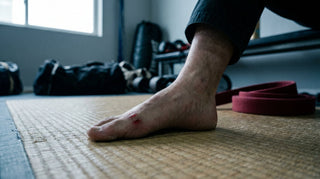
Wrestling and grappling mats are smooth vinyl over EVA foam. The vinyl itself isn't rough, but under load it grips skin, and repeated dragging generates heat and shear. The result is usually a shallow, wide burn, often on the face, ears, knees, and tops of the feet, and often contaminated with whatever was living on the mat surface.
Synthetic turf is the opposite: abrasive plastic fibers over rubber crumb infill. A slide tackle grinds particles straight into the wound. Turf burns tend to be deeper, dirtier, and studded with embedded debris. We cover those in detail in our turf burn treatment guide for rugby and field-sport athletes.
| Feature | Mat burn | Turf burn |
|---|---|---|
| Surface | Smooth vinyl / EVA foam | Abrasive synthetic fibers plus rubber infill |
| Mechanism | Heat and shear from skin dragging under body weight | Grinding abrasion from a slide or tackle |
| Typical depth | Shallow and wide | Often deeper, ragged edges |
| Common locations | Face, ears, knees, tops of feet | Thighs, hips, forearms, knees |
| Debris in the wound | Rare, but the mat surface carries heavy bacterial load | Common: rubber crumb and fiber fragments embedded |
| Main infection risk | Skin-to-skin and skin-to-mat contact with training partners' flora | Contaminated infill ground into broken skin |
The short version: turf burn is a dirtier wound, but mat burn happens on a surface dozens of sweaty bodies rolled on before you. Staph, ringworm, and impetigo all spread through broken skin in grappling rooms, which is why a "minor" mat burn deserves proper care.
What Is a Turf Burn? (And Why It Isn't Really a Burn)
A turf burn is a friction injury. When you slide, dive or get dragged across artificial grass, the surface scrapes away the top layers of skin. The friction also generates heat, which adds to the damage.
It's called a burn because it looks and feels like one: raw, shiny, and stinging the moment water touches it. Medically, though, it's an abrasion, a graze. It's treated the way you'd treat a graze, not the way you'd treat a burn from heat or chemicals.
How it happens:
- Slide tackles and dives, where your bodyweight and speed drag skin across the surface.
- Tackles and falls on 3G, 4G and astroturf, where knees, elbows, hips and forearms land first.
- Goalkeepers, landing on the same side session after session.
Why artificial grass is worse than real grass: synthetic fibres are more abrasive than grass, and the rubber crumb and sand used as infill can be driven into the wound. That's why cleaning out debris properly matters so much.

What Does a Turf Burn Look Like? Mild, Moderate and Deep
Most turf burns are mild and heal well at home. This is how to judge which one you've got.
| Severity | What you'll see | What it feels like | What to do |
|---|---|---|---|
| Mild | Red, raw, shiny skin. Maybe a few pinpricks of blood. | Stings, especially in the shower | Clean it, cover it, and keep it covered while it heals |
| Moderate | The top layer of skin is gone. It weeps clear or yellowish fluid and bleeds in spots. | Sore for a few days, stings a lot | Clean it thoroughly and use a non-stick dressing. Watch for infection. |
| Deep | A larger raw area that bleeds more, often with grit or rubber crumb that won't rinse out | Very painful | Get it seen. NHS guidance is to get urgent advice if a wound is still dirty after cleaning, or is very large or deep. |

Signs it's turning into an infection instead: the NHS lists a wound that's swollen, red and getting more painful, or has pus coming out of it, as a reason to get urgent medical help. The same goes if you feel generally unwell or have a high temperature.
Sources: NHS: cuts and grazes
Mat Burn First Aid: The Step-by-Step Protocol
Treat every mat burn the same day it happens, ideally within minutes of stepping off the mat. The protocol is simple.
- Wash your hands first. Don't introduce new bacteria to a fresh wound.
- Rinse the burn with clean running water or sterile saline. Flush for a minute or two. Cool water also takes the sting and heat out of the area. The Mayo Clinic's first-aid guidance for cuts and scrapes backs rinsing with water as the core cleaning step.
- Remove any visible debris. Rare with mat burn, but if anything is stuck in the wound, lift it out gently with clean tweezers. If debris won't come out easily, stop and see a clinician rather than digging.
- Pat dry with clean gauze. Don't scrub the raw surface.
- Cover it. Use a hydrocolloid or non-adherent dressing sized past the wound edges. A covered wound stays moist, hurts less, and heals with less scarring than one left to scab in open air.
- Change the dressing daily and any time it gets wet or dirty, and check the wound each time for signs of infection.
Skip the harsh stuff. Hydrogen peroxide and rubbing alcohol damage healing tissue and hurt far more than they help. Water or sterile saline does the job.
How to Shower With a Turf Burn (and Stop the Sting)
A turf burn stings in the shower because the protective top layer of skin is gone, and water, soap and heat all reach nerve endings that are normally covered. You can't stop it completely, but you can take most of the sting out.
- Go lukewarm, not hot. Hot water stings far more and increases the throbbing.
- Let the water run over it, rather than pointing the shower head straight at the wound.
- Keep soap and shower gel away from the wound itself. Wash around it, and let clean water rinse the graze. NHS guidance is to clean grazes with tap or bottled water.
- Don't scrub, and don't use a sponge or loofah on it.
- Pat dry gently with your own clean towel, then leave it a minute to air-dry.
- Put a fresh dressing on straight away.
Keeping it dry in the shower: a waterproof dressing lets you shower without soaking the wound. It's worth doing in the first few days, or if you're showering at a club.
Sources: NHS: cuts and grazes
Mat Burn on the Face: Why It Needs Gentler Care
Facial mat burn is the classic wrestler's badge: cheekbone, chin, forehead, ears. It's also the most annoying spot to manage, because facial skin is thin, dressings don't stay put, and anything that stings feels twice as bad near your eyes and mouth.
The rules for the face:
- Clean with water or sterile saline only. No alcohol-based products on broken facial skin.
- Use thin hydrocolloid patches where a dressing will stay on, such as the cheekbone or forehead. They're low-profile enough to train around and they protect the area from headgear and gi friction.
- Don't pick at scabbing or peeling skin. On the face, picking is the fastest route to a mark that outlasts the season.
- Keep the surrounding skin clean after every session. Friction-stressed facial skin still collects mat grime and sweat, and it needs cleansing that doesn't set the sore area on fire.
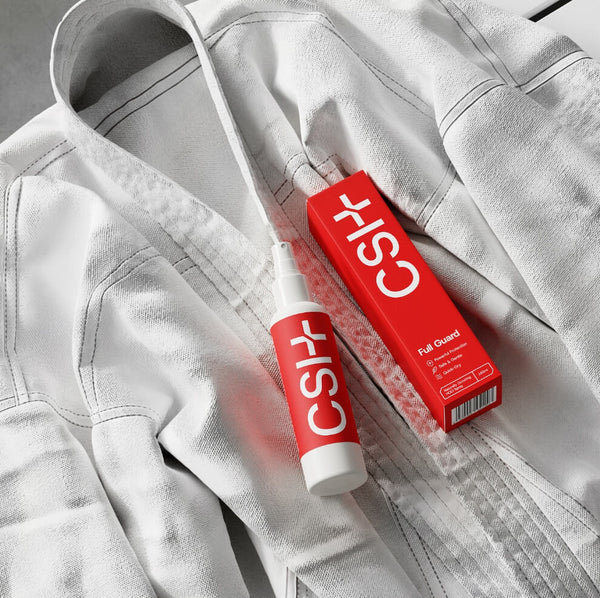
That last point is where most athletes go wrong. Scrubbing a raw cheek with harsh soap or dousing it with stinging antiseptic wipes is miserable, so people skip post-training skin care entirely, right when their skin barrier is compromised. A gentle option like Full Guard hypochlorous acid spray is built for exactly this: a non-stinging cosmetic cleansing spray that washes away sweat and mat residue from friction-stressed and healing skin, and it's gentle enough to use on the face. It's a skin cleanser, not a wound treatment, so use it on the skin around the area as part of your post-training routine while your first-aid dressing does its job on the wound itself.

Mat Burn Healing Stages: What to Expect Day by Day
A shallow mat burn cared for properly follows a predictable arc.
Days 1–2: Inflammation
The area is red, weepy, and tender. Clear or slightly yellow fluid on the dressing is normal; that's plasma, not pus. Keep it clean and covered.
Days 3–7: Rebuilding
New pink tissue fills in and the wound starts to itch, which is a good sign. Under a moist dressing you may get little or no scab. Resist the urge to peel anything.
Weeks 2–4: New skin and fading
Fresh skin covers the site, usually pinker or darker than the surrounding area. Protect it from sun and repeat friction; new skin re-tears easily. The American Academy of Dermatology's wound-care guidance notes that keeping a healing wound moist and covered helps minimize scarring, which matters most on the face.
If a mat burn isn't clearly improving after a week, something is off. Reassess your wound care or get it looked at.
When to See a Doctor
Mat burns share a room with contagious skin infections, so take warning signs seriously. See a doctor promptly if you notice any of the following:
- Spreading redness, warmth, or red streaks tracking away from the wound
- Thick yellow or green discharge, or a foul odor
- Increasing pain after day two instead of decreasing
- Fever, chills, or swollen lymph nodes
- Honey-colored crusting, ring-shaped scaly patches, or clusters of blisters near the site — possible impetigo, ringworm, or herpes gladiatorum, all of which spread through a training room fast
- A burn that hasn't healed within two to three weeks
Don't try to train through a suspected infection. You risk your own health and every partner you touch. Get it diagnosed, follow the return-to-mat guidance you're given, and come back cleared.
How to Prevent Mat Burn
You won't eliminate mat burn from a grappling sport, but you can cut how often it happens and how bad it gets.
- Wear a rashguard, and consider knee sleeves. A layer of fabric between your skin and the vinyl absorbs most of the shear. Long-sleeve rashguards protect elbows and forearms in no-gi rounds.
- Support mat cleanliness. Mats should be cleaned after every class, not every week. If your gym's mats smell or your feet turn black walking across them, say something.
- Cover existing burns before you train. A dressing plus athletic tape protects the wound and your partners. Raw skin on a shared mat is an open door in both directions.
- Shower as soon as possible after rolling and cleanse skin that took friction, then get a clean dressing on any open areas.
- Keep nails short and skin checked. A weekly once-over catches small lesions before they become infected ones.
Mat burn is part of the sport; infected mat burn doesn't have to be. Clean it fast with water or saline, keep it covered, treat your face gently, and watch it for a week. That routine costs you five minutes a day and saves you weeks off the mat.
Disclaimer: The information provided is for educational purposes and does not substitute professional medical advice. Always consult a physician for severe or worsening skin conditions.
Before your next session
Sort the kit tonight, not after the sore shows up
Every guide on this site ends the same way: sweat off fast, broken skin covered, gear dry, towel your own. That takes kit you carry, not kit you mean to buy. If any of these six is missing from your bag, this is the one to fix before you train again.
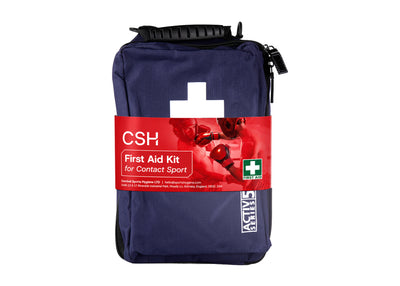
CSH Personal First Aid Kit
Washproof and hydrocolloid plasters, saline wipes and tape, in your bag
£26.99
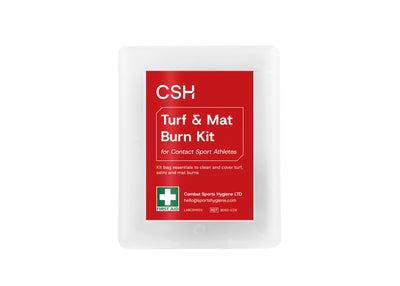
The Ultimate Mat & Turf Burn Treatment Kit
Built for the grazes that let infection in
£14.89
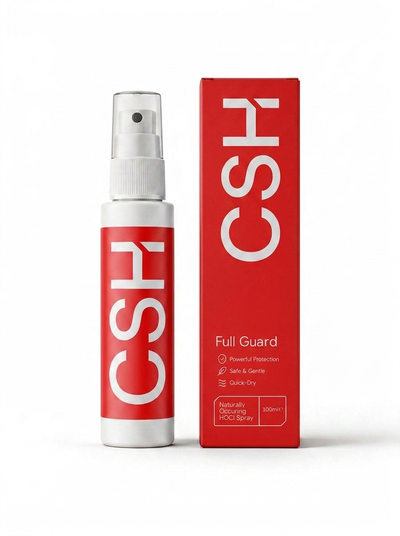
Full Guard V2
Rinse-free skin cleansing for the gap between training and the shower
£16.49
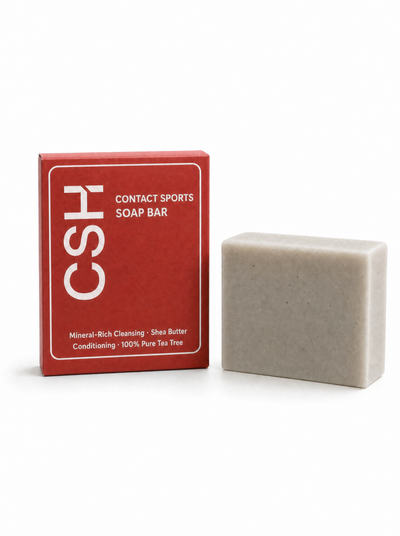
Athlete Soap Bar
The post-training shower, done properly
£8.49
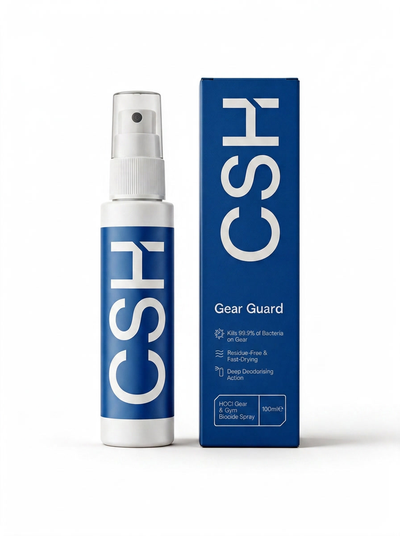
Gear Guard
For headgear, gloves, pads and the bag itself
£16.49
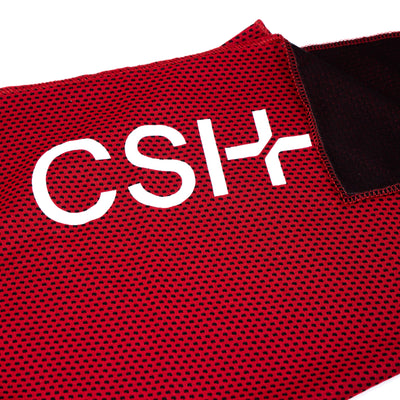
Moisture Wicking Sports Towel
Your own, washed after every session
£3.99
Get the full kit → See everything in the wrestling and grappling hygiene kit
Full Guard and the soap bars are cosmetics for cleansing the skin. First aid kits are CE/UKCA marked wound-care items, not medicines. Gear Guard is an equipment cleaner; use biocides safely and read the label. Nothing here prevents or treats a skin infection: if you think you have one, see a pharmacist or GP.