Athlete's Foot (Tinea Pedis) in Martial Arts
Educational information only – read the full notice
Train barefoot on shared mats for a few years, like I have, and athlete's foot stops being bad luck and starts being an occupational hazard. It's common, usually minor, and very manageable - but it's also easy to pass around and easy to let drag on. Here's the plain-English version: general information, not medical advice, and not about any product we sell, fact-checked against trusted sources and the doctors we work with.
⚡ 60-Second Summary
- What it is: a common fungal infection that thrives on warm, damp, enclosed feet. Very manageable, very easy to pass on.
- The most skipped step: drying properly between the toes, every single time.
- Use the right category: antifungal products. A leftover steroid or antibiotic cream is the wrong tool and can make things harder to recognise.
- Red flags: nails involved, spreading, not improving, or you have diabetes or a weakened immune system. See a GP.
What it is
Athlete's foot (tinea pedis) is a common fungal infection of the feet, in the same dermatophyte family as ringworm and jock itch. The NHS describes itchy, scaly and sometimes cracked or sore skin, classically between the toes, though it can affect the soles and sides of the feet too (NHS: Athlete's foot). The same fungus can travel to other warm, damp areas, which is how a foot problem becomes a groin problem if you're not careful with the order you dry and dress in.
Why martial artists are prone
Warm, damp, communal floors plus barefoot training are close to ideal conditions for the fungi behind it. The walk from the mat to the showers to the changing room is a tour of exactly the surfaces it likes. The mats themselves are a factor, which is part of why clubs clean them - see how to clean and disinfect training mats - but your own routine off the mat matters just as much.
How to recognise it
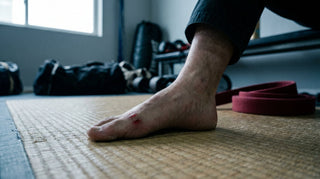
The familiar version is itchy, flaky, sometimes cracked skin between the toes - often starting in the gap between the smallest toes - that can sting or feel raw. It can also show up as dry, scaly patches on the soles and sides of the feet, or as small blisters. The itch and the between-the-toes flaking are the usual giveaways, but a pharmacist or GP can confirm it, since plain dry skin and other conditions can look similar to the untrained eye.
Habits that help
- Wash and, crucially, dry your feet thoroughly after training, especially between the toes - damp skin is the whole game. There's a full routine in the post-training shower routine.
- Wear clean, dry socks, and let trainers air out and dry between uses; rotating footwear helps.
- Consider footwear off the mat in communal areas like changing rooms and showers.
- Don't share towels, and dry your feet last so you're not carrying anything from your feet to the rest of your body.
What to do if you get it
A pharmacist is a sensible first stop and can advise on managing a typical, mild case. Keep up the drying-and-clean-socks basics while it clears, because re-exposing damp feet to the same conditions is exactly how it lingers or comes straight back. If a training partner has it, the shared-mat reality means the room's general hygiene matters too, not just yours.
Using the wrong cream: why it matters
A recurring question is whether a combined steroid and antibiotic cream from a previous prescription will sort out athlete's foot. It is worth understanding why that is the wrong tool.
Athlete's foot is a fungal infection. Antifungal products are the category designed for it. Steroid creams reduce inflammation, and antibiotics act on bacteria, so a combined steroid and antibiotic product contains nothing aimed at a fungus. Worse, the steroid component can calm the redness and itch for a few days while the fungus carries on underneath, which both delays the right approach and can leave the rash looking less typical and harder to recognise later.
This is also why leftover creams from an old prescription are a bad idea generally. They were prescribed for a specific problem at a specific time, and skin conditions that look similar are frequently not the same thing. A pharmacist can tell you in a couple of minutes which category you actually need, without an appointment. That conversation is free, fast and much cheaper than a month of using the wrong product.
Feet, socks and shoes: breaking the cycle
Fungi that cause athlete's foot like warm, damp, enclosed conditions, so the practical work is about removing those conditions rather than doing anything clever.
- Dry between the toes properly. The single most skipped step in the whole routine, and the one that matters most. Pat rather than rub, and do it every time.
- Dry your feet last when towelling off, so you are not moving anything from feet to groin. Better still, use a separate towel for feet if you are dealing with an active case.
- Change socks daily, more if they get soaked. Wash them at the temperature the label allows and dry them fully.
- Rotate footwear. Trainers need a day to dry out properly inside. Wearing the same pair every session keeps them permanently damp.
- Air shoes out rather than sealing them in a bag, and take the insoles out when you can.
- Sliders in communal showers and changing rooms. Warm wet floors are the classic shared route, and this costs almost nothing.
- Never share towels, socks or footwear. Obvious, still happens.
Why it keeps coming back
Recurrence is the most common complaint, and it usually comes down to one of four things rather than bad luck.
The course was stopped early. Treatment is typically continued for a period after the skin looks normal, precisely because the fungus outlasts the symptoms. Stopping the day it looks better is the most common reason it returns within weeks. Follow the instructions on the product and the advice of whoever recommended it, right to the end.
The shoes and socks were never dealt with. Treating the skin while re-wearing the same damp trainers puts you back where you started.
The conditions never changed. If feet spend the week damp and enclosed, the environment that allowed it is still there.
It is also somewhere else. The same family of fungi is behind jock itch, and it moves between areas easily, classically via a towel or by pulling shorts on over infected feet. Treating one area while ignoring the other lets it bounce back and forth. There is more on that in jock itch and how it differs from chafing.
If you have worked through all four and it still returns, that is worth a GP visit rather than another round of the same product. Persistent or unusual foot rashes are not always what they appear to be, and nail involvement in particular is managed differently.
Don't pass it around
Active, flaking athlete's foot on a shared mat isn't ideal for anyone. You usually don't need to stop training for a mild case, but keep your feet clean and dry, cover any broken or weeping skin as advised, and get it looked at if you're unsure. The same courtesy applies as with any skin issue: if in doubt, ask a coach.
Common questions
Can I train with athlete's foot?
A mild case usually doesn't mean stopping, but you're training barefoot on a shared surface, so keep your feet clean and dry, cover broken or weeping skin as advised, and get it sorted rather than letting it linger. If it's badly cracked or weeping, it's worth checking with your coach and ideally a pharmacist first.
Why does it keep coming back?
Usually because the conditions never change: damp feet, trainers that don't dry out, or re-exposure on a communal floor. The fix is rarely one thing applied once - it's the boring drying-and-clean-socks routine kept up consistently, plus airing footwear between sessions and not living in the same damp trainers.
Can the mats give it to me, or just other people?
Both. Shared, warm, damp floors are part of how the fungus spreads, which is why mat cleaning matters - but you can pick it up from surfaces as well as from other people. That's why the prevention habits work on both ends: clean mats from the club, and dry, clean feet from you.
When to see a doctor
Speak to a pharmacist or GP if foot skin is cracked, painful, weeping, spreading or simply not settling with the basics. Take extra care and seek advice sooner if you're diabetic or have circulation problems, as foot issues need closer attention in those cases. Anything that looks infected - increasingly red, hot and painful - is also worth getting checked promptly.
This article is general educational information and not medical advice, and it isn't about any Combat Sports Hygiene product. If you're worried about your skin, contact a GP, pharmacist or dermatologist.
BJJ Hygiene
Good hygiene is the best foundation for healthy training. Explore the everyday hygiene routine, kit and guides for BJJ athletes, all in one place. Explore the BJJ hygiene hub →
The Mat Entry/Exit Protocol: Where Prevention Is Actually Won
Most athlete's foot in grappling is not caught on the mats. It is caught on the ten metres of floor between the mats, the toilets and the changing room — then carried back onto the tatami on the soles of your feet.

The fix is a boring, repeatable routine:
- Flip-flops live at the mat edge. Feet go from mat directly into flip-flops, never onto bare floor.
- Bathroom trips mid-session: flip-flops on, and back off only at the mat edge.
- After training: wash feet properly with soap — including between the toes — as part of the full shower (the best soap for BJJ guide covers what to look for).
- Dry between every toe. Damp toe webs are where tinea starts; thirty extra seconds with the towel outworks any product.
- Shoes and mat shoes get dried out between sessions — rotate pairs rather than sealing damp footwear in the bag.
Creams treat; habits prevent. Over-the-counter antifungal creams from the pharmacist clear most established cases — ask a pharmacist or GP rather than guessing, and see the American Podiatric Medical Association's foot health guidance at apma.org. Daily washing and drying is what stops the reinfection cycle the creams cannot break on their own.