The Best Soap for Sweaty Skin After Football or Heavy Lifting
Educational information only – read the full notice
Two-a-days in August. A squat session that leaves your shirt wringable. If you sweat harder than most people, you already know that a quick rinse with whatever bar is in the locker room doesn't cut it — and sometimes makes things worse.

Here's the part most athletes never hear: the problem usually isn't that you're washing too little. It's that heavy sweat and harsh soap are working together against your skin. Understanding why takes about three minutes, and it changes how you pick a soap for good.
Why Sweaty Skin Needs a Different Soap
Your skin's surface sits at a mildly acidic pH, usually somewhere around 4.5 to 5.5. Dermatologists call this the acid mantle — a thin film of sweat, oil, and natural acids that keeps the skin's resident bacteria in balance. Research indexed on PubMed has examined skin surface pH extensively, and the pattern is consistent: skin works best when it stays on the acidic side.
Odor-causing bacteria prefer the opposite. When skin drifts toward neutral or alkaline, the species responsible for that locker-room smell multiply faster. Keep the surface mildly acidic and you make life harder for the bacteria that make you stink.
What heavy sweating does to your pH
A hard practice or a long lifting session floods the surface with sweat, which dilutes the acid mantle. On its own, that's temporary — skin recovers. The trouble starts when you stack a second hit on top of it.
What harsh soap does next
Most commercial bar soaps are alkaline, often pH 9 to 10. Scrub already-diluted skin with a strongly alkaline wash and you push the surface even further from where it wants to be. Do that after every session, day after day, and your skin spends most of the week playing catch-up.
The result many heavy sweaters know well: tight, itchy skin that somehow still smells by mid-afternoon. You're not under-washing. You're washing with the wrong chemistry.
The Under-Pads Problem Football Players Face
Football adds a layer that lifters don't deal with: equipment. Shoulder pads, girdles, helmets, and compression layers trap heat and moisture against the skin for two or three hours at a stretch.
That trapped zone becomes its own microclimate — warm, wet, low-airflow, and slow to dry. It's exactly the environment sweat-loving bacteria multiply in, which is why pad rash and shoulder funk show up in the spots your gear covers, not on your forearms.
The under-pads microclimate raises the stakes on everything else in this article:
- Longer exposure. Sweat that evaporates in minutes at the gym sits against a lineman's shoulders for an entire practice.
- Friction. Pads rub, and rubbed skin is more reactive to harsh surfactants afterward.
- Re-contamination. Pads and girdles that never fully dry reintroduce bacteria at the next practice, so the skin under them needs a thorough — but gentle — cleanse every single day.
If you play a padded position and sweat heavily, your wash routine matters more than almost anyone else's in the building.
What to Look for in the Best Soap for Sweaty Skin
Forget the marketing on the front of the box. Three things separate a soap that works for extreme sweat from one that fights you.
1. Gentle surfactants
Surfactants are the cleaning agents — the molecules that lift sweat, oil, and grime so water can carry them off. Aggressive ones strip everything, including the oils your skin needs. Gentle ones remove the day's buildup without scouring the surface raw.
A practical test: if your skin feels tight and squeaky the moment you towel off, the surfactant is too harsh for daily post-training use. Clean skin should feel clean, not stripped.
2. A skin-respecting pH
This is the big one for heavy sweaters. A soap formulated to sit close to skin's natural acidity cleanses without dragging the surface alkaline, so your skin isn't starting every recovery from a deficit. Since you're washing after every session — sometimes twice a day in camp — the pH of your soap compounds over a season.
3. No heavy synthetic fragrance
Strong perfume in a soap does two things you don't want. It masks odor instead of removing what causes it, and on skin that's been sweated on, rubbed by pads, and washed twice a day, added fragrance load is a common irritant. A light, natural scent — or none — is the better call for daily athletic use.

How to Wash After Football Practice or a Heavy Lifting Session
The right soap only pays off if the routine around it is solid. The American Academy of Dermatology — see aad.org for their skin care guidance — recommends showering promptly after workouts rather than letting sweat sit. Here's the athlete's version:
- Shower as soon as you can after training. Every hour sweat sits under a dried shirt or damp pads is time bacteria spend multiplying. Aim to be in the water within 30 minutes.
- Use warm water, not hot. Scalding showers feel great after squats but strip skin oils on their own, before soap even enters the picture.
- Lather the covered zones deliberately. Shoulders, chest, back, waistband line, groin — wherever pads or compression gear sat. These trap the most sweat and get skipped the most.
- Rinse completely. Soap residue left in creases keeps working on your skin long after you've dried off.
- Dry fully before dressing. Pat down, and give feet, groin, and underarms an extra minute. Putting clothes on damp skin rebuilds the microclimate you just washed away.
- Dry your gear too. Pads, girdles, and lifting belts need airflow between sessions. Clean skin in dirty gear is a half-measure.
Where the Athlete Soap Bar Fits
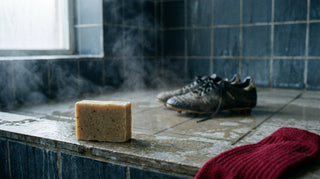
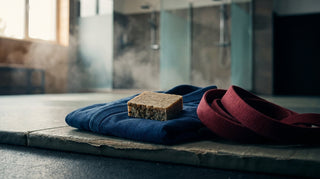
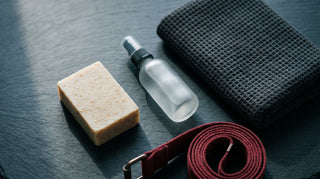
We built the Athlete Soap Bar for exactly this situation: athletes who sweat hard, train daily, and need a wash that keeps up. It cleanses thoroughly while respecting the skin's natural pH, with gentle surfactants and no heavy synthetic fragrance — the three boxes above, checked.
It's a bar, which matters more than it sounds. A solid bar survives a gym bag, doesn't burst in your locker, and lasts through a training block without the watery drop-off you get from the last third of a shower gel bottle.
One bar, used consistently after every session, does more for how you smell at 4 p.m. than any body spray applied over unwashed skin.
Common Mistakes Heavy Sweaters Make
- Scrubbing harder instead of smarter. Aggressive scrubbing with a harsh bar irritates skin that pads have already rubbed all practice. Pressure isn't the fix; chemistry is.
- Relying on antiperspirant over unwashed skin. Layering product on top of the day's sweat traps everything underneath. Wash first, always.
- Sharing bars in the locker room. Your soap should be yours. Full stop.
- Skipping the post-lift shower because "it's just the gym." Sweat from a deadlift session feeds the same bacteria as sweat from practice. Same rules apply.
- Ignoring gear hygiene. The cleanest skin in the world loses to a girdle that hasn't dried out since Tuesday.
The Bottom Line
Heavy sweat plus harsh alkaline soap is a cycle: the wash that's supposed to fix the smell keeps nudging your skin toward the conditions odor-causing bacteria love. Break it by switching to a soap with gentle surfactants, a pH close to your skin's own, and no heavy fragrance — then shower promptly, dry fully, and keep your gear as clean as your skin.
Pick the right chemistry once, and the daily routine takes care of itself.
Related reading
Two bars, handmade in Britain
The everyday Tea Tree & Dead Sea Mud bar for after every session, and the Deep Cleanse neem bar for the heavy ones. Cold-process, no synthetic fragrance, made by the same small soap maker since the start.
See all BJJ soap and athlete soap bars →