How to Safely Remove Rugby Grip Spray Resin From Your Kit and Skin
Educational information only – read the full notice
Rugby grip spray ends up on your kit. That is not a complaint - it ends up on your kit because it is doing its job, transferring from hands to ball to jersey during handling. The problem is that the waxy, tacky residue it leaves behind does not come out in a standard wash cycle. Most players either live with progressively stiff, discoloured patches on their jerseys, or they scrub at it and damage the fabric. Neither is necessary. Here is what grip spray actually contains and how to remove it properly - from fabric, and from your hands and skin.
What Rugby Grip Sprays Actually Contain
Grip sprays vary by brand and formulation, but the active components generally fall into a few categories:
- Natural or synthetic wax/resin: The primary tackifier. Pine resin (colophony) is common in older formulations; synthetic polymer resins in newer ones. This is what creates the physical grip and what bonds to fabric fibres when transferred.
- Tackifier compounds: Additives that increase surface adhesion - essentially making the wax stickier and longer-lasting on the hands.
- Carrier solvent: Usually alcohol or a water-based carrier that evaporates quickly after application, leaving the resin behind.
- Silicone (some brands): Adds a slicker feel to the spray whilst retaining grip. Silicone leaves a different type of residue to resin - less tacky, more of a surface sheen - and requires a different approach to remove.
Understanding which type of grip spray you are dealing with matters, because the removal method differs between water-based tackifiers and resin-based ones.
Removing Grip Spray from Fabric: Water-Based Tackifiers
If the grip spray uses a water-based formulation (check the label - it will usually say water-based or list water as the first ingredient), the residue is easier to shift. The approach:
- Do not put the jersey in the machine first. Pre-treat the stained area.
- Apply a small amount of washing-up liquid (dish soap) directly to the stain - dish soap is a degreaser and works well on water-soluble tackifier compounds.
- Work the soap gently into the fabric with your fingers. Do not scrub with a brush - this pushes the residue deeper into the weave and can damage technical fabric.
- Leave for 5-10 minutes, then rinse under cold water.
- Machine wash as normal at 40°C, inside-out, with enzyme detergent.
For most water-based grip sprays, this is sufficient. If the stain is old and has been washed repeatedly without pre-treatment (which can set the residue), you may need two rounds of the pre-treatment before it shifts fully.
Removing Grip Spray from Fabric: Resin-Based Formulations
Resin-based grip sprays are more stubborn. The resin does not respond to soap and water the same way water-based tackifiers do - you need a solvent to break it down first.
Options, in order of preference:
- White spirit: Apply a small amount to a clean cloth and dab (not rub) the stained area. The solvent dissolves the resin. Test on a hidden seam first to check for any colour lift. After the resin has softened, apply dish soap as above, then machine wash.
- Acetone (nail polish remover): More aggressive than white spirit - effective on stubborn resin, but higher risk of colour fading on dyed fabric. Use sparingly, test first, and rinse immediately after the resin lifts.
- Eucalyptus oil: A gentler option for natural resin residues. Apply to the stain, leave 5 minutes, then wash with dish soap and rinse. Takes longer but is fabric-safer.
After any solvent pre-treatment, always wash the jersey fully before wearing - you do not want residual solvent against your skin during a match.
Removing Grip Spray from Hands and Skin
For most grip sprays, soap and warm water is sufficient to clean your hands after use. Work up a good lather and wash for at least 20-30 seconds, paying attention to the webbing between fingers and around the nail beds where residue accumulates.
If the residue persists - particularly with resin-based sprays that have had time to set - try this before reaching for anything harsher:
- Rub a small amount of cooking oil (vegetable or olive oil) into the affected skin. The oil lifts the wax and resin from the skin surface by dissolving the bond - like dissolves like.
- Leave for 30-60 seconds, then wash thoroughly with soap and warm water.
- Rinse completely.
This works because grip spray resin is lipophilic - it binds more readily to oils than to water. The cooking oil acts as a carrier that lifts the residue, then the soap emulsifies the oil so it washes away cleanly.
What Not to Do: Harsh Scrubbing and Skin Barrier Damage
The instinct when something is stuck to your hands is to scrub harder. With grip spray residue on skin, that is the wrong approach. Dry scrubbing with an abrasive exfoliant strips the skin's barrier - the outer lipid layer that protects against bacterial entry. On hands that are already handling shared equipment in close-contact sport, a damaged skin barrier is a genuine hygiene risk. It creates micro-fissures that bacteria exploit.
Let the soap and oil do the work. If residue remains after a thorough wash, repeat the oil-then-soap method rather than scrubbing more aggressively. Your hands will thank you mid-season when everyone else's knuckles are cracked and yours are not.
For post-training hand and skin care, the CSH Athlete Soap Bar - a natural tea tree and Dead Sea mud bar - is a solid daily option for players who want something specifically formulated for sports use rather than a generic bathroom soap. Use it after the grip spray is off, as part of a full post-training wash.
Prevention is considerably easier than removal. If you apply grip spray to gloves rather than directly to your jersey, transfer to the fabric is reduced significantly. Some players also keep a dedicated training jersey - one they do not mind getting tacky over the season - specifically for sessions where grip spray is in heavy use, keeping their match jerseys clean. Both habits are simpler than running a solvent pre-treatment before every wash.
Related Guides
- How to Get the Mud and Smell Out of Rugby Jerseys
- The Ultimate Rugby Kit Bag Hygiene Checklist
- Post-Match Rugby Hygiene: The Full Routine
The other half of clean
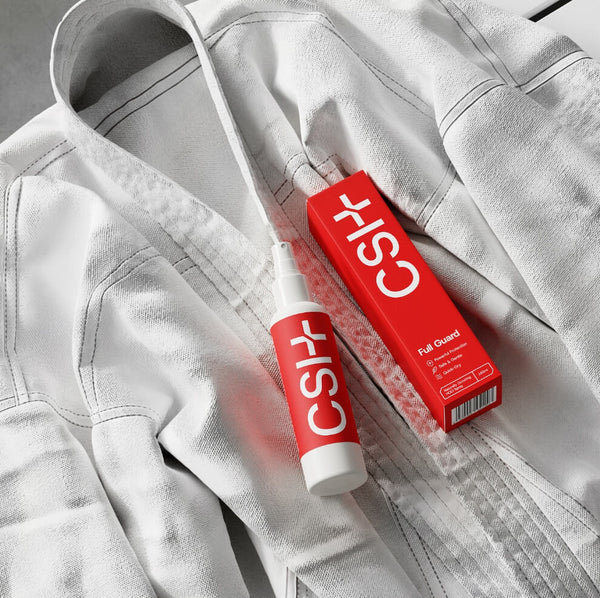
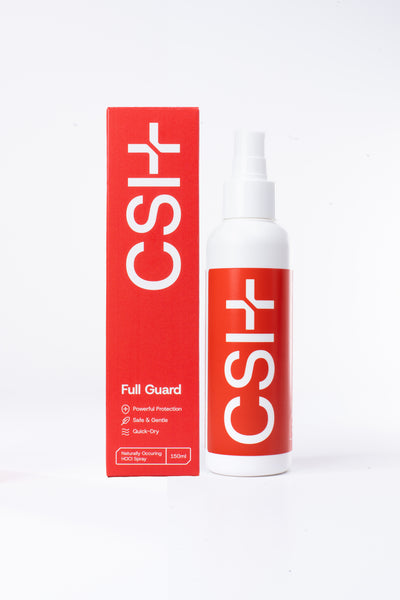
Full Guard HOCl Spray
Soap is the shower. Full Guard is everything in between. For the highest-contact sports on earth, a rinse-free skin cleanse for the car, the corner and the kit bag is as essential as the bar itself.
- 200ppm of 95% pure hypochlorous acid, a registered cosmetic spray
- Rinse-free and skin-friendly at pH 5.5 to 6.5, dries in about 60 seconds
- Freshens the skin surface when a proper shower is not an option
- Pairs with the Athlete Soap Bar for the complete routine
 Order Full Guard · £16.49
Full Guard is a cosmetic skin cleansing spray registered under the UK Cosmetic Products Regulation. It is not intended to treat, cure, prevent or diagnose any skin condition. For any active skin concern, consult a GP, dermatologist or pharmacist.
Rugby Hygiene Hub
The kit, the guides and the routines that keep rugby athletes clean and training, all in one place. Explore the Rugby hygiene hub →
The rugby bag, sorted
First aid kits built for grass and astro burns, a rinse-free cleansing spray for after training, handmade soap for the shower, and the spray for scrum caps and shared kit. For players, parents and clubs, with the season written up in order.
See the rugby hygiene and first aid collection →