A Coach's Guide to Sanitizing Rugby Balls and Training Equipment
Educational information only – read the full notice
A rugby ball passes through thirty pairs of hands in a single training session. It picks up skin flora, respiratory droplets from scrums and lineouts, and - if anyone on the pitch has an open cut - blood. Most clubs have a cleaning protocol for the changing rooms. Almost none have one for the ball. That is a gap worth closing, particularly if you have had a skin infection circulate through a squad, or if you are coaching youth players whose parents would reasonably want to know what hygiene steps the club takes with shared equipment.
The Genuine Transmission Risk from Shared Rugby Balls
The transmission risk from a rugby ball is lower than from direct skin-to-skin contact, but it is not zero. The relevant routes are:
- Skin flora transfer: Players handling the ball deposit bacteria from their hands - including Staphylococcus aureus, which is carried asymptomatically by roughly a third of the general population. If another player then touches their face, an open wound, or an area of broken skin, there is a potential route in.
- Respiratory droplets: During scrums, lineouts, and close contact handling, droplets land on the ball surface. In outbreak scenarios involving respiratory illness, the ball becomes a fomite.
- Open wound contact: During handling drills, players with cuts or abrasions on their hands make direct contact with the ball. Blood on a ball is not uncommon, and it carries a higher transmission risk than sweat.
World Rugby's guidance on equipment hygiene in outbreak scenarios specifically recommends washing balls with soapy water before and during training sessions where infection is circulating in a squad. That guidance exists because the risk has been deemed credible enough to warrant a protocol.
How to Clean a Match Ball Without Damaging It
A rugby ball - whether leather or synthetic - is not designed to be submerged in water. The internal bladder, the panel bonding, and leather surfaces can all be damaged by full immersion or by harsh chemical cleaners. The correct approach is a surface wipe-down, not a soak.
The protocol:
- Dampen a clean cloth with warm water and add a small amount of mild liquid soap (washing-up liquid works).
- Wipe down the entire ball surface - panels, seams, and the area around the valve.
- Wipe again with a clean damp cloth to remove soap residue.
- Dry with a clean dry cloth and leave to air dry completely before storage.
- Store in a cool, dry place - not in a damp bag at the bottom of a kit store.
Do not use bleach or chlorine-based cleaners on leather or synthetic leather. They degrade the surface, dry out the material, and shorten the life of the ball significantly. For synthetic match balls, avoid alcohol-based wipes at high concentration - they can affect the surface grip coating over time with repeated use.
Training Cones, Tackle Bags, and Scrum Machines
Training cones are picked up, thrown, kicked, and handled constantly, then stored in bags where bacteria can survive on plastic surfaces for hours to days. They are easy to clean - a wipe-down with warm soapy water at the end of each session, allow to air dry, done. It takes two minutes. Make it part of the kit-pack-up routine and it becomes automatic.
Tackle bags and scrum machine pads present a different challenge because they are padded and their surfaces are rougher. Bacteria can lodge in surface textures and seams. The approach:
- Exterior surfaces: wipe down with a damp cloth and mild soap after each session. Pay particular attention to the top and side impact zones where hands and faces make most contact.
- Allow to air dry fully before stacking or covering. Tackle bags stored damp in a pile will develop mould in the foam padding over a season.
- Inspect the outer cover for cracks or splits - damaged surfaces harbour bacteria far more effectively than intact ones and are harder to clean.
Tackle Pads and Tackle Shields
Tackle pads and shields follow the same logic as shoulder pads - the interior padding accumulates sweat and bacteria from repeated contact, and the exterior absorbs whatever is on the pitch. Handle them like personal protective equipment, not like furniture:
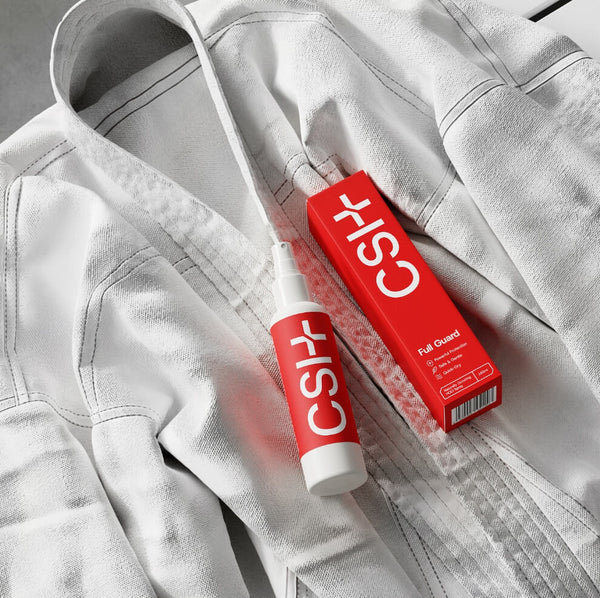
- Interior: where the foam is exposed or has a fabric liner, allow thorough air drying after each session. A light mist of a skin-safe cosmetic spray can help freshen the interior surface - Full Guard HOCl Spray is formulated for skin contact and is suitable for use on the interior surfaces that come into contact with players' skin and arms. It is a registered cosmetic spray containing 200ppm of 95% pure hypochlorous acid at a pH of 5.5-6.5. It is not a disinfectant product and should not be the only hygiene step, but it is a practical addition to the end-of-session routine.
- Exterior: wipe down with warm soapy water and allow to dry.
Why Clubs Need a Written Protocol, Not Individual Player Habit
Leaving equipment hygiene to individual players means it does not happen consistently. Some players will clean the ball after every session. Most will not. The result is a hygiene standard that depends entirely on whoever is most conscientious that day - which is not a standard at all.
A written protocol does not need to be elaborate. It needs to specify who is responsible for cleaning the balls and pads after each session, what products are used, and where equipment is stored. Laminate it and put it in the kit store. Kit managers: this is your list to own. Coaches: this is worth five minutes at the start of pre-season to establish before someone in the squad develops a skin infection that sidelines them for two weeks.
For player-facing hygiene - the individual responsibility that complements the club-level protocol - see The Ultimate Rugby Kit Bag Hygiene Checklist.
Related Guides
- The Ultimate Rugby Kit Bag Hygiene Checklist
- How to Clean Rugby Shoulder Pads
- Sharing Equipment and Rugby Infections: What Coaches Need to Know
- Rugby Locker Room Infections: What's Actually Going Around

For the gear that can't be washed
Gear Guard Equipment Cleaner Spray
A targeted HOCl surface spray for the kit no washing machine can help: gloves, pads, headgear, boots and bag linings. Spray until visibly wet, wait 60 seconds, wipe, and let it air dry.
- Independently tested surface biocide (BS EN 13727, BS EN 1650)
- One-minute contact time, then wipe and air dry
- No fragrance, dries clear, nothing left behind once dry
- 100ml fine mist, hundreds of targeted sprays, UK-made
Use biocides safely. Always read the label and product information before use. Gear Guard is for equipment, not skin. Fabric kit goes in the washing machine.
Rugby Hygiene Hub
The kit, the guides and the routines that keep rugby athletes clean and training, all in one place. Explore the Rugby hygiene hub →
Coaches who want the full grounding beyond equipment care will find it in the CSH Coaches Hygiene Course, built for club coaching teams.
The rugby bag, sorted
First aid kits built for grass and astro burns, a rinse-free cleansing spray for after training, handmade soap for the shower, and the spray for scrum caps and shared kit. For players, parents and clubs, with the season written up in order.
See the rugby hygiene and first aid collection →