The Resistance Question: Why HOCl Is Different
Educational information only – read the full notice
"Resistance" is one of the biggest stories in modern medicine: the worry that the bugs we're trying to manage can adapt and stop responding. It comes up a lot in conversations about hygiene products, so it's worth understanding the science behind it. A quick, important caveat first: this is a general look at how the chemistry works, not a set of claims about any product.
Written in plain English and fact-checked with our medical team.
How resistance happens with antibiotics
Antibiotics typically work in a targeted, "lock-and-key" way: a drug molecule fits a specific site to interrupt a specific biological process. That precision is powerful, but it's also the weakness: a small genetic change can alter the "lock" just enough that the "key" no longer fits, and a microbe carrying that change survives and passes it on. Repeat over many generations and you get resistance. It's biochemical, and it's adaptable.
Why oxidisers are a different category
Oxidising chemistry, the kind hypochlorous acid belongs to (see how hypochlorous acid works), isn't a lock-and-key interaction with one specific target. It's a broad chemical reaction. Researchers who study disinfectants generally note that this kind of broad, physical-chemical mechanism is a very different proposition to a single-target drug, and that organisms don't adapt to it in the same neat, heritable way they can to a precision antibiotic. That's a point about the class of chemistry, studied in lab and industrial settings, not a promise about your bathroom shelf.
A quick primer on how resistance spreads
To understand why resistance is such a concern, it helps to see how it takes hold. When a population of microbes is exposed to a targeted drug, most are affected, but if even a few carry a chance genetic variation that lets them survive, those few go on to reproduce. Their offspring inherit the trait, and over many generations the resistant version becomes the norm. It's evolution in fast-forward, driven by the fact that the drug applies a selective pressure: survive-the-drug becomes the winning trait. This is well-documented science, and it's exactly why public-health bodies urge careful, appropriate use of antibiotics: the more you expose microbes to a targeted drug, the more chances you give resistance to emerge.
Why broad mechanisms are a different category
The key distinction researchers draw is between targeted and broad mechanisms. A targeted drug works like a key in a specific lock: precise, but vulnerable, because a small change to the lock defeats the key. A broad oxidising reaction isn't picking a single molecular lock; it's a general chemical process. Researchers who study disinfectants and oxidisers as a class generally note that organisms don't adapt to that kind of broad, physical-chemical action in the same neat, heritable way they adapt to a precision drug, since there's no single "lock" for a mutation to change. This is a statement about a category of chemistry, studied in laboratory and industrial settings, and it's genuinely interesting context. It is emphatically not a performance claim about any cosmetic product.
Keeping this in perspective
It's worth repeating, clearly, what this article is and isn't. It's a general, educational look at why two types of chemistry behave differently when it comes to resistance. It is not a suggestion that you should reach for any hygiene product instead of proper medical treatment, and it is not a claim that a cosmetic mist does anything to microbes on your skin. Antimicrobial resistance is a serious public-health issue that belongs to doctors, pharmacists and bodies like the NHS and WHO, the right places for both the science and any personal advice. Nothing here changes that, and nothing here should be read as a shortcut around it.
The honest bottom line
So why write about resistance on a hygiene blog at all? Because people genuinely ask about it, and understanding the difference between a targeted drug and a broad chemical reaction is useful, interesting knowledge, the kind that helps you see past marketing in either direction. Our position stays firmly on the right side of the line: our Full Guard mist is a cosmetic hygiene product for keeping skin clean and fresh, and we make no antimicrobial, disinfectant or medical claims for it whatsoever. Knowledge, not claims: that's the whole of it.
Where to learn more, properly
Because antimicrobial resistance is a genuinely important topic, and one that deserves better than marketing spin from either direction, it's worth pointing you to the right sources rather than leaving it here. Public-health bodies cover it thoroughly and authoritatively: the NHS has accessible explainers on antibiotics and resistance, and the World Health Organization treats antimicrobial resistance as one of the major global health challenges, with detailed, trustworthy material on why it matters and what's being done about it. Those are the places to go for the real science and any guidance that applies to you personally. What we've offered here is narrower and more modest: a general, plain-English look at why a broad oxidising reaction differs, as a category of chemistry, from a targeted drug: useful context, nothing more. We've been deliberately careful to keep our cosmetic product entirely out of that discussion, because it belongs out of it: a skin mist is a skin mist, with no antimicrobial or medical claims attached. If you take two things from this article, make them these. First, the difference between targeted and broad mechanisms is a real and interesting bit of science worth understanding. Second, anything to do with infections, antibiotics, resistance or treatment is a matter for qualified professionals and reputable health bodies, not something to settle with a hygiene product or infer from a blog. Knowledge from the right sources, claims from nobody: that's the honest way to handle a serious subject.
FAQ
Are you saying your spray beats antibiotic resistance?
No, absolutely not. This article explains a general scientific distinction between types of chemistry. Our product is a cosmetic mist and makes no antimicrobial or medical claims at all.
Why write about resistance at all, then?
Because people genuinely ask about it, and understanding the difference between targeted drugs and broad chemical reactions is interesting and useful context. Knowledge, not claims.
Where can I read more on antibiotic resistance properly?
Trusted public-health sources like the NHS and WHO cover antimicrobial resistance in depth: the right place for the medical detail.
Keep reading
- How hypochlorous acid works: the oxidation chemistry.
- HOCl vs bleach.
- How your cells make HOCl.

Our HOCl mist
Full Guard Hypochlorous Acid Spray
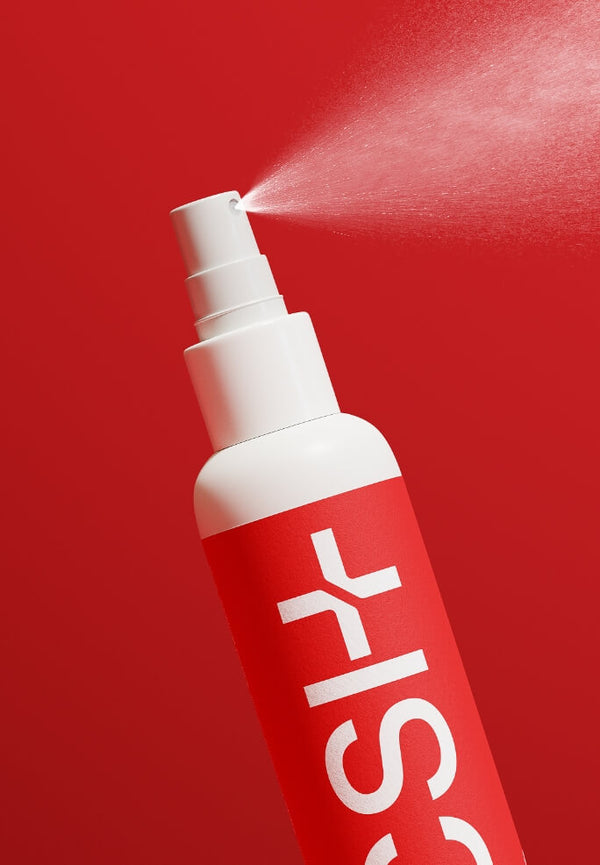
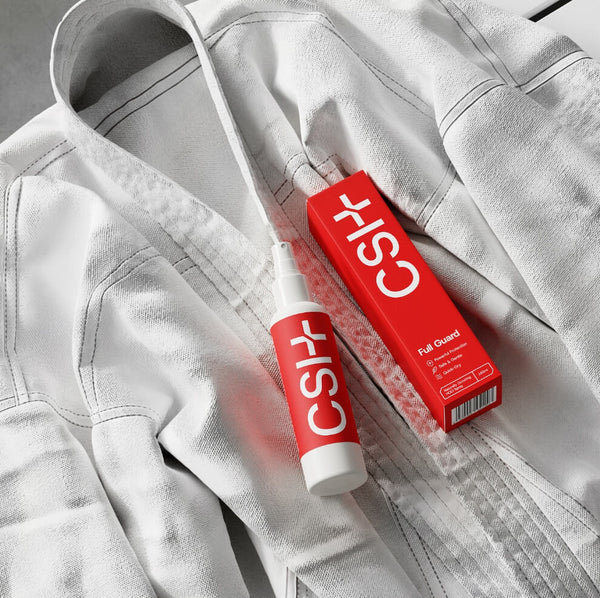
An ultra-pure, fragrance-free HOCl mist made in the UK. Rinse-free, no alcohol and no sting, it dries in a minute or two and leaves skin feeling clean and fresh, the perfect freshen-up when a shower isn't happening yet.
- 95% pure hypochlorous acid, skin-friendly pH 5.5-6.5
- Fragrance-free and non-stripping, kind to sensitive skin
- Rinse-free, dries fast, fits any bag or desk drawer
- UK-made to ISO 22716 (GMP) standards
Want the full picture on Full Guard? See what makes our hypochlorous acid spray different, for sport and for skin.
Full Guard is a cosmetic skin cleansing spray registered under the UK Cosmetic Products Regulation. It is not intended to treat, cure, prevent or diagnose any skin condition. For any active skin concern, consult a GP, dermatologist or pharmacist.