The pH Tightrope: What Keeps HOCl Stable
Educational information only – read the full notice
Hypochlorous acid lives or dies by its pH. Nudge the acidity one way and you've got the gentle, skin-friendly molecule everyone wants; nudge it the other way and you've got something closer to bleach, or, at the far extreme, something you really don't want at all. It's a genuine tightrope, and it's why a well-made product is more of an achievement than the simple ingredients suggest.
Here's the chemistry, kept plain, and fact-checked with our medical team.
An equilibrium, not a fixed thing
In water, hypochlorous acid sits in a balance with its ionised form, the hypochlorite ion. Chemists write it like this:
HOCl ⇌ H+ + OCl-
That double arrow is the important bit: the two forms exist together, and the ratio between them shifts with pH. In acidic-to-neutral conditions, the balance favours HOCl, the gentle, useful form. As things turn alkaline, the balance tips towards OCl-, the harsher, bleach-like hypochlorite (the contrast is in HOCl vs bleach).
Why the tightrope is narrow
- Too alkaline and you drift towards hypochlorite: harsher and less skin-friendly.
- Too acidic and the chemistry can start releasing chlorine gas: not something you want near skin at all.
- Around neutral-to-slightly-acidic is the sweet spot where HOCl dominates and stays gentle.
So a quality product isn't just "salt water with something in it". It's a solution held in a fairly narrow pH window. That control is also tied to how long it lasts, which is shelf life.
pH, briefly, for non-chemists
If pH is a hazy memory from school science, here's the short version. The pH scale runs from 0 to 14: low numbers are acidic (lemon juice, vinegar), high numbers are alkaline (bleach, oven cleaner), and 7 in the middle is neutral, like pure water. Your skin sits slightly on the acidic side of neutral, which is why products close to that range tend to feel kindest. pH is really just a measure of how many free hydrogen ions are floating about, and for hypochlorous acid that number is the master switch: it decides which form of the molecule you actually have. Nudge the hydrogen-ion count and you nudge the whole balance.
What happens at each end of the scale
Picture the equilibrium as a slider. Down in the acidic-to-neutral zone, the slider sits on HOCl, the gentle, useful form you want on skin. Push it alkaline and the slider moves towards hypochlorite, the harsher, bleach-like form (the contrast is in HOCl vs bleach). Push it too far the other way, strongly acidic, and the chemistry can start releasing chlorine gas, genuinely not something you want anywhere near your skin or your lungs. So the sweet spot is a fairly narrow window around neutral-to-slightly-acidic, with unpleasant outcomes waiting on both sides. That's the tightrope: not much room for error in either direction.
Why a good product is an achievement
This is the bit that reframes how you think about a HOCl product. Because the useful, gentle form only exists in a narrow pH band, and because the molecule is naturally dynamic and inclined to drift, holding a solution steadily in that window, through manufacture, packaging and months on a shelf, takes real process control. "Salt water with something in it" undersells it badly. A stable, gentle, reliably skin-friendly HOCl product is the result of getting the pH right and keeping it right, which is harder than the humble ingredients suggest. It's also tied to how long the product lasts, the subject of shelf life.
What it means for you as a user
You don't need to monitor any of this yourself, that's the maker's job, but understanding it helps you be a smarter buyer and user. It's why you shouldn't try to "top up" or dilute a HOCl product at home (you'd risk tipping it out of its safe window), why proper packaging and a sensible shelf life matter, and why a faint pool-like smell on a fresh product is normal rather than alarming. Buy a well-made product, store it sensibly, use it within its life, and the pH tightrope is something the manufacturer walks so you don't have to. Knowing it's there just helps you appreciate what you're actually using.
The short version
If the chemistry has made your eyes glaze, here's everything that actually matters in a nutshell. Hypochlorous acid only exists as the gentle, useful molecule within a narrow pH window around neutral-to-slightly-acidic. Drift alkaline and it becomes harsher and bleach-like; drift too acidic and it can release chlorine gas. The molecule is also naturally dynamic, so it doesn't just need to be made in that window. It needs to be held there through packaging and months on a shelf. That's why a genuinely good HOCl product is a feat of careful process control rather than just "salt water with something added," and it's why three things matter when you buy and use one: that it's properly made by someone who controls the pH, that it's well-packaged to protect it, and that you use it reasonably fresh. You don't need to measure or manage any of this yourself; just don't try to tamper with, dilute or "top up" a product, because you'd risk tipping it out of its safe window. Buy a well-made mist, store it cool and out of strong light, use it within its life, and the tightrope is something the manufacturer walks on your behalf. Knowing it's there simply helps you appreciate what's in the bottle and steer clear of the dodgy DIY shortcuts that float around online. Gentle, effective and stable all at once is harder to achieve than it looks, which is rather the point.
FAQ
Can I adjust the pH of a HOCl product myself?
Best not to. You'd risk tipping it towards bleach-like hypochlorite or, worse, releasing gas. Leave the pH control to a properly made product.
Why does pH change the molecule at all?
Because HOCl and hypochlorite are two forms of the same equilibrium, and pH (the amount of free hydrogen ions) is exactly what decides which form dominates.
Does pH affect how gentle it feels?
Yes. A near-neutral pH is a big part of why a good HOCl mist feels mild and doesn't sting.
Keep reading
- HOCl vs bleach: the two forms compared.
- Shelf life: why it fades.
- How hypochlorous acid works.

Our HOCl mist
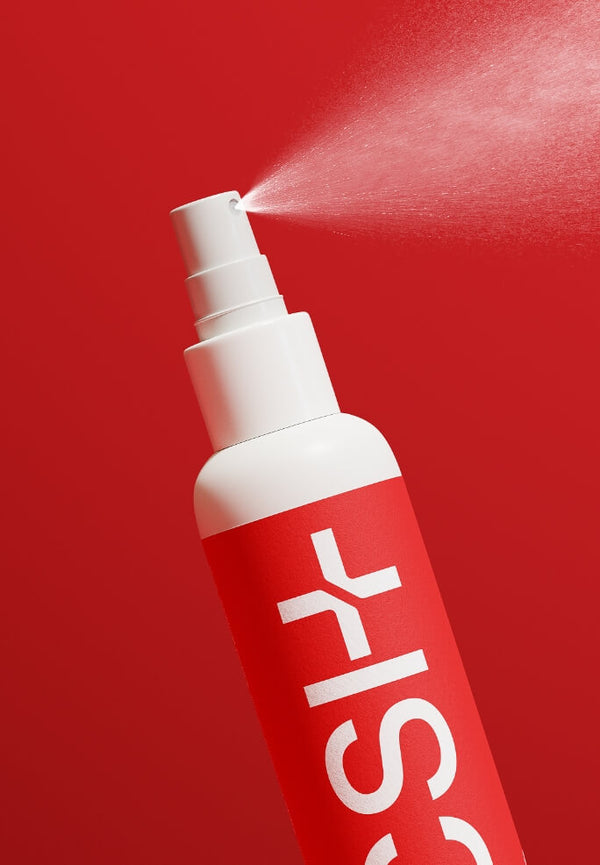
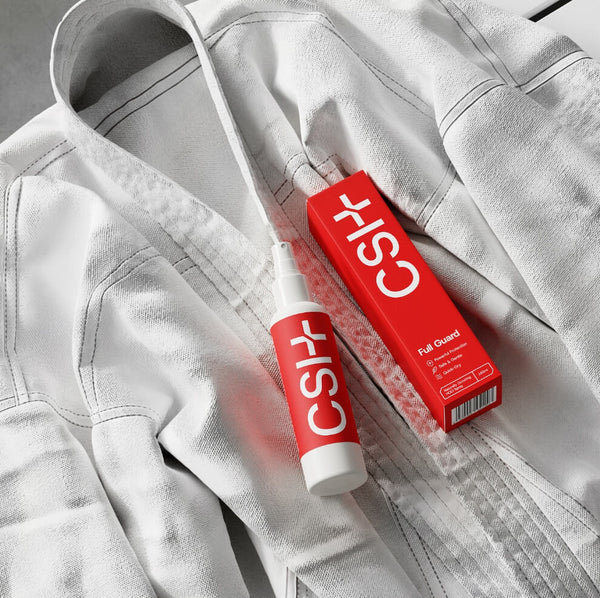
Full Guard Hypochlorous Acid Spray
An ultra-pure, fragrance-free HOCl mist made in the UK. Rinse-free, no alcohol and no sting, it dries in a minute or two and leaves skin feeling clean and fresh, the perfect freshen-up when a shower isn't happening yet.
- 95% pure hypochlorous acid, skin-friendly pH 5.5-6.5
- Fragrance-free and non-stripping, kind to sensitive skin
- Rinse-free, dries fast, fits any bag or desk drawer
- UK-made to ISO 22716 (GMP) standards
Want the full picture on Full Guard? See what makes our hypochlorous acid spray different, for sport and for skin.
Full Guard is a cosmetic skin cleansing spray registered under the UK Cosmetic Products Regulation. It is not intended to treat, cure, prevent or diagnose any skin condition. For any active skin concern, consult a GP, dermatologist or pharmacist.