How Hypochlorous Acid Works: The Science of Oxidation
Educational information only – read the full notice
Hypochlorous acid gets talked about a lot, but rarely explained. So let's do that properly: what this molecule actually is, and the chemistry behind why it behaves the way it does. No marketing, just the science, kept in plain English and fact-checked with our medical team.
A very small, very reactive molecule
Hypochlorous acid (HOCl) is about as simple as molecules get: one hydrogen, one oxygen, one chlorine atom. What makes it interesting to chemists is that it's a strong oxidiser. Oxidation is just the transfer of electrons from one substance to another; HOCl readily pulls electrons from the organic molecules it meets, which chemically alters them.
That's the whole story at a molecular level: HOCl is a reactive little molecule that oxidises organic material it comes into contact with, changing its structure. It's the same basic chemistry whether you're reading a textbook or looking at why a fresh batch smells faintly of a swimming pool.
Why it's also gentle
Here's the part that surprises people: despite being reactive, HOCl sits at a skin-friendly, near-neutral pH and is the same molecule your own body produces (more on that in how your cells make HOCl). It's also electrically neutral, which is part of why it behaves so differently to bleach. The contrast is in HOCl vs bleach.
It's a dynamic, slightly unstable molecule, too. Left to its own devices it gradually reverts to little more than mild salt water, which is why strength and storage matter (see PPM explained and shelf life).
Oxidation in everyday life
"Oxidiser" sounds like lab jargon, but oxidation is one of the most ordinary chemical processes there is, and you see it constantly. A sliced apple turning brown is oxidation. Iron rusting is oxidation. A cut avocado going off, a copper roof turning green: all oxidation, just electrons being transferred from one substance to another and changing it in the process. Hypochlorous acid is simply a molecule that's good at driving that kind of reaction with the organic material it meets. There's nothing exotic or sinister about it; it's the same broad family of chemistry as the browning fruit in your kitchen, which is a useful thing to remember when the marketing around HOCl gets breathless.
Why a reactive molecule can still be gentle
People often assume "reactive" must mean "harsh," but the two aren't the same. HOCl's reactivity is real, yet it's paired with two properties that keep it skin-friendly: a near-neutral pH that's close to your skin's own, and the fact that it's the very molecule your body already produces (see how your cells make HOCl). It's also short-lived, doing its bit and then winding back down towards mild saline rather than lingering as something aggressive (the chemistry of that fade is in shelf life). So you get a molecule that's chemically active but gentle in feel, which is an unusual and useful combination.
What this means in practice
Strip away the science and the practical picture is simple. Hypochlorous acid is a small, naturally-occurring molecule, made from salt and water, that's chemically active yet gentle and pH-friendly on skin. Those properties are why it's become popular as the basis for a fragrance-free skin mist. The science above explains why the molecule behaves as it does; it doesn't change what the product is: a cosmetic hygiene item for keeping skin clean and fresh. We keep the molecule's chemistry and the product's job in separate boxes on purpose: the chemistry is interesting; the cosmetic claim stays modest.
Cutting through the marketing
Hypochlorous acid has had a surge of popularity, and with popularity comes hype, so it's worth keeping a level head. You'll see HOCl described in near-miraculous terms, and on the flip side you'll see people dismiss it as "just bleach" or "just salt water." The grounded truth sits between those poles. It is a real, well-understood molecule with genuinely useful properties: an active oxidising chemistry paired with a gentle, skin-friendly nature, and the appeal of being something your own body makes. It is not a miracle, and a cosmetic skin mist made from it is exactly that: a nice, gentle product for keeping skin clean and fresh, not a cure-all. The most useful thing you can do as a buyer is ignore both the breathless claims and the lazy dismissals, and judge a product on the basics: is it gentle, is it fragrance-free, is it well-made and properly packaged, does it suit your skin? Understanding the chemistry, that it's a small, naturally-occurring oxidiser that's active yet mild, is what lets you see past the marketing in either direction. Knowledge is the antidote to hype, which is rather the point of a post like this one.
FAQ
Is hypochlorous acid the same as bleach?
No. They're chemically related but behave very differently. HOCl is neutral and skin-friendly where household bleach (sodium hypochlorite) is harsh and alkaline. The full explanation is in HOCl vs bleach.
What does "oxidiser" actually mean?
An oxidiser is a substance that pulls electrons from others, changing them chemically. It's a basic, everyday type of chemical reaction: rusting and browning fruit are oxidation too.
If it's reactive, is it safe on skin?
At the low, cosmetic strengths used in a skin mist it's formulated to be gentle and non-stinging. Any specific skin concern is still a question for a healthcare professional.
Why does my HOCl product have a faint pool smell?
That light, chlorine-family note is normal and expected. Hypochlorous acid is chemically related to the compounds that give a swimming pool its smell, so a faint whiff is just the chemistry being itself. It's usually mild and fades as the product is used and ages. A strong, harsh bleach smell would be a different story and might suggest the pH has drifted, but a gentle, faintly-poolish scent on a fresh product is exactly what you'd expect from genuine HOCl. If anything, a completely odourless "HOCl" product is more worth questioning than a faintly scented one.
Keep reading
- How your cells make HOCl.
- HOCl vs bleach: the neutral-charge advantage.
- Electrolysed water 101: how it's made.
Related reading: the science of how HOCl breaks down odours.

Our HOCl mist
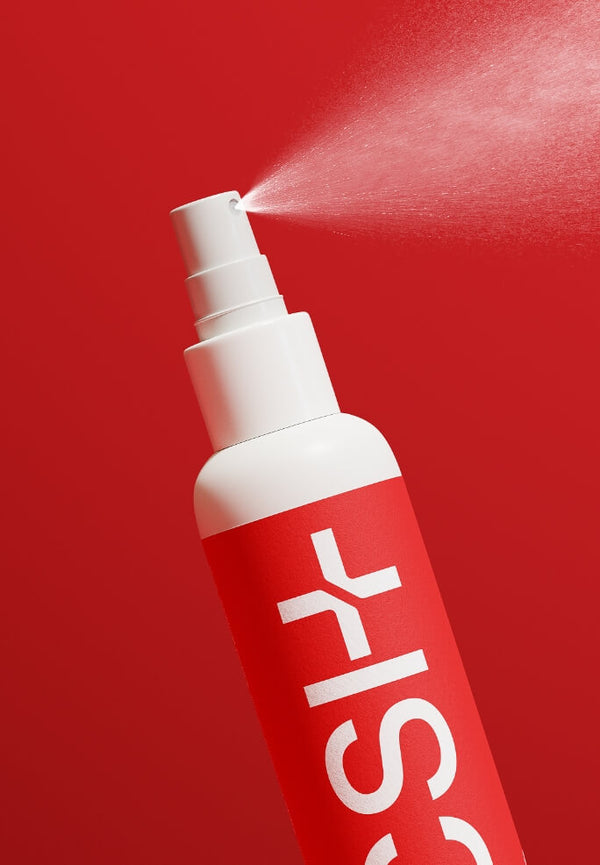
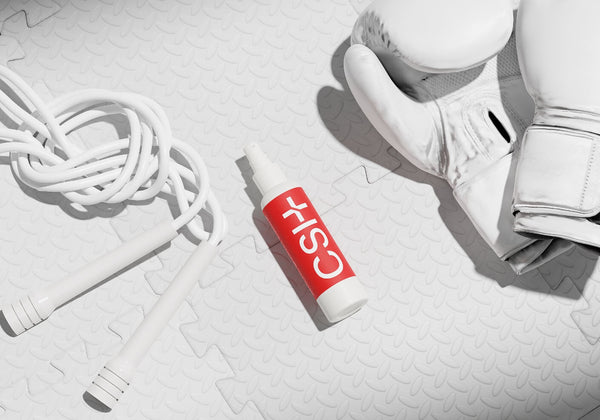
Full Guard Hypochlorous Acid Spray
An ultra-pure, fragrance-free HOCl mist made in the UK. Rinse-free, no alcohol and no sting, it dries in a minute or two and leaves skin feeling clean and fresh, the perfect freshen-up when a shower isn't happening yet.
- 95% pure hypochlorous acid, skin-friendly pH 5.5-6.5
- Fragrance-free and non-stripping, kind to sensitive skin
- Rinse-free, dries fast, fits any bag or desk drawer
- UK-made to ISO 22716 (GMP) standards
Want the full picture on Full Guard? See what makes our hypochlorous acid spray different, for sport and for skin.
Full Guard is a cosmetic skin cleansing spray registered under the UK Cosmetic Products Regulation. It is not intended to treat, cure, prevent or diagnose any skin condition. For any active skin concern, consult a GP, dermatologist or pharmacist.