Electrolysed Water 101: Brine, Electricity and HOCl
Educational information only – read the full notice
For something that sounds high-tech, hypochlorous acid is made from a startlingly short ingredients list: salt, water and electricity. That's genuinely it. The process is called electrolysis (or, more formally, electrochemical activation) and understanding it is the best way to demystify what's actually in the bottle.
Here's how it works, in plain English, fact-checked with our medical team.
Salt + water + a precise charge
Start with a simple brine: pure water with a measured amount of salt (sodium chloride) dissolved in it. Pass a carefully controlled electric current through it, and the electricity drives chemical reactions that rearrange those basic building blocks. Out of that brine you get hypochlorous acid.
The "carefully controlled" part is the whole craft. The strength of the current, the purity of the water and salt, and the precise conditions all determine the concentration and the pH of what comes out, which is why two HOCl products can be quite different despite the same humble starting materials.
Why this matters to you
- It's transparent. There's no mystery cocktail: the inputs are salt and water, and the output is a molecule your body already makes (see how your cells make HOCl).
- It explains the gentleness. A well-made, pH-balanced electrolysed solution is mild by nature.
- It explains the limits. Because it's made from a balanced reaction, HOCl naturally tends to drift back towards plain salt water over time: the reason storage matters, covered in shelf life.
The electrochemistry, a little deeper
Without getting lost in equations, it's worth seeing roughly what the electricity is doing. Salt is sodium chloride, and dissolved in water it splits into sodium and chloride ions. When you pass a controlled current through that brine, the energy drives reactions at the electrodes that rearrange those building blocks, and under the right conditions of concentration and pH, the chloride ends up forming hypochlorous acid. That's the whole trick: you're not adding anything exotic, you're using electrical energy to coax salt and water into a more useful arrangement. The technical name for the broad approach is electrochemical activation, which sounds grand for what is, at heart, salt water and a precisely managed electric charge.
Why consistency is the hard part
If the ingredients are this cheap and the principle this simple, you might wonder where the difficulty, and the value, lies. The answer is consistency. The concentration and, crucially, the pH of what comes out depend on getting the current, the water purity, the salt level and the conditions exactly right, every time. Drift off the narrow pH window and you no longer have gentle hypochlorous acid; you have something more like bleach, or, at the other extreme, something that off-gasses chlorine (the tightrope is in the pH tightrope). Producing a stable, gentle, reliably skin-friendly solution batch after batch is a genuine piece of process control, which is why a good product is more of an achievement than its humble inputs suggest.
From brine to bottle
The final piece is what happens after production. Because HOCl is a dynamic molecule that naturally drifts back towards salt water, how it's stabilised and packaged matters as much as how it's made: opaque, UV-protected packaging, sensible storage, a realistic shelf life (all covered in shelf life). So the journey from brine to bottle is: precise electrochemistry to make it, careful control to get the strength and pH right, and proper packaging to keep it that way until you use it. Transparent inputs, demanding process: that's the honest picture of what's in the bottle.
Why transparency matters
There's a reassuring honesty to a product whose entire ingredient story is "salt, water and a precise electric charge." In an industry that often hides behind unpronounceable ingredient lists and vague promises, being able to say exactly what something is made from, and to point at the simple science of how, is genuinely valuable. It means there's no mystery cocktail to worry about: the inputs are about as benign as inputs get, and the output is a molecule your own body manufactures (how your cells make HOCl). That transparency is also why understanding the process is worth your time as a buyer. Once you know it's electrolysed brine held in a careful pH window, you can ask the right questions of any product: is it fresh, is it well-packaged, is it at a skin-friendly strength? You're not taking anything on faith. For a savvy, ingredient-conscious consumer (and athletes increasingly are exactly that) a clean, comprehensible production story is part of the appeal, not a footnote. Salt and water and electricity, controlled with real care, then protected in the bottle: that's the whole of it, and there's something quietly trustworthy about a product that has nothing to hide.
FAQ
Can I make hypochlorous acid at home?
DIY kits exist, but consistency is the hard part: concentration and pH depend on precise control, and a home brew can be unpredictable. A properly made, stable product takes the guesswork out.
If it's just salt water, why isn't it free?
The ingredients are cheap; the precision, stabilisation and quality control are where the value is. Getting a consistent, gentle, stable product is the craft.
Is electrolysed water the same as hypochlorous acid?
"Electrolysed water" is the broad process; hypochlorous acid is the useful molecule it can produce when done under the right conditions. The chemistry of the molecule itself is in how hypochlorous acid works.
Is electrolysed water the same as the "alkaline water" I've seen advertised?
No. They're different things, despite both involving electrolysis. The "alkaline ionised water" sold as a drink is about raising the pH of drinking water. Hypochlorous acid is produced from brine under specific conditions to make a skin-friendly solution at a near-neutral pH, and it's a topical cosmetic ingredient, not a drink. Don't conflate the two: our product is a skin mist, not something to consume, and the electrolysis here is in service of making gentle HOCl rather than altering the pH of water you'd swallow. As ever, a skin product is for skin, used as directed.
Keep reading
- How hypochlorous acid works.
- How your cells make HOCl.
- Shelf life: why it reverts to salt water.

Our HOCl mist
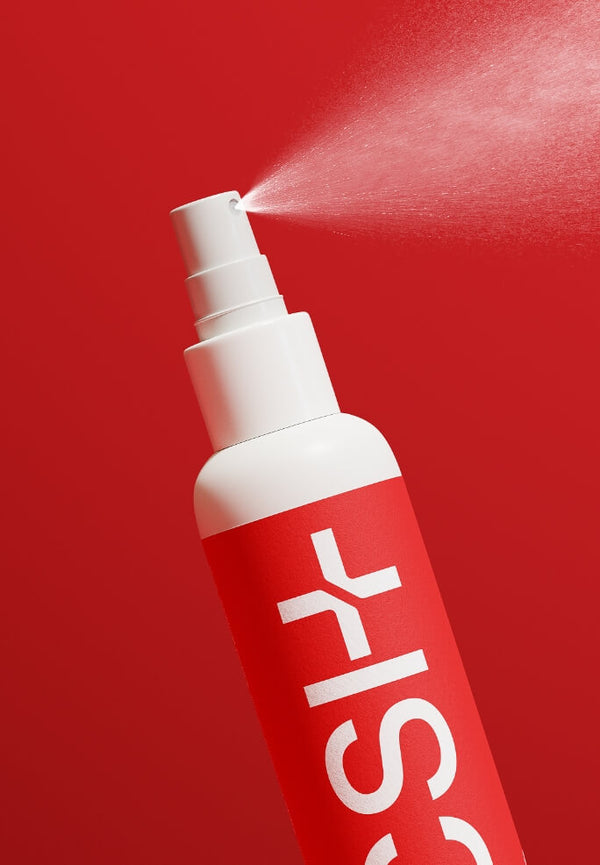
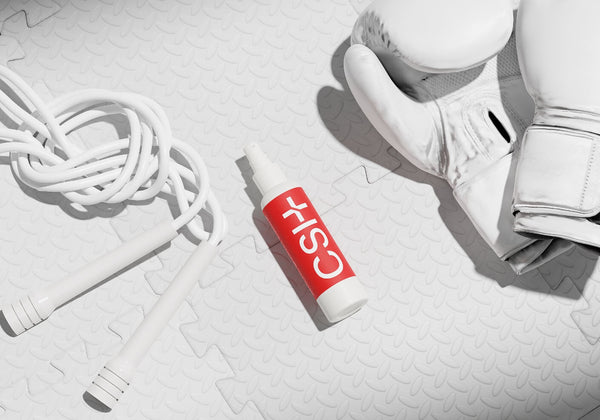
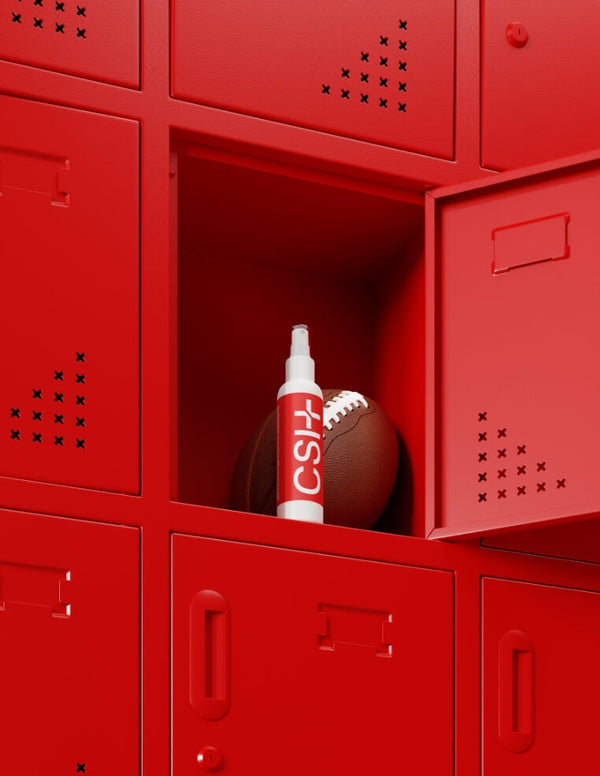
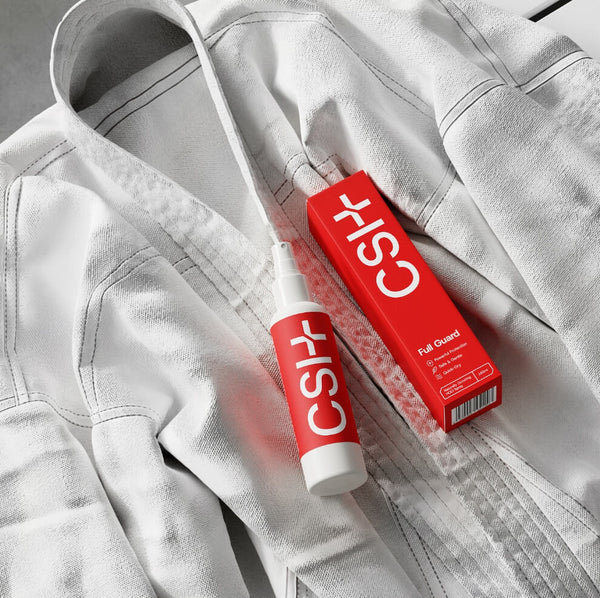
Full Guard Hypochlorous Acid Spray
An ultra-pure, fragrance-free HOCl mist made in the UK. Rinse-free, no alcohol and no sting, it dries in a minute or two and leaves skin feeling clean and fresh, the perfect freshen-up when a shower isn't happening yet.
- 95% pure hypochlorous acid, skin-friendly pH 5.5-6.5
- Fragrance-free and non-stripping, kind to sensitive skin
- Rinse-free, dries fast, fits any bag or desk drawer
- UK-made to ISO 22716 (GMP) standards
Want the full picture on Full Guard? See what makes our hypochlorous acid spray different, for sport and for skin.
Full Guard is a cosmetic skin cleansing spray registered under the UK Cosmetic Products Regulation. It is not intended to treat, cure, prevent or diagnose any skin condition. For any active skin concern, consult a GP, dermatologist or pharmacist.