Hypochlorous Acid Face Spray vs Makeup Setting Mist: What is the Difference?
Educational information only – read the full notice
Hypochlorous Acid Face Spray vs Makeup Setting Mist: What Is the Difference?
A hypochlorous acid face spray is a cosmetic skin surface cleanser that purifies and calms skin before and between makeup applications. A makeup setting mist is a film-forming product designed to hold foundation and powder in place. They are not the same thing, and understanding the difference helps you get the best from both.
Can you spray hypochlorous acid over makeup? Yes. A light HOCl mist is fine over makeup for a midday or post-gym refresh. Hold it at arm's length, close your eyes and let it settle rather than rubbing it in. It won't set your makeup, though, because that's the job of a setting spray. The full how-to is further down this page.
TL;DR
- A HOCl face spray cleanses and calms the skin surface. A setting mist forms a film that locks makeup in place.
- HOCl goes first, on clean skin before makeup. A setting mist goes last, after makeup.
- HOCl air-dries in about 60 seconds and leaves no residue. A setting mist is designed to leave something behind.
- They are not interchangeable, and they work well together in the right order.
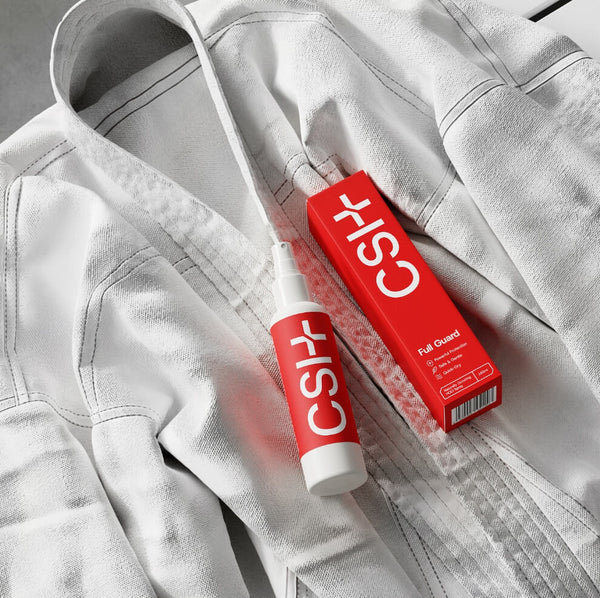
 Full Guard HOCl Spray
200ppm of 95% pure hypochlorous acid. pH 5.5 to 6.5, fragrance-free, no rinse required. Air-dries in a minute or two. Registered cosmetic under the UK Cosmetic Products Regulation.
Shop Full Guard HOCl Spray
The Difference at a Glance
| HOCl face spray | Makeup setting mist | |
|---|---|---|
| What it is | A cosmetic skin surface cleanser | A film-forming makeup product |
| How it works | Gently cleanses and balances the skin surface | Polymers form a mesh that bonds makeup together |
| When it goes on | First: on clean skin before serums and makeup, or as a light mid-day refresh | Last: over finished makeup |
| What it leaves behind | Nothing: air-dries in about 60 seconds, no film or tackiness | A deliberate film: that is its job |
| The job | Skin prep and comfort | Hold and finish for makeup |
What Makeup Setting Mists Actually Do
Setting mists have become a fixture on vanity tables and backstage beauty kits everywhere. The formulas vary, but most contain a combination of glycerin for humectancy, aloe vera for a cooling sensation, and film-forming polymers such as PVP or acrylates. Those polymers are the key: they create a fine cross-linked mesh over the surface of your makeup, bonding foundation, blush and powder together so the look lasts longer and resists transfer.
Some setting mists also contain silicones that give the skin a blurred, soft-focus finish. Others lean into the "dewy skin" aesthetic by front-loading glycerin and hyaluronic acid. The marketing language is cosmetic, but the mechanism is physical. These products work because they lock things in place.
That locking action is exactly why a setting mist is used after makeup application, not before. Spraying a film-forming product onto bare skin before foundation would interfere with adhesion and change the texture your base is trying to sit on. Setting mists are last-step products. They have a specific job and they do it well.
What a HOCl Face Spray Does Instead
Hypochlorous acid (HOCl) works through an entirely different mechanism. It is a naturally occurring molecule produced by the body's own white blood cells as part of the skin's normal surface defence. At the right concentration and pH, HOCl in a topical spray gently cleanses the skin surface, balances surface impurities, soothes temporary redness, and supports the acid mantle.
Full Guard contains 200ppm of 95% pure hypochlorous acid, buffered to a pH of 5.5 to 6.5. That pH range sits squarely within the skin's own natural acid mantle, which typically measures between 4.5 and 6.0 depending on the individual. Applying Full Guard is not about forming a physical film or holding anything in place. It is about gently purifying the skin surface and creating the best possible starting canvas, whether that canvas is going to receive makeup or nothing at all.
Full Guard air-dries in approximately 60 seconds and requires no rinsing. Once dry, it leaves no residue, no tackiness, and no film. That is an important distinction from a setting mist, which is intended to leave something behind.
Why HOCl Stability Matters
Not all HOCl products are equal. Hypochlorous acid is inherently unstable and will degrade to saltwater over time without careful manufacturing controls. Many brands use low-grade stabilisation that results in a product with declining efficacy long before the bottle is empty.
Full Guard uses pharmaceutical-grade stabilisation to keep the HOCl molecule active throughout the product's shelf life. The pH is held at 5.5 to 6.5, which is the precise window in which HOCl is both stable and most effective as a cosmetic cleanser. Stray too far above or below that range and the molecule either degrades rapidly or shifts into a less useful chemical form. Getting this right requires real manufacturing rigour, not just dissolving salt in water.
When you choose a HOCl spray, the stability of the formulation is not a secondary concern. It is the whole product.
HOCl as a Pre-Makeup Skin Primer Step
Here is where the two product types can work together rather than compete. Because Full Guard cleanses the skin surface and air-dries completely within 60 seconds, it is an excellent pre-makeup step for skin that tends to feel oily, congested, or reactive by mid-morning.
Applying makeup over skin that still carries the residue of overnight skincare, morning sweat, or environmental exposure means your foundation is sitting on an uneven, impurity-laden surface. A quick mist of Full Guard after your morning moisturiser, allowed to air-dry fully, gives foundation a clean, balanced surface to adhere to. You are not adding a layer, you are removing what should not be there.
This is especially useful for anyone with blemish-prone or congested skin who finds that conventional primers feel heavy or comedogenic. Full Guard is fragrance-free, contains no oils, and leaves no residue. For anyone wanting a gentle way to refresh blemish-prone skin without disturbing the moisture barrier, this pre-makeup step is worth building into the routine.
Mid-Day: Where HOCl and Setting Mists Part Ways Again
By mid-afternoon, many people reach for a top-up spray of some kind. Setting mists are sometimes used at this point to revive a flattened look, re-melt powder lines, or add a fresh dewy effect. They work, but they are adding product onto product.
If your mid-day concern is that your skin feels warm, looks shiny in patches, or feels congested under makeup, a light mist of Full Guard over the surface can help calm and balance without moving your makeup significantly. Because it air-dries quickly and leaves no sticky residue, it is less likely to drag pigment or disturb set powder than a heavy glycerin-based mist.
This is not the same as a full setting mist refresh. Full Guard is not going to revive a wilting base or add dewiness. It will soothe skin that feels reactive, help balance the surface, and provide a gentle mid-day cleanse without requiring you to remove and reapply your makeup. Consider it skincare support rather than a makeup tool.
If you also run warm during the day or find your skin flushes easily, pairing a gentle HOCl mist with a lightweight setting mist might give you more than either product alone. The HOCl step calms and balances; the setting mist seals and finishes. They can coexist in a routine when each is used at the right moment.
4-Step Routine Integration
Here is how to build Full Guard into a makeup-wearing day effectively:
- Step 1: Cleanse. Use your preferred gentle cleanser and pat skin dry thoroughly.
- Step 2: Mist Full Guard. Hold the bottle 20 to 25 cm from the face, spritz generously across the full surface, and allow to air-dry completely. This takes approximately 60 seconds. Do not pat or rub.
- Step 3: Apply serums and actives. Once Full Guard has dried, layer your water-based serums such as hyaluronic acid or niacinamide, followed by any actives including retinol or vitamin C if used in the morning routine.
- Step 4: Seal and prime. Apply your moisturiser or facial oil. Once absorbed, proceed with SPF and then foundation as normal. Your setting mist follows as the final makeup step, not the skincare step.
For a mid-day refresh, simply mist Full Guard lightly over the face, allow to dry, and then apply your setting mist on top if needed.
Honest Summary: They Serve Different Jobs
A hypochlorous acid face spray and a makeup setting mist are not interchangeable, and neither replaces the other. Full Guard is a registered cosmetic cleanser that purifies the skin surface, calms temporary redness, and supports the skin's natural barrier. A setting mist is a film-forming product that holds makeup in place and adjusts finish.
Used in the right sequence, both have a place in a skincare and makeup routine. HOCl goes first, as a cleansing and skin-support step. The setting mist goes last, after makeup is applied.
If you are curious about how Full Guard fits into other parts of a daily routine, read about using hypochlorous acid with retinol or how it works as a post-workout face hygiene mist for active skin days.
Can you use hypochlorous acid over makeup?
Yes, as a refresh. A fine mist over makeup cleanses and cools a hot, sweaty face without you having to take the whole lot off and start again, which is the entire point at two in the afternoon.
Be clear on the boundary though. It is not a setting spray. It will not lock makeup in place and it is not built to.
If you use both, the order is simple. Hypochlorous acid goes on bare skin at the start, before anything else. Setting spray goes on last, once your makeup is finished.
How to Spray Hypochlorous Acid Over Makeup
- Let your makeup set first. If you've just applied foundation or concealer, give it a few minutes before misting.
- Hold the bottle at arm's length. You want a fine, even veil, not a wet patch in one spot.
- Close your eyes and mouth, and aim slightly below your eye line if you're wearing mascara that isn't waterproof.
- Mist once or twice, then stop. More isn't better over makeup.
- Let it air-dry. Don't blot, rub or press while it's damp. A minute or two is enough.
- Then carry on: touch up concealer, add powder, or reapply SPF if you need to.
When it's most useful: after the gym when you don't want to start your face again, mid-afternoon when skin feels warm and shiny, or before a setting spray at the end of your routine.
Will Hypochlorous Acid Mess Up Your Makeup? By Product Type
Most makeup is fine under a light mist. What changes the result is how much you spray and what you're wearing.
| What you're wearing | What to expect from a light HOCl mist | Tip |
|---|---|---|
| Powder foundation or setting powder | A fine mist from arm's length usually settles without disturbing it. A close, heavy spray can leave damp spots. | Mist lightly and don't touch until it's dry |
| Liquid or cream foundation | Generally fine once your base has set | Wait a few minutes after applying |
| Mineral makeup | Plenty of people mist mineral powder on purpose to take away a powdery finish | Hold it a little further away |
| Mascara and eyeliner (not waterproof) | Can smudge if they get wet | Close your eyes and aim below the eye line |
| Waterproof and long-wear makeup | Holds up well | Nothing extra needed |
| Tinted SPF or sunscreen | The mist doesn't top up your sun protection | Reapply sunscreen as directed on the pack |
Can You Use Hypochlorous Acid as a Setting Spray?
Not really, and it isn't meant to be one.
Setting sprays usually contain film-forming ingredients that hold makeup in place for hours. A hypochlorous acid mist is water-based, with nothing in it to form that film. It freshens the skin and dries clear, but it doesn't lock anything in.
If you want both, use them in this order:
| Step | What | Why |
|---|---|---|
| 1 | HOCl mist on clean skin, before makeup | A fresh, clean base that dries without residue |
| 2 | Your makeup | As normal |
| 3 | Setting spray | Holds everything in place |
| Later | HOCl mist, lightly, as a refresh | Freshens up without starting again |
If long-lasting hold is what you're after, a setting spray does that. A HOCl mist is for keeping skin feeling clean and fresh around it.
Where Full Guard fits
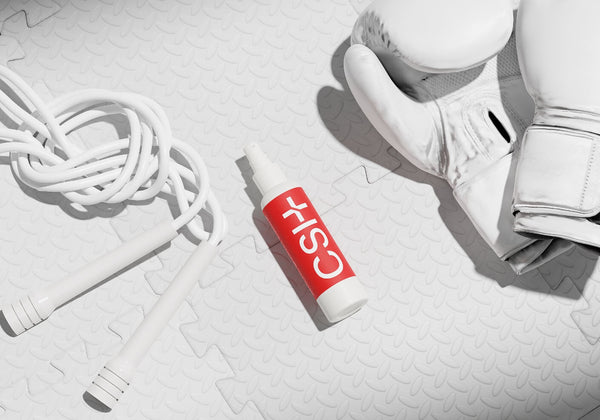
Full Guard is the lunchtime-training answer: fine enough to mist over makeup after a session, so you're back at your desk clean-faced without a full reset. Fine mist, pH-balanced, fragrance-free, alcohol-free. No sting, dries fast, leaves nothing behind. 100ml, £16.49, made in Britain. It won't set your makeup, and it won't ruin it either. Different job, same bottle as your gym bag.
Full Guard Hypochlorous Acid Spray, 100ml
More on using hypochlorous acid in a normal skincare routine: our hypochlorous acid skincare guide.
Common questions
Can I use a HOCl spray and a setting mist together?
Yes, and they pair well. Use the HOCl spray first as a skincare prep step on clean skin, and the setting mist last, after makeup is finished. Each does its own job in its own slot.
Will misting HOCl mid-day move my makeup?
A light mist air-dries quickly and leaves no film, so it is less likely to drag pigment than a heavy glycerin-based mist. It will not revive a flattened base though. That is a setting mist's job.
Is a HOCl spray a primer?
Not in the film-forming sense. It preps skin by cleansing the surface rather than by adding a layer, which is exactly why makeup sits better on top of it.
New to hypochlorous acid skincare? Explore the full HOCl skincare range and the 6-month bundle.
Using it daily? The Full Guard 3-bottle bundle covers months of daily use and works out cheaper per bottle.
Full Guard is a cosmetic skin cleansing spray registered under the UK Cosmetic Products Regulation. It is not intended to treat, cure, prevent or diagnose any skin condition. For any active skin concern, consult a GP, dermatologist or pharmacist.
Our HOCl mist
Full Guard Hypochlorous Acid Spray
An ultra-pure, fragrance-free HOCl mist made in the UK. Rinse-free, no alcohol and no sting, it dries in a minute or two and leaves skin feeling clean and fresh, the perfect freshen-up when a shower isn't happening yet.
- 95% pure hypochlorous acid, skin-friendly pH 5.5-6.5
- Fragrance-free and non-stripping, kind to sensitive skin
- Rinse-free, dries fast, fits any bag or desk drawer
- UK-made to ISO 22716 (GMP) standards

For females with fight
The face spray for after the gym
Full Guard started on the mats. A fine, fragrance-free mist that cleanses and freshens post-workout skin in seconds, with no rinse and no residue.
See the face spray · £16.49