Can You Use Hypochlorous Acid Spray with Retinol? A Layering Guide
Educational information only – read the full notice
Can You Use Hypochlorous Acid Spray With Retinol?
Yes, you can use hypochlorous acid spray with retinol, and the two work well together when applied in the right order. HOCl at pH 5.5 to 6.5 is chemically compatible with retinol, does not interfere with its mechanism of action, and makes an excellent surface prep step before retinol is applied.
⚡ 60-Second Summary
- Yes, HOCl spray and retinol work well together. HOCl at pH 5.5-6.5 does not interfere with retinol.
- Order: cleanse, mist HOCl, let it air-dry for about 60 seconds, then apply retinol, then moisturiser.
- Never mist anything over retinol once it is applied. It can dilute or disturb the layer.
- HOCl is fine nightly (retinol nights or not) and in the morning routine too.
- Red flags: prolonged stinging or persistent discomfort means scale the retinol back and speak to a pharmacist or dermatologist.
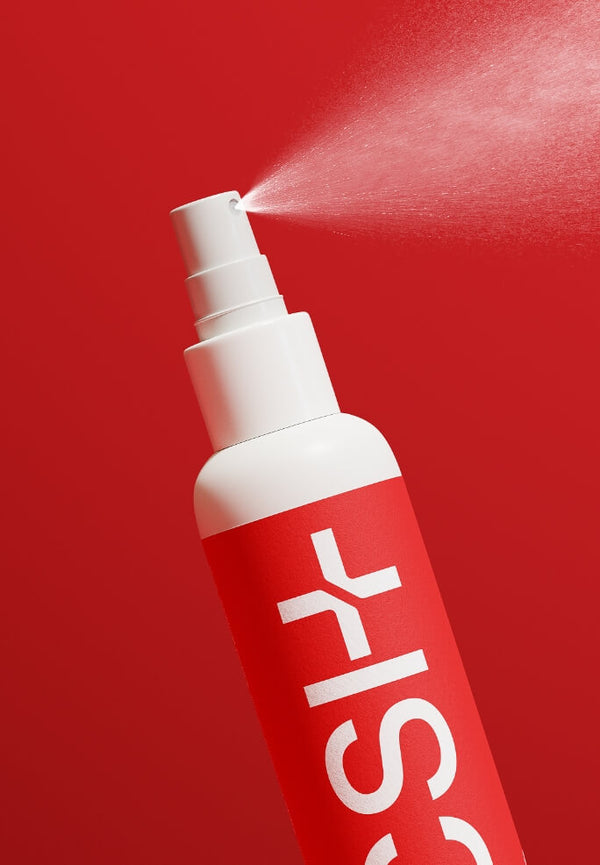
 Full Guard HOCl Spray
200ppm stabilised hypochlorous acid at pH 5.5 to 6.5. No fragrance, no alcohol, no rinsing required. Air-dries in a minute or two.
Shop Full Guard HOCl Spray
HOCl and Retinol at a Glance
| Question | Answer |
|---|---|
| Can you use them together? | Yes. They work at different depths and do not interfere with each other. |
| Which goes first? | HOCl first, as the surface prep step. Retinol goes on after. |
| How long between them? | Let the HOCl air-dry fully, roughly 60 seconds, before applying retinol. |
| Retinol nights only? | No. HOCl can be used every evening, and in the morning routine as well. |
| Mist over applied retinol? | No. Once retinol is on, leave it undisturbed. |
| During the adjustment period? | A minimal, pH-compatible mist suits temporarily reactive skin. Patch test anything new. |
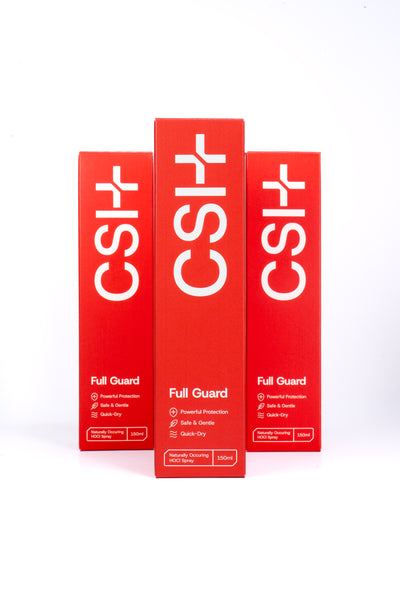
From the CSH range
Full Guard 3-Bottle Bundle · £38.99
A gentle rinse-free mist that sits happily alongside a retinol routine, for keeping skin feeling clean and calm between washes. The 3-Bottle Bundle is about six months of daily use and works out cheaper per bottle, with a free sports towel and tracked shipping thrown in.
What Retinol Does to the Skin Surface
Retinol is a form of vitamin A and one of the most studied cosmetic ingredients available without prescription. It works by converting to retinoic acid within the skin, which signals cells to turn over more rapidly. This accelerated cell turnover is why retinol is associated with smoother texture, more even tone, and a reduction in the visible signs of ageing over time.
The trade-off, especially when first introducing retinol or using higher-strength formulations, is that the skin surface can become temporarily more sensitive. Faster cell turnover means the outermost layer of skin is thinner than usual. The skin barrier can be temporarily compromised, and the surface may react more readily to products that would otherwise be well tolerated. This is sometimes called the retinol adjustment period, and it is why skincare professionals often advise starting retinol slowly, beginning with a lower concentration applied two to three nights per week.
During the adjustment period, every other product in your routine comes under more scrutiny. High-pH cleansers, alcohol-based toners, fragrance, and harsh exfoliants can all increase surface sensitivity when retinol is already in the mix. This is exactly where the choice of a surface prep step matters.
Why HOCl Is Compatible With Retinol
Two aspects of HOCl chemistry make it a good companion to retinol.
pH compatibility. Retinol is not especially pH sensitive in the way that vitamin C (ascorbic acid) is. Vitamin C is stable only at pH below 3.5, which means it can be destabilised or deactivated by products that raise the local pH. Retinol does not have the same restriction. It functions across a wider pH range, so applying an HOCl mist at pH 5.5 to 6.5 before retinol does not compromise the retinol molecule's activity. The HOCl prepares the surface without creating a pH environment that would work against what follows.
No interference with mechanism. HOCl works at the skin surface. It cleanses the outermost layer, removing surface impurities, without penetrating the deeper layers where retinol's conversion chemistry takes place. The two ingredients are operating at different depths and via different mechanisms, so there is no crosstalk between them.
This is different from ingredients that genuinely conflict. For example, using a very high-strength AHA exfoliant in the same routine as retinol stacks two sources of cellular stress and can cause cumulative irritation. HOCl introduces no additional surface stress. Its pH sits within the skin's preferred range, and its action is gentle surface cleansing rather than chemical exfoliation.
Why HOCl Stability Matters
Hypochlorous acid is inherently unstable. Without careful manufacturing, the molecule degrades to saltwater and the product becomes inert. Degradation accelerates with heat, UV exposure, and pH drift outside the stable window. A poorly manufactured HOCl spray may be active at the production line but arrive at your door as little more than water.
Full Guard uses pharmaceutical-grade stabilisation to maintain the HOCl molecule active at pH 5.5 to 6.5, which is the same window at which it is compatible with the skin's acid mantle. This is why the pH specification matters when choosing an HOCl product: it is not just a skin-friendliness figure, it is also a proxy for whether the manufacturing process has been robust enough to keep the active molecule intact. Full Guard's 200ppm concentration, pharmaceutical-grade stabilisation, and stated pH range are the markers that distinguish a functional HOCl product from one that has already degraded on the shelf.
The Correct Order: HOCl Before Retinol, Not After
The most common question about layering HOCl and retinol is whether to apply HOCl before or after. The answer is clear: HOCl goes first, as your surface prep step, and retinol goes on after the HOCl has fully air-dried.
Here is the logic. HOCl's role in this routine is surface cleansing: removing the residue, surface oils, and impurities that accumulate on the skin between cleansing and the moment you apply your actives. A clean, pH-balanced surface allows actives like retinol to make contact with the skin without a layer of interference. If retinol is applied to a surface that has not been properly prepared, part of its dose is wasted on sitting on top of residue rather than contacting the skin itself.
Applying HOCl over retinol after the retinol has been applied would dilute and potentially disturb the retinol layer. You have positioned retinol where you want it, in contact with the skin. Misting anything over the top, including water or HOCl, risks washing some of that retinol away or preventing it from being fully absorbed. Leave the retinol undisturbed once it is applied.
Does Hypochlorous Acid Deactivate Retinol?
The honest answer: no published study has tested a hypochlorous acid mist and retinol together on skin, so nobody can give you a lab-proven yes or no.
What we do know is enough to set a sensible routine:
- HOCl is an oxidiser. That's part of how it works as a cleansing ingredient.
- Retinol is famously sensitive to oxidation. That's why good retinol products come in opaque, airless packaging and why they're mostly used at night.
- So don't let them meet while wet. Mist first and let it dry fully, which takes a minute or two. By the time retinol goes on, the mist has done its job and evaporated.
What to avoid:
- Mixing the two in your palm, or misting straight onto freshly applied retinol.
- Decanting retinol into a clear bottle. Light and air are both bad news for it.
- The same logic applies to other oxidation-sensitive serums, such as vitamin C: mist first, dry, then serum.
Should You Use HOCl on Retinol Nights or Every Night?
Full Guard is formulated for daily use, and there is no reason to limit it to retinol nights only. Using it as a consistent part of your evening routine, on retinol nights and non-retinol nights alike, means the surface prep step becomes a reliable habit rather than something you only do sometimes.
On evenings when you are not using retinol, HOCl still provides gentle surface cleansing that prepares the skin for whatever comes next, whether that is a hydrating serum, a calming oil, or simply your moisturiser. Consistency in this step supports a more stable surface environment over time, which is particularly useful during the retinol adjustment period when your skin is already doing more work than usual.
For a broader look at how HOCl works with sensitive and reactive skin types, the article on HOCl and skin barrier support for sensitive skin covers the underlying pH and barrier science in more detail.
Addressing Temporary Surface Sensitivity During Retinol Use
During the adjustment period, the skin surface may feel more reactive than usual. Products that were previously well tolerated may feel slightly more noticeable. In these windows, switching to the most minimal, pH-compatible version of every routine step reduces the total burden on the skin.
Full Guard's formulation is about as minimal as a toning or surface prep step can be: HOCl in purified water, stabilised to pH 5.5 to 6.5, with no fragrance, no alcohol, no preservatives that could add irritation potential. For skin that is temporarily more reactive because of retinol, this is a meaningful advantage over alcohol-based toners, fragrance-heavy toning mists, or any product with a pH that pulls significantly away from the acid mantle.
If you experience prolonged or intense skin sensitivity, that is a signal to reduce retinol frequency or concentration, and to consult a dermatologist or pharmacist for guidance on managing the adjustment period. Cosmetic surface cleansing steps support a stable routine, but they do not address a reaction that requires clinical input.
What About Morning HOCl Use When You Are Using Retinol at Night?
Retinol is applied at night because it can be broken down by UV exposure. By morning, the retinol has been working in the skin overnight and any excess on the surface has either been absorbed or dissipated. Your morning routine can proceed normally, including using Full Guard as a surface prep step before your morning serums and SPF.
There is no interaction between morning HOCl use and the previous evening's retinol application. The two are separated by several hours and the skin's own overnight renewal process.
HOCl in a Full Evening Layering Routine With Retinol: Step by Step
Step 1: Cleanse with your preferred gentle cleanser, then pat dry. Choose a low-pH, sulphate-free, fragrance-free cleanser to avoid adding surface stress before retinol. Pat dry with a clean towel. Some people prefer to let the skin air-dry for a minute or two at this stage, particularly if they find retinol more noticeable on damp skin.
Step 2: Mist Full Guard generously across the face and neck, then allow to air-dry fully, approximately 60 seconds. Hold the bottle 15 to 20 cm from the face for an even application. Do not pat or rub. The air-dry step is essential: you want the surface fully dry before retinol goes on, so the retinol contacts skin rather than a moisture film. This 60-second pause is a useful moment to let skin return to its resting pH and surface temperature before applying your active.
Step 3: Apply your retinol or other actives. If you are using retinol alongside other actives such as niacinamide, niacinamide can be applied before retinol as a buffer that helps reduce the appearance of sensitivity. Vitamin C is generally used in the morning rather than the evening, so it typically does not compete for placement with retinol in a PM routine.
Step 4: Seal with moisturiser or facial oil. A ceramide-rich moisturiser or a nourishing facial oil applied over retinol helps support the barrier and reduces the likelihood of the tight or slightly uncomfortable feeling that some people experience during the retinol adjustment period. Apply while the retinol is still slightly tacky.
How to Layer Hypochlorous Acid: Morning and Night
A simple chart to screenshot.
| Step | Morning | Night | Straight after training |
|---|---|---|---|
| 1 | Cleanse, or rinse with water | Cleanse | HOCl mist |
| 2 | HOCl mist, then let it dry | HOCl mist, then let it dry | Let it dry |
| 3 | Serums, such as vitamin C or niacinamide | Retinol, or your prescribed retinoid as directed | Moisturiser if your skin feels tight |
| 4 | Moisturiser | Moisturiser | SPF if you're heading outside |
| 5 | SPF |
Three rules that cover almost everything:
- HOCl goes on clean skin, before anything you want to stay put.
- Always let it dry before the next layer.
- Never mist over an active you've just applied.
Choosing a Retinol Strength to Pair With HOCl
Retinol products span a wide range of strengths, and the routine around them looks slightly different at each stage. The HOCl step, usefully, does not change.
Starting out (around 0.1% to 0.3%). This is where most people should begin, applied two to three nights per week while the skin adjusts. At this stage the priority is keeping every other step in the routine as gentle and predictable as possible, which is exactly the argument for a minimal, pH-compatible mist as your prep step rather than an alcohol-based toner. Use the HOCl step every evening, retinol night or not, so the only variable your skin is adjusting to is the retinol itself.
Building up (around 0.3% to 0.5%). Once your skin tolerates the starter strength comfortably for several weeks, some people step up. The layering order stays identical: cleanse, mist, air-dry for about 60 seconds, retinol, moisturiser. If stepping up brings back the tight or flaky adjustment feeling, drop back to the previous strength or frequency and rebuild slowly.
Experienced users (up to 1%). Higher-strength retinol demands more of the skin barrier, so the supporting cast matters more, not less: a gentle low-pH cleanser, a genuinely minimal prep step, and a richer moisturiser to seal. Nothing about the order changes at any strength.
Whatever the strength, the same rule applies: one new variable at a time. Introduce the retinol step or a strength change on its own, keep everything else constant, and you will always know what caused what.
Retinal, Retinyl Esters and Prescription Retinoids: Does the Order Change?
Retinol is one member of a wider retinoid family, and the layering logic transfers across most of it.
Retinaldehyde (retinal) sits one conversion step closer to retinoic acid than retinol, which is why it is often described as faster-acting at comparable percentages. From a layering point of view it behaves the same way: apply it to clean, fully dry skin, so the HOCl-then-air-dry sequence is unchanged.
Retinyl esters such as retinyl palmitate are the gentlest end of the family, common in entry-level products. Same order again: mist first, ester product after the skin is dry.
Prescription retinoids such as tretinoin or adapalene are a different category: they are medicines, prescribed for specific reasons, with their own usage instructions. If you are using a prescription retinoid, follow your prescriber's directions exactly, and ask the prescriber or a pharmacist before adding any new step to the routine, including a cosmetic mist. A blog is the wrong place to adjust a prescribed regime.
Can You Use Hypochlorous Acid With Tretinoin?
Tretinoin (you may know it as Retin-A) is a prescription retinoid, which makes it a medicine rather than a cosmetic. That changes the answer slightly: whatever your prescriber told you comes first, and nothing here replaces it.
With that said, here's how a gentle, fragrance-free HOCl mist usually fits alongside a prescription retinoid:
- Same order as retinol. Mist first, let it dry completely, then apply tretinoin as prescribed. Tretinoin leaflets typically say to apply it to clean, dry skin, and a mist that has fully dried leaves nothing in the way.
- Don't mist over it afterwards. Once tretinoin is on, leave it alone.
- Skip broken or peeling patches. Tretinoin often makes skin flaky and sensitive, especially in the first weeks. Don't mist onto cracked, raw or very irritated skin.
- Keep the rest of the routine simple. When skin is adjusting to a retinoid, fewer products is kinder than more.
- Ask if in doubt. If your skin is stinging, burning or peeling more than you were told to expect, stop adding extras and speak to your prescriber or a pharmacist.
Adapalene is another retinoid. In some countries it's sold over the counter; in the UK it's prescription-only. The same approach applies: mist first, dry, then adapalene as directed.
| Ingredient | What it is in the UK | Where you get it | Order with an HOCl mist |
|---|---|---|---|
| Retinol | Cosmetic | Skincare shops | Mist, dry, then retinol |
| Retinal (retinaldehyde) | Cosmetic | Skincare shops | Mist, dry, then retinal |
| Retinyl esters | Cosmetic | Skincare shops | Mist, dry, then the ester product |
| Tretinoin | Prescription medicine | Prescriber | Mist, dry, then tretinoin, following the prescriber's instructions |
| Adapalene | Prescription medicine in the UK | Prescriber | Mist, dry, then adapalene, following the prescriber's instructions |
Common Layering Mistakes to Avoid
- Misting over applied actives. The most common error. Once retinol (or any serum) is on, it stays undisturbed. All misting happens before, never after.
- Applying retinol to damp skin. Dampness increases how noticeable retinol feels on the surface. Let the HOCl air-dry fully, roughly 60 seconds, before the retinol goes on.
- Skipping moisturiser. The seal-and-support step is not optional during the adjustment period. A ceramide-rich moisturiser over the retinol reduces the tight, dry feeling that makes people give up in week three.
- Stacking strong exfoliating acids on retinol nights. An AHA or BHA session and a retinol application on the same evening doubles the surface stress. Alternate nights instead.
- Forgetting SPF the next morning. Fresh, faster-turnover skin deserves daily sun protection. This is standard advice with any retinoid routine.
- Storing products badly. Heat and light degrade both retinol and HOCl. A cool, dark shelf beats a sunny windowsill, and lids go back on straight away.
Eyes, Lips and Neck: Layering Around Delicate Areas
The neck and chest generally tolerate the same mist-then-retinol sequence as the face, though many people apply retinol there at a lower frequency because the skin is thinner. Around the eyes, keep any mist well clear of the eyes themselves and treat the orbital area as its own zone: if you want a retinoid effect there, use a product designed for the eye area rather than pushing your face product closer. Lips do not need actives; a plain balm after the moisturiser step finishes the routine. If any area stings, stays red or feels persistently uncomfortable, that zone is telling you to scale back.
How Long Until You See Results From a Retinol Routine?
Set expectations in months, not days. In general cosmetic use, texture and tone changes are commonly discussed in the eight-to-twelve-week range, with the adjustment period occupying the first few weeks of that. Consistency matters far more than strength: a modest retinol used four nights a week for three months will show you more than a strong one abandoned in a fortnight. The role of the HOCl step in that picture is simple: it keeps the prep stage identical every single evening, which makes the routine easier to stick to and makes any reaction easier to trace. If you see no change at all after a full three months of consistent use, a pharmacist or skincare professional can help you review the routine.
Can you use hypochlorous acid and retinol at the same time?
Same routine yes, same moment no. Hypochlorous acid goes on clean skin first and needs to dry completely, which takes about 60 seconds, before retinol or any other active goes on top.
The reason is practical rather than dramatic. A mist sitting wet on the skin is a layer of water between your retinol and the face it is meant to be working on. Put the retinol straight onto that and you are diluting it and slowing it down, so neither step does its job properly.
So the order is: cleanse, mist, wait a minute, retinol, then moisturiser. The waiting is the only part people skip, and it is the only part that matters here.
Where Full Guard fits
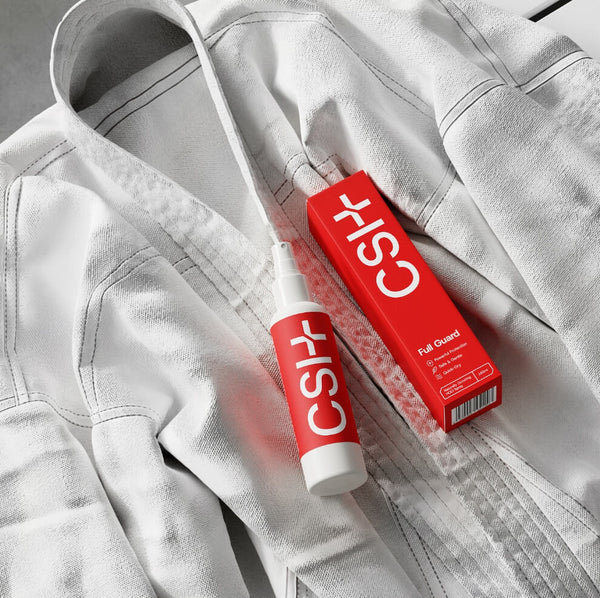
Full Guard is the hypochlorous step in the routine above. Spray on clean skin, give it a minute to dry, then carry on with your retinol as normal. Fine mist, pH-balanced, fragrance-free, alcohol-free. No sting, dries fast, leaves nothing behind. 100ml, £16.49, made in Britain. It earns its shelf spot on training days: the same bottle that preps skin for actives at night is the one that rescues your face after the gym.
Full Guard Hypochlorous Acid Spray, 100ml
More on using hypochlorous acid in a normal skincare routine: our hypochlorous acid skincare guide.
Frequently Asked Questions
Can I mist HOCl over my retinol if my skin feels tight or uncomfortable during the adjustment period?
No. Once retinol is applied, leave it in place. Misting any liquid over retinol can disturb or dilute it. If you find your skin uncomfortable after retinol application, a richer moisturiser or facial oil over the retinol is a better strategy than adding a water-based mist on top.
Does HOCl help with the appearance of blemish-prone skin that also uses retinol?
HOCl supports gentle surface cleansing, which is useful for blemish-prone skin at any stage of a skincare routine. For a closer look at how HOCl supports blemish-prone skin in general, see the article on refreshing blemish-prone skin without drying it out.
Can I use HOCl and a vitamin C serum in the same routine?
HOCl and vitamin C (ascorbic acid) can coexist in a routine provided they are applied at separate steps and in the right order. Because vitamin C is pH-sensitive, apply it after the HOCl has fully air-dried and the skin's surface pH has restabilised. Vitamin C is most often used in the morning, which sidesteps any question of same-routine interaction with retinol.
Is Full Guard appropriate for skin that is already in the retinol adjustment period and feeling reactive?
Yes. Full Guard's minimal formulation and pH-compatible profile make it appropriate even for temporarily reactive skin. Patch test first if you are introducing it as a new product during an already-disrupted skin period.
Can I use niacinamide, HOCl and retinol in the same evening?
Yes. Niacinamide is one of the more flexible ingredients and is often used as a buffer alongside retinol. The order is: cleanse, mist HOCl, air-dry fully, niacinamide serum, retinol, then moisturiser. As always, nothing gets misted over the top once the serums are on.
Does HOCl replace a toner in a retinol routine?
For many people it fills the same slot, and fills it with less baggage. Traditional toners often carry alcohol or fragrance, which are the first things skincare professionals suggest removing during a retinol adjustment period. An HOCl mist at pH 5.5 to 6.5 does the surface prep job with a near-empty ingredient list.
How should I store HOCl spray and retinol?
The same way, conveniently: cool, dark and sealed. Retinol oxidises with light and air exposure, and HOCl degrades with heat and UV, so neither belongs on a sunny bathroom windowsill. A cabinet or drawer keeps both at their best, and lids go back on straight after use.
New to hypochlorous acid skincare? Explore the full HOCl skincare range and the 6-month bundle.
Using it daily? The Full Guard 3-bottle bundle covers months of daily use and works out cheaper per bottle.
Full Guard is a cosmetic skin cleansing spray registered under the UK Cosmetic Products Regulation. It is not intended to treat, cure, prevent or diagnose any skin condition. For any active skin concern, consult a GP, dermatologist or pharmacist.

Our HOCl mist
Full Guard Hypochlorous Acid Spray
An ultra-pure, fragrance-free HOCl mist made in the UK. Rinse-free, no alcohol and no sting, it dries in a minute or two and leaves skin feeling clean and fresh, the perfect freshen-up when a shower isn't happening yet.
- 95% pure hypochlorous acid, skin-friendly pH 5.5-6.5
- Fragrance-free and non-stripping, kind to sensitive skin
- Rinse-free, dries fast, fits any bag or desk drawer
- UK-made to ISO 22716 (GMP) standards
Keep reading
- HOCl and the skin barrier - why it suits reactive, sensitive skin.
- Calming post-shave redness - another spot where gentle beats strong.
- Is hypochlorous acid safe? - the safety background behind the layering advice.

For females with fight
The face spray for after the gym
Full Guard started on the mats. A fine, fragrance-free mist that cleanses and freshens post-workout skin in seconds, with no rinse and no residue.
See the face spray · £16.49