How to Calm Skin Redness After Shaving with Hypochlorous Acid
Educational information only – read the full notice
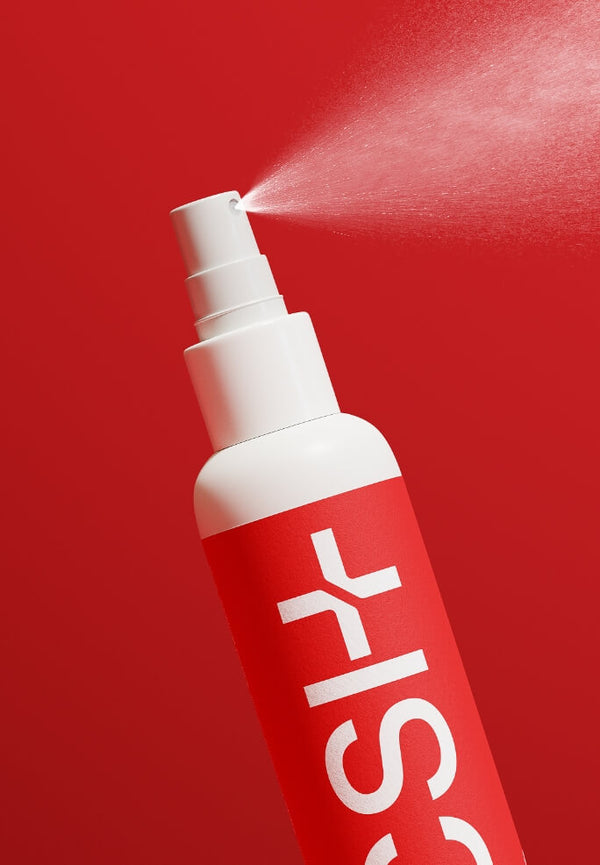
A pH-matched hypochlorous acid mist applied immediately after shaving helps calm temporary skin redness by supporting the skin surface as it recovers from mechanical friction, without the alcohol or fragrance that make many aftershaves counterproductive. Full Guard HOCl Spray at 200ppm and pH 5.5 to 6.5 is rinse-free, air-dries in around 60 seconds, and is gentle enough for daily use on freshly shaved skin.
200ppm stabilised hypochlorous acid. pH 5.5 to 6.5. Rinse-free, fragrance-free, alcohol-free. Registered cosmetic under the UK Cosmetic Products Regulation.
Shop Full Guard HOCl Spray →
⚡ 60-Second Summary
- What shaving does: a blade removes hair and part of the skin surface with it, leaving the barrier temporarily disrupted and reactive.
- The problem with most aftershaves: alcohol and fragrance on freshly disrupted skin is what causes the sting people accept as normal.
- A gentler step: a pH-compatible, fragrance-free, alcohol-free mist, applied to clean skin and left to air-dry.
- Red flags: persistent bumps, pain, spreading redness or anything not settling is a pharmacist or GP question, not a skincare one.
What actually happens to your skin when you shave
Shaving is a mechanical process. The blade moves across the skin under pressure, and even the sharpest, most well-maintained razor creates a degree of friction at the surface. That friction has consequences that go beyond simply cutting hair.
The outermost layer of the skin, the stratum corneum, is a tightly organised structure of flattened cells and lipids that forms the skin's physical barrier. Repeated blade passes, particularly against the grain, shear away some of that surface layer. This is not a dramatic injury in any clinical sense, but it is a form of mechanical disruption that leaves the skin surface temporarily more reactive and more permeable than it was before you picked up the razor.
The temporary redness that follows shaving is a normal skin response to this friction. Blood vessels near the surface dilate slightly in response to the mechanical stimulus, producing the pink or red flush that is most visible on lighter skin tones and most noticeable around the jaw, chin and upper lip. For most people it fades within 20 to 40 minutes, but the window during which the skin surface is in a slightly disrupted state can last longer than the visible redness suggests.
The acid mantle is also a casualty of aggressive shaving. This is the slightly acidic film, maintained at a pH of roughly 4.5 to 5.5 on healthy skin, that sits at the skin surface and plays a role in maintaining surface comfort and balance. Shaving creams, gels and soaps are formulated at higher pH levels to soften the hair shaft for cutting. This is functionally necessary but it temporarily shifts the skin surface toward a more alkaline state. The skin restores its natural pH over time, but products applied in the post-shave window either support or hinder that restoration depending on their own pH.
The problem with most aftershave products
Traditional aftershave lotions and balms were formulated in an era before the skin's acid mantle was well understood as a cosmetic concept. Many contain high concentrations of alcohol, which produces the familiar cooling sensation on freshly shaved skin but also strips residual moisture and disrupts the lipid layer that the shaving process has already compromised. The short-term cooling sensation can mask the fact that the product is doing little to support the skin surface during recovery.
Fragrance, present in the majority of mainstream aftershave products, is one of the most common causes of contact sensitivity in skincare. Applied to skin that has just been mechanically disrupted, it has a clearer path to the layers beneath the surface and is more likely to cause the kind of reactive response that presents as prolonged redness or a sensation of heat. For anyone with reactive or sensitive skin, the ritual of applying a fragranced aftershave immediately after shaving is a genuinely counterproductive habit.
Menthol, widely used in post-shave products for its cooling effect, creates a similar issue. The sensation is pleasant and has strong cultural associations with a clean shave, but menthol is a known sensitiser and its vasoconstrictive properties can mask surface reactivity rather than address it. When the effect wears off, skin that felt calm for a short period may feel more uncomfortable than it would have had the product not been applied at all.
Hypochlorous Acid as an Aftershave: How It Compares
People ask whether an HOCl mist can replace their aftershave. It depends what you want your aftershave to do.
| Alcohol-based aftershave splash | Aftershave balm | Fragrance-free HOCl mist | |
|---|---|---|---|
| Sting on freshly shaved skin | Often, because alcohol stings | Usually little or none | Formulated to be non-stinging |
| Fragrance | Usually fragranced | Often fragranced, with some unscented options | None |
| How it feels on the skin | Evaporates quickly, cooling, then can feel tight | Leaves a soft, moisturising layer | Dries clear, with no residue |
| Moisturising | No | Yes | No. Add a moisturiser if you want one. |
| Rinse off? | No | No | No |
| Suits | People who like the classic splash and scent | Dry skin, and anyone who wants moisture after shaving | People who want a clean-feeling, fragrance-free step with no residue |
How to use a mist as part of a shaving routine:
- Shave, then rinse with cool water and pat dry.
- Mist the shaved area lightly and let it dry.
- Moisturise if your skin feels tight or dry. A mist doesn't replace a moisturiser.
- Deodorant or fragrance, if you use them, goes on last, once everything else is dry.
Why pH matters more than most people realise
The pH of what you put on your skin after shaving is a genuinely practical consideration. Products formulated at high pH levels, regardless of their other ingredients, push the skin surface further from its natural state at the moment when it is least able to correct quickly. Products formulated close to the skin's natural pH work with the skin's own recovery process rather than requiring it to do more compensatory work.
Full Guard is formulated at pH 5.5 to 6.5. This sits within or immediately adjacent to the skin's natural acid mantle range, which means applying it after shaving does not add a pH burden on top of the mechanical disruption. It is cosmetically compatible with the skin surface in a way that most traditionally formulated aftershaves are not.
This also matters for what comes after the post-shave step. Serums, actives and moisturisers all perform optimally when the skin's surface pH is close to its natural range. A post-shave step that restores rather than further disrupts that pH creates a better foundation for every subsequent product in the routine.
Why HOCl stability matters
Hypochlorous acid is inherently unstable. Without careful manufacturing controls, it degrades into salt water, which is cosmetically inert and provides none of the surface cleansing properties that make the molecule useful. Many HOCl products on the market have a shorter active window than their packaging implies because the molecule has already partially degraded by the time the bottle reaches the consumer.
Full Guard uses pharmaceutical-grade stabilisation to maintain the molecule's activity throughout the product's shelf life. At 95% purity and 200ppm concentration, the formulation delivers consistent performance from the first spray to the last. The pH range of 5.5 to 6.5 is not simply a cosmetic comfort feature: it is the range at which HOCl is most stable and most effective as a surface cleansing agent. Outside this range, the molecule's stability decreases and its cosmetic performance diminishes.
For a post-shave application where skin is temporarily sensitised and the surface has been mechanically disrupted, a stabilised, pH-appropriate formulation matters more than it would in a standard daily cleansing context. You want a product that is doing exactly what it says, consistently, every time you use it.
Full Guard as part of a post-shave routine
Integrating Full Guard into a shaving routine requires no significant changes to existing habits. It slots in between the rinse and any subsequent skincare steps, replacing or supplementing a traditional aftershave product with something that has a clearer cosmetic rationale.
The following four-step sequence works for both face and head shaving and can be completed in under five minutes.
- Step 1: Cleanse and rinse. Complete your shave, rinse away all shaving cream, gel or soap thoroughly with cool or lukewarm water, and pat the skin dry with a clean towel. Avoid hot water at this stage as it can prolong the vasodilatory response that produces post-shave redness.
- Step 2: Mist Full Guard. Hold the bottle 15 to 20 cm from the face and apply a generous mist across all shaved areas. Include the neck and any areas where the razor passed over. Allow to air-dry fully, around 60 seconds. Do not wipe or blot. The product works on the skin surface as it dries and does not need to be removed.
- Step 3: Apply serums or actives. Once the skin is fully dry, apply any water-based serums such as niacinamide, known for its role in supporting surface evenness, or hyaluronic acid for hydration. If your routine includes vitamin C, the stable surface pH left by Full Guard creates a compatible foundation. For combined use with retinol in an evening routine, our guide to hypochlorous acid and retinol covers the sequencing in detail.
- Step 4: Seal with moisturiser. Apply a moisturiser suited to your skin type to lock in hydration and support the skin barrier through the rest of the day. If your skin is particularly dry, a facial oil as the final step adds an occlusive layer that slows water loss.
Shaving frequency and cumulative surface disruption
Most men who shave daily are introducing a low-level but consistent form of mechanical disruption to the same areas of skin, usually the lower face, jaw and neck, every 24 hours. Over time, skin in these areas can develop a degree of persistent roughness or reactive sensitivity that is not caused by any single shave but by the cumulative effect of frequent friction without adequate surface recovery between sessions.
Building a post-shave routine that actively supports the skin surface, rather than simply applying a fragrance product for the sensory experience, addresses this cumulative effect over weeks and months. The skin in high-friction shave zones tends to look and feel better with consistent use of a pH-compatible, non-irritating post-shave surface cleansing step than without one.
For those who also train regularly, the post-shave routine can be combined with a post-workout surface hygiene step. Full Guard works equally well in both contexts, and keeping a single product that covers both use cases simplifies the routine without sacrificing any cosmetic performance. For more on the post-workout application, see our article on using a hypochlorous acid mist for post-workout face hygiene.
Razor burn, razor bumps and irritation: knowing what you are looking at
People use these terms interchangeably and they are not the same thing, which matters because the responses differ.
Razor burn is the immediate, diffuse stinging and redness across the whole shaved area, showing up within minutes to hours. It is surface irritation from the mechanical act of shaving, made worse by a blunt blade, a dry pass, too much pressure or an aggressive aftershave. It typically settles over a day or so once the skin is left alone.
Razor bumps are individual raised spots that appear a day or more later, classically where hair curls back into the skin. They tend to concentrate on the neck and jawline, and they are more common with coarse or curly hair. Unlike razor burn they do not resolve simply by waiting out the afternoon.
Folliculitis is inflammation around hair follicles, appearing as small bumps centred on individual hairs. It can look very similar to razor bumps, and it is a genuinely different situation.
Here is the honest line on all three: cosmetic products support comfortable, clean skin, and they are not the answer to a persistent bump problem. Anything that keeps recurring, becomes painful, spreads, fills with pus or is simply not settling deserves a pharmacist or GP rather than another product. That is not a disclaimer for the sake of it. Persistent bumps have several possible causes, and picking the wrong one wastes months.
Technique beats product every time
Most post-shave discomfort is created during the shave, not after it. Before reaching for anything to calm skin down, work through this list.
- Change the blade more often than you do. A blunt blade drags rather than cuts, and dragging is what causes most irritation. This is the single biggest lever.
- Soften first. Shave after a warm shower, or at least after a minute with a warm, damp flannel. Dry-shaving a stubborn area is asking for it.
- Use a proper lubricating layer rather than plain water or a smear of soap, so the blade glides instead of scraping.
- Go with the grain first. Chasing a closer finish against the grain on a sensitive neck is the classic cause of bumps.
- Let the razor do the work. Pressure does not make a shave closer, it makes it more irritating.
- Fewer passes over the same patch. Repeatedly re-shaving one spot removes far more of the skin surface than one clean pass.
- Rinse cool and pat dry. No vigorous towelling on freshly shaved skin.
Get those right and the post-shave step becomes a comfort measure rather than damage control.
Head shaving for grapplers: the specific case
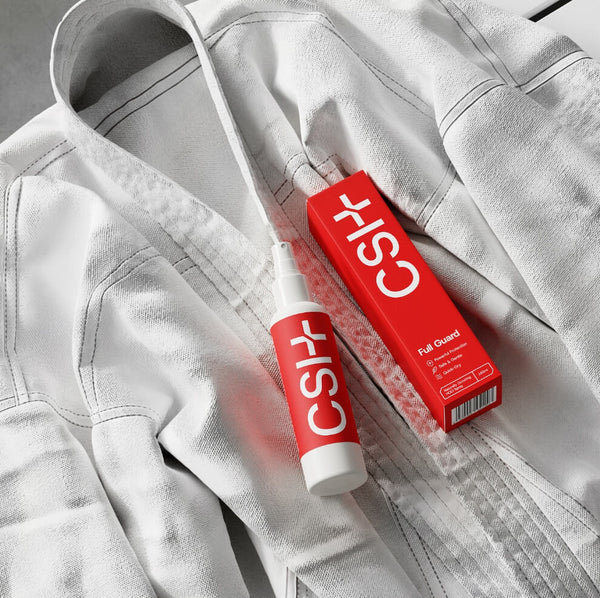
Plenty of combat sports athletes shave their heads, and it comes with a particular combination: freshly shaved skin, then a gi collar, a training partner's forearm and a sweaty mat, sometimes within hours.
Two practical suggestions. First, put daylight between shaving and training where you can. Shaving the morning of a hard session means going onto the mats with skin that has just been through it, so shaving on a rest day or in the evening after training gives the surface time to settle. Second, take the whole scalp and neck seriously in your washing routine afterwards, because a shaved head has none of the buffer hair provides and it takes the same contact your face does.
The wider routine sits in scalp and face care for wrestlers, and if anything unusual appears on shaved skin after training, treat it the way you would treat any new patch: get it looked at rather than shaving over it again next week.
Beard lines, necks and the awkward zones
A trimmed beard line on the neck is one of the most irritation-prone spots on the body: the hair often grows in several directions at once, the skin is thin, and a collar rubs it all day. Shave that area less aggressively than the cheeks, accept a slightly less sharp line in exchange for comfort, and avoid re-shaving it daily if it is protesting.
The same logic covers other commonly shaved areas. Skin that is thin, folded or under kit friction is skin that does better with a gentler approach and a longer gap between shaves. If an area consistently reacts no matter what you do, that is worth a professional opinion rather than another change of product.
After Shaving Your Legs, Underarms or Bikini Line
Most of this page is about faces and heads. The same questions come up for legs, underarms and the bikini line, where skin behaves a little differently.
| Area | What's different about it | How to use a mist |
|---|---|---|
| Legs | Large area, often shaved quickly in the shower, with nicks around knees and ankles | Mist lightly once you're dry, and skip any nicks or cuts |
| Underarms | Thinner skin, plus deodorant or antiperspirant going on straight after | Mist, let it dry fully, and give it a few minutes before deodorant, which can sting on freshly shaved skin |
| Bikini line | Some of the most sensitive skin on the body, and prone to ingrown hairs | External skin only. Mist lightly from a distance and let it dry before clothing goes back on. |
Rules that apply everywhere:
- External skin only. Never spray inside the vagina or onto other mucous membranes (the moist inner skin of the body).
- Not on broken skin. Skip cuts, nicks and anything raw.
- Patch test first if it's your first time using a mist on a new area.
- Let it dry before clothes, deodorant or moisturiser go on.
- Leave ingrown hairs alone. Don't pick or squeeze them. If a bump becomes painful, swollen or fills with pus, see a pharmacist or GP.
Skin type considerations
Post-shave redness is most visible and most problematic for people with fair skin, rosacea-prone skin or reactive skin that tends toward sensitivity. For these skin types, any post-shave product containing alcohol, fragrance, menthol or synthetic cooling agents is likely to prolong or intensify the response rather than calm it. A fragrance-free, alcohol-free, pH-matched mist is the lowest-irritation option available in cosmetic skincare for this specific application.
For oily or combination skin, the post-shave window is also an opportunity to cleanse the skin surface of any shaving product residue and excess sebum before it can contribute to congestion. Full Guard cleanses the skin surface while balancing surface impurities, making it useful for this skin type beyond the redness-calming function.
Dry or dehydrated skin benefits from the rinse-free format, which avoids the additional moisture loss that can come from water-rinse steps. The mist adds a light layer of surface hydration as it dries, which works alongside rather than instead of a dedicated moisturiser applied afterward.
For anyone whose skin also tends toward sensitivity in contexts beyond shaving, our article on HOCl and the skin barrier for sensitive skin provides a broader overview of how a pH-matched HOCl mist fits into a low-irritation skincare routine.
Is hypochlorous acid good for shaving rash?
For the way freshly shaved skin feels, it is a far easier option than a traditional aftershave. There is no alcohol in it, so there is no sting, and it is fragrance-free, so there is nothing sharp landing on skin you have just dragged a blade across.
It is also not an exotic ingredient. Your own body produces hypochlorous acid naturally, which is part of why it suits skin that has just been through something.
What it will not do is sort out a rash. If shaving irritation is spreading, persistent or sore, that is a conversation with a pharmacist or GP rather than another bottle.
Where Full Guard fits
Full Guard after a shave does the job an alcohol splash pretends to: skin feels clean and calm instead of stripped and stinging. Fine mist, pH-balanced, fragrance-free, alcohol-free. No sting, dries fast, leaves nothing behind. 100ml, £16.49, made in Britain. Shave, rinse, two sprays, done. Works the same on a fresh head shave, which the barbers who stock us figured out before we did.
Full Guard Hypochlorous Acid Spray, 100ml
More on using hypochlorous acid in a normal skincare routine: our hypochlorous acid skincare guide.
New to hypochlorous acid skincare? Explore the full HOCl skincare range and the 6-month bundle.
Full Guard is a cosmetic skin cleansing spray registered under the UK Cosmetic Products Regulation. It is not intended to treat, cure, prevent or diagnose any skin condition. For any active skin concern, consult a GP, dermatologist or pharmacist.
Post-shave FAQs
Can I use a hypochlorous acid spray straight after shaving?
That is the intended moment for it: on clean skin, immediately after rinsing and patting dry, then left to air-dry rather than wiped off. It is fragrance-free and alcohol-free, which is what makes it a gentler option than a traditional aftershave on skin that has just been through a blade. If you have any actual break in the skin from a nick, treat that as a first-aid matter and keep products away from it.
Before or after moisturiser?
Before. The mist is a surface prep step, so the order is shave, rinse cool, pat dry, mist, let it air-dry for about a minute, then moisturise. Nothing gets misted over the top of a moisturiser you have just applied.
Will it sting on freshly shaved skin?
It is formulated not to, and the alcohol found in many traditional aftershaves is the usual cause of that sting. Freshly shaved skin is more reactive than usual though, so patch test anything new before committing to it across your whole face.

Our HOCl mist
Full Guard Hypochlorous Acid Spray
An ultra-pure, fragrance-free HOCl mist made in the UK. Rinse-free, no alcohol and no sting, it dries in a minute or two and leaves skin feeling clean and fresh, the perfect freshen-up when a shower isn't happening yet.
- 95% pure hypochlorous acid, skin-friendly pH 5.5-6.5
- Fragrance-free and non-stripping, kind to sensitive skin
- Rinse-free, dries fast, fits any bag or desk drawer
- UK-made to ISO 22716 (GMP) standards