How to Clean Gym Mats with Hypochlorous Acid
Educational information only – read the full notice
Run a BJJ or wrestling gym for long enough and you will deal with a skin outbreak. One case of ringworm can empty a beginner class for a month, and a staph scare can do worse. Almost every outbreak traces back to the same two failures: mats that were never properly disinfected, and cleaning products that were wiped off before they had time to work.

This guide covers how to clean training mats with hypochlorous acid (HOCl), why contact time is the number that actually matters, and a daily, weekly, and monthly protocol you can hand to whoever closes the gym at night.
Why BJJ and Wrestling Mats Harbor Ringworm and Staph
Tatami and puzzle mats look smooth, but EVA foam is porous. Under magnification the surface is a landscape of pits and channels, and the textured tatami finish that gives you grip also gives microorganisms somewhere to sit.
Every round deposits sweat, skin cells, and oil onto that surface. Then the seams between puzzle mats collect moisture that never fully dries. That combination is exactly what Trichophyton — the fungus behind ringworm — and Staphylococcus aureus need to persist between sessions.
- Ringworm (tinea corporis): spreads through direct skin contact and through contaminated surfaces. Fungal spores can survive on mats for extended periods.
- Staph and MRSA: the CDC identifies close skin contact and shared surfaces as key transmission routes in athletic settings, which is why its MRSA prevention guidance puts regular surface cleaning and disinfection at the center of gym hygiene.
The takeaway for gym owners: a mat that looks clean is not the same as a mat that has been disinfected. A dry mop removes visible dirt. It does nothing about what lives in the foam.
Why Hypochlorous Acid Works on Training Mats
Hypochlorous acid is the same compound your own white blood cells produce to deal with pathogens. Formulated as a surface cleaner, it has three properties that make it a strong fit for a combat sports facility.
- It is effective at low concentrations. Professionally formulated, EPA-registered HOCl disinfectants kill bacteria and fungi on hard surfaces when used as directed — you can verify any product's registration through the EPA's pesticide registration program.
- It is gentle on skin and gear. Unlike bleach or quaternary ammonium compounds, HOCl leaves no harsh residue for barefoot athletes to roll on, and no fumes to air out before the next class.
- It will not degrade your mats. Bleach dries out and discolors EVA foam over time. HOCl does not, which matters when a mat area costs five figures to replace.
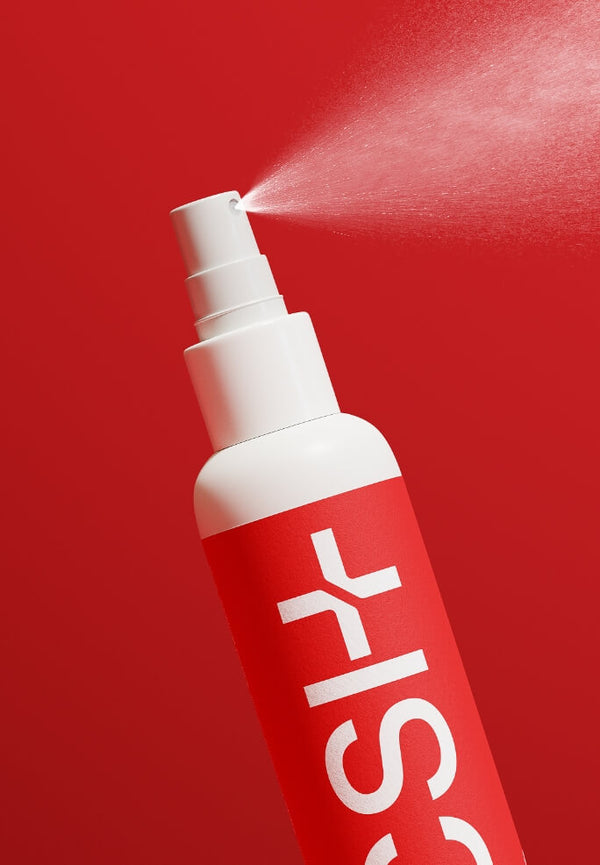
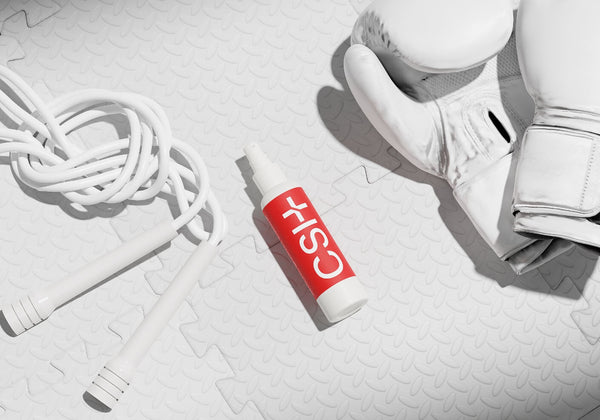
If you want the deeper chemistry, our hypochlorous acid explainer covers how HOCl is made and stabilized. For mats, the practical version is simple: use a bactericidal surface product built for the job. The CSH Mat & Gym Floor Cleaner is our on-label surface formulation, designed to disinfect tatami, EVA, and vinyl at the stated contact time.
Contact Time: Why Spray-and-Wipe Fails
Here is the mistake almost every gym makes. Someone sprays the mats, follows immediately behind with a mop or towel, and calls it done. The mats smell clean. They are not disinfected.
Every disinfectant has a contact time (also called dwell time): the number of minutes the surface must stay visibly wet with the product for it to kill the organisms listed on its label. Wipe it off at thirty seconds and you have interrupted the process — you removed the product before it finished working.
Think of it like a submission. Getting the grip is not the finish. You have to hold it.
How to get contact time right
- Read the label. Contact times vary by product and by organism. Fungi like Trichophyton often require longer dwell than common bacteria.
- Spray to visible wetness. A light mist that flashes dry in a minute never achieves its contact time. The surface should glisten.
- Start a timer. Do not estimate. Phone timer, full duration, every time.
- Reapply if it dries early. A surface that dries before the timer ends has not met contact time. Hit it again.
- Then mop or air dry per the label. Only after the clock runs out.
If closing staff rotate, put the contact time for your product on a laminated card next to the mop bucket. The protocol only works if the newest employee follows it the same way you do.

Daily, Weekly, and Monthly Mat Cleaning Protocol
Daily (after the last class)
- Dry mop or vacuum the full mat area to lift hair, skin cells, tape, and grit. Disinfectant works better on a debris-free surface.
- Apply your surface disinfectant — we use the Mat & Gym Floor Cleaner — wall to wall, to visible wetness.
- Hold the full labeled contact time, then finish with a clean flat mop. One mop head for mats only; never the one used on bathroom floors.
Weekly
- Pull apart high-traffic puzzle mat seams and clean the edges where sweat wicks down and sits.
- Disinfect the walls to grappling height, door handles, and any pads or shields that touched the mat.
- Launder or replace mat-cleaning mop heads. A dirty mop head redeposits everything you just removed.
Monthly
- Lift a section of mats and inspect the subfloor for trapped moisture or mildew. Dry and treat before relaying.
- Inspect mats for deep gouges and delaminating surfaces. Damaged foam holds moisture and cannot be disinfected reliably — replace those tiles.
- Audit the routine: check the closing log, confirm contact times are being held, and restock product before you run out.
Printable Mat Cleaning Protocol Checklist
Print this section and post it where the closing staff will see it.
- ☐ Dry mop or vacuum entire mat area
- ☐ Spray disinfectant wall to wall — surface visibly wet
- ☐ Timer set for full labeled contact time: ______ minutes
- ☐ Reapplied any areas that dried early
- ☐ Finished with clean, mats-only mop head
- ☐ Weekly: seams, walls, and door handles done (day: ______)
- ☐ Monthly: subfloor checked, damaged tiles flagged
- ☐ Initialed and dated: ______
A signed log matters. If a member ever reports a skin infection, a dated cleaning record shows your facility did its part — and tells you immediately whether a step got skipped.
The Other Half: Your Athletes' Skin
Clean mats are half the equation. The other half walks in the door, trains, and carries whatever it picked up home in a gym bag. Build these into gym culture:
- Shower as soon as possible after training — soap and water, full body.
- No shoes on the mat, ever. No bare feet off the mat, ever. Enforce both.
- Wash the gi, rashguard, and shorts after every single session.
- Cover any broken skin before training, and rinse fresh scrapes with clean water or sterile saline. Anyone with a suspicious lesion — a ring-shaped rash, a hot swollen bump, anything draining — stays off the mat and sees a doctor before returning.
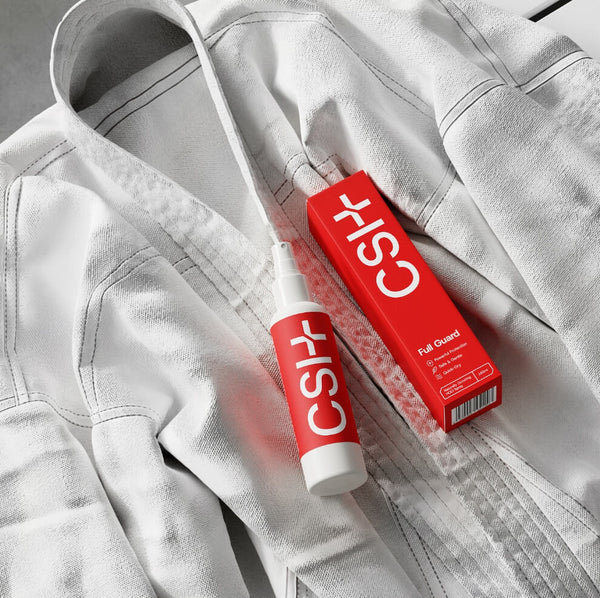
For members who cannot shower right after class, a cosmetic skin spray is a practical stopgap. The Full Guard HOCl skin spray lets athletes cleanse and refresh their skin immediately after rolling, before they get to a proper shower. It is the athlete-side companion to your surface routine — skin care for your members, not a mat product.
The Bottom Line
Mat hygiene is not complicated, but it is unforgiving. Use a bactericidal surface product like the CSH Mat & Gym Floor Cleaner, hold the full contact time every night, work the protocol on a schedule, and log it. The gyms that skip steps are the ones that end up explaining an outbreak to their members.