Hypochlorous Acid Cleaning Spray: What It Kills, Where to Use It and How It Compares to Bleach
Educational information only – read the full notice
Share
The short answer: hypochlorous acid makes an excellent cleaning spray for kit and hard surfaces because it kills bacteria and fungi quickly, then breaks down into salt water with no fumes, no residue and nothing to rinse. Spray until wet, leave it for the contact time on the label, wipe and let it dry. Just make sure what you buy is a tested surface product, not a face mist, and check the label says which surfaces it's for.
Why hypochlorous acid works as a cleaner
HOCl is an oxidiser. It attacks the cell walls and proteins of bacteria and fungi until they can't function. Because it carries no electrical charge, it gets through microbial cell walls more easily than bleach, which is why it works at much lower concentrations. Bleach is mostly hypochlorite, which is negatively charged and repelled by the cell wall it's trying to get through. We explain this properly in HOCl vs bleach.
The other half of the appeal is what it leaves behind: nothing. Once it's done its job it reverts to salt water. No fumes in a small room, no rinsing, no sticky film, and no strong smell beyond a faint swimming-pool note while it's wet.
What "kills 99.9%" should actually mean
A kill claim is only as good as the testing behind it. In the UK and Europe, disinfectants are tested against British and European Standards, and a good label tells you which:
- BS EN 13727: kills bacteria
- BS EN 1650: kills fungi and yeasts
- BS EN 13697: works on real surfaces, not just in a test tube
Each test is run at a set contact time. If the label says 60 seconds, the claim only holds if the surface stays wet for 60 seconds. Spray-and-wipe in five seconds hasn't been tested and isn't doing what the bottle says.
Where to use an HOCl cleaning spray
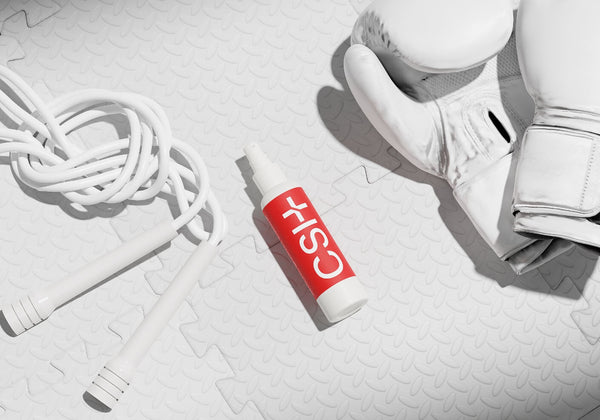
- Sports kit you can't wash: boxing and MMA gloves, pads, shin guards, headgear, ear guards, the inside of a kit bag. See how to clean boxing and MMA gloves.
- Gym equipment: benches, handles, kettlebells, the reception desk.
- Around the house: worktops, bathroom surfaces, door handles, bins, if the product is labelled for them.
- Smelly kit and trainers: because it removes what's causing the smell rather than covering it. More in the science of smell.
Where not to use it
- On skin, unless the product is a cosmetic labelled for skin. A cleaning spray is tested for surfaces.
- On fabric you can wash. Gis, rashguards and towels go in the machine. At higher concentrations HOCl can lighten some dyes.
- Mixed with anything. Never combine with other cleaners, especially anything containing ammonia or acid.
- On bare metal, repeatedly at high strength. Wipe it off once the contact time's up.
How to use it properly
- Remove visible dirt first. Disinfectants don't work well through grime.
- Spray until the surface is visibly wet.
- Leave it for the contact time on the label.
- Wipe with a clean cloth or paper towel.
- Let it air dry. For gloves and pads, leave them open.
Shop-bought, homemade or generator?
Ready-to-use HOCl cleaners give you a known concentration, a tested claim and a shelf life. Countertop generators that make HOCl from salt, water and vinegar are cheap per litre, but the strength and pH vary with every batch, there's no test data behind it, and it starts degrading within days. Fine for wiping a worktop if you follow the maker's instructions; not something to rely on for kit that's been on a mat with other people.
For a full rundown of every type of hypochlorous acid on sale, from face mists to medical solutions, see our guide to choosing the best hypochlorous acid spray.
Questions people ask
Is hypochlorous acid better than bleach for cleaning?
For kit and anything you'll touch with bare skin, usually yes: it kills at lower concentrations, doesn't corrode zips or discolour padding, has no fumes and needs no rinsing. For heavily soiled floors and drains, bleach still has its place.
Is it safe to use around children and pets?
Used as directed, a ready-to-use HOCl cleaner has no fumes and leaves no residue. Keep it out of reach like any cleaning product, and check the label.
How long does a hypochlorous acid cleaning spray last?
Months, if it's formulated for stability and stored out of sunlight and heat. Check the date on the bottle. See HOCl shelf life.
Can I use the same bottle on my face?
No, unless it's labelled as a cosmetic for skin. Use a face mist for your face; see hypochlorous acid spray for face.
Our kit spray
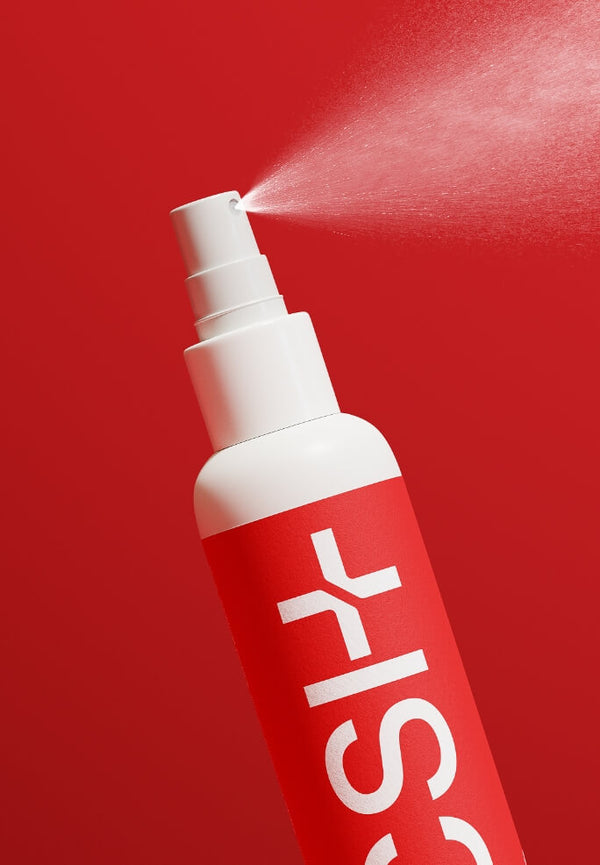
Gear Guard is a 200ppm hypochlorous acid spray for sports kit and hard surfaces. It kills 99.999% of bacteria and 99.99% of fungi in 60 seconds, tested to BS EN 13727, BS EN 1650 and BS EN 13697. No alcohol, so it won't dry out leather or crack foam, and no fragrance, so your gloves smell of nothing rather than perfume. 100ml, or the 3-pack for the gym bag, the pad cupboard and the car.
Gear Guard is a biocidal product. Use biocides safely. Always read the label and product information before use. Not for use on skin.