How to Wash Combat Sports Training Kit: The Complete Guide
Educational information only – read the full notice
Combat sports kit gets a specific kind of dirty. It is not mud. It is sweat, skin oil, other people's sweat, and mat residue, pressed into synthetic fabric for an hour at close range. Then it goes in a bag. Then the bag goes in a car boot.
If your rashguards smell fine coming out of the machine and then turn halfway through the warm-up, the problem is almost never that you are not washing enough. It is how you are washing. Here is the full system: sorting, timing, temperature, detergent, the drum, drying, and rotation.
Deal with kit before it ever reaches the machine
Most of the damage happens in the gap between training and washing. Damp kit in a zipped bag is a warm, dark, well-fed environment, and every hour in there makes the wash harder.
The rule is simple: unpack the bag the moment you get home. Not after food, not after a shower. Get everything out and either straight into the machine or hung somewhere airy on a rail or the back of a door.
If you cannot wash the same day, dry it out first. A dry rashguard waiting two days for a wash is a far better outcome than a damp one waiting two hours in a bag. Damp is the enemy, not time.
I once left a full session's kit in a bag from a Friday night through to Monday morning. When I opened it in the kitchen my partner asked, entirely seriously, whether something had died in the house. The gi took three washes and a lot of fresh air before it was fit for training, and the rashguard never fully came back. Now the bag gets emptied on the doorstep.
While you are at it, the bag itself needs attention. It is the thing every clean item passes through, and it is usually the last thing anyone cleans. Worth reading up on gym bag hygiene if you have never given yours a proper going over.
Sorting: three piles, not two
Forget lights and darks for a moment. For training kit, sort by fabric behaviour:
- Synthetics: rashguards, spats, fight shorts, compression gear, socks. Polyester and elastane blends. These hold odour compounds in the fibre itself.
- Cotton and heavy cotton: gis, cotton tees, towels. Thick, absorbent, slow to dry, and happy at higher temperatures than synthetics.
- Anything with hook and loop, zips or hard trim: shorts with a hook and loop fly, knee sleeves, ankle supports. These shred everything they touch.
Wash synthetics together, turned inside out. The dirty side is the inside, and that is the side you want facing the water.
The third pile gets its own handling. Fasten every strip, close every zip, and put those items in a mesh bag. If you have enough of them, run them as their own load rather than letting them loose among your rashguards. A single open hook and loop strip will pill an entire load in one cycle.
Temperature: warm enough to work, cool enough to survive
This is where most people go wrong in one direction or the other.
30 degrees is not enough for sports synthetics. Body oil is the carrier for odour, and cold water struggles to lift oil off polyester. That is why a cold wash can come out smelling of nothing and then reactivate the moment you sweat. There is a proper explanation of why cold washes fail on sports fabric if you want the mechanism rather than the summary.
40 degrees is the sensible default for synthetics. Hot enough to shift oils, cool enough that elastane survives. Check the label, but 40 covers most technical kit.
Gis have enough quirks of their own to deserve separate treatment, so see the guide on how to wash a gi properly.
Use a proper wash cycle, not a 15-minute quick wash. Quick cycles are for lightly worn clothes. Training kit needs agitation time and a full rinse.
Detergent and the drum
Use a standard biological or non-bio detergent, dosed correctly for your load size and water hardness. Liquid tends to rinse out of synthetics more cleanly than powder, which can leave gritty residue in tight weaves.
Do not overload the drum. Kit needs room to move for water and detergent to reach the fabric. A packed drum is essentially a damp squeeze, not a wash. Half to two thirds full is the target.
Run an extra rinse if your machine offers one, so less detergent is left sitting in the fibre.
Then, the single most underrated step: get the load out of the drum as soon as the cycle ends. Wet kit sitting in a sealed drum for four hours undoes the entire wash. Set an alarm if you have to.
Your machine also needs looking after. Run an empty maintenance wash at 60 degrees or higher every month or so, wipe the door seal, and leave the door ajar between washes. A machine that smells will make your kit smell.
Drying
Air dry wherever possible, ideally with airflow. Outdoors on a line is best. Indoors, spread items out rather than doubling them over a radiator, where the inner face stays damp for hours.
Avoid the tumble dryer for synthetics. Heat damages elastane, shortens the life of technical fabric, and if any odour survived the wash, heat sets it into the fibre permanently.
Myths and hacks that do not work
- Fabric softener. It works by coating fibres. On technical fabric that coating traps odour, kills wicking, and makes the next wash less effective. Skip it entirely on training kit.
- Boil washing synthetics. Destroys elastane. Your rashguard will go baggy and never recover.
- Washing everything at 90 to fix everything. You will wreck the garment long before you achieve anything useful.
- Neat bleach on technical fabric. Weakens fibres, wrecks colour, and does nothing for embedded oil.
- Doubling the detergent. More detergent than the machine can rinse simply leaves residue behind in the fabric.
- Freezing kit. Cold does not remove sweat residue. It comes out of the freezer with the same problem, just chilled.
- Tumble drying to bake out the smell. Does the opposite. Heat sets odour.
- Deodorant or aftershave on kit. Masking, not cleaning, and you end up with a worse combined smell.
- Soaking in vinegar for days. A short soak has its place. Days of it degrades elastic and leaves you with sour kit.
Worth noting that muddy outdoor kit needs a different approach altogether.
Where a gear spray fits
A lot of combat sports gear cannot go in a machine at all. Shin pads, headgear, gloves, wraps between sessions, mouthguard cases, the inside of the bag itself.
Some people include an HOCl gear spray in their routine for items that cannot be machine washed. It is sold for use on fabric, kit and hard surfaces rather than as a laundry replacement, and you should follow the product's own label instructions for how to use it.
If a rashguard keeps coming back smelling faintly wrong, the fix is the wash and dry method: a proper 40-degree wash, a correct detergent dose, an extra rinse, no softener, and a full air dry. A gear spray is an optional extra step in that routine, used according to its label, not the thing doing the work.
Two things to be clear about. First, this is not for skin. It goes on fabric, pads, gear, bags and hard surfaces, and nowhere else. Second, HOCl also turns up in skincare products, and those are entirely different formulations for an entirely different job. They are not interchangeable in either direction.
Use biocides safely. Always read the label and product information before use.
The purpose-built option
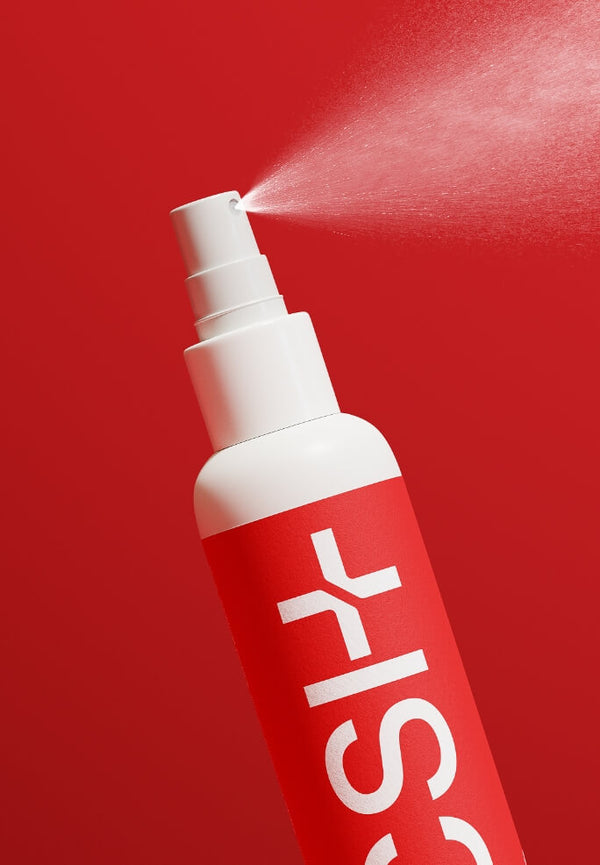
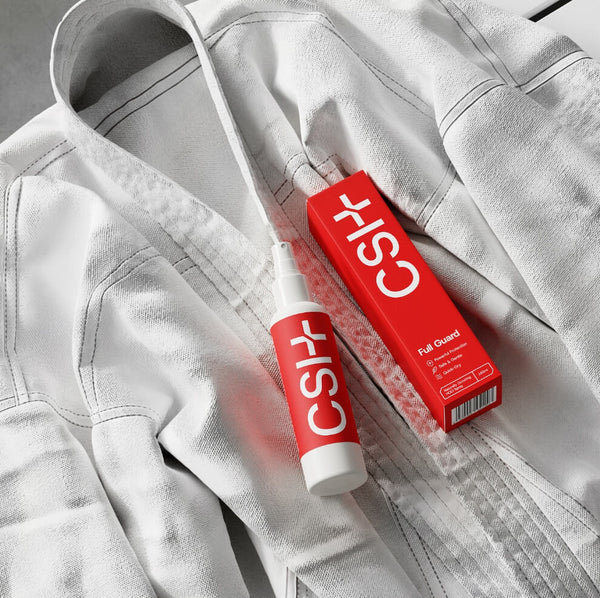
Everything above covers the washable kit; for gloves, pads and protective gear, the rules change. If you'd rather not improvise with what's under the sink, this is the exact job Gear Guard was built for: a UK-made HOCl surface spray that kills 99.999% of bacteria and 99.99% of fungi in 60 seconds, without the alcohol that cracks leather or the fragrance that just papers over the smell. Spray, wait a minute, wipe, air dry. The full method and comparison is on the Gear Guard guide page.
Rotation: the part nobody wants to hear
If you train four times a week and own two rashguards, you are always washing under pressure and always cutting corners. Three or four of each core item is the difference between a system and a scramble. Rotation also gives items time to dry fully, and fully dry storage is the cheapest odour control there is.
FAQ
How do I deal with shin pads that cannot go in the machine?
Wipe them down after training, then get them out of the bag and somewhere airy so both faces dry completely before the next session. Stacked damp in a holdall is the worst case. Check the manufacturer's guidance before putting any padded item near water or heat.
Why does my kit smell fine at home but bad once I start training?
Almost always leftover oil or detergent residue in the fibre. It is inert while the fabric is dry and cool, then reactivates with sweat and heat. Fix it with a warmer wash, a correct detergent dose, an extra rinse, and no fabric softener.
Is a quick wash ever acceptable for training kit?
Only for something barely worn. Quick cycles cut both the agitation and the rinse, which are the two things sweat-soaked kit needs most. If it was worn hard, give it a full cycle.
None of this is complicated. Unpack the bag straight away, sort by fabric, wash at 40 on a full cycle with a correct detergent dose, skip the softener, get it out of the drum, and air dry it. Do that consistently and the smell problem mostly stops being a problem.

For the gear that can't be washed
Gear Guard Equipment Cleaner Spray
A targeted HOCl surface spray for the kit no washing machine can help: gloves, pads, headgear, boots and bag linings. Spray until visibly wet, wait 60 seconds, wipe, and let it air dry.
- Independently tested surface biocide (BS EN 13727, BS EN 1650)
- One-minute contact time, then wipe and air dry
- No fragrance, dries clear, nothing left behind once dry
- 100ml fine mist, hundreds of targeted sprays, UK-made
Use biocides safely. Always read the label and product information before use. Gear Guard is for equipment, not skin. Fabric kit goes in the washing machine.
More kit care
- Laundry Stripping, Vinegar and Bicarb: What Actually Shifts Sports Odour
- Your Washing Machine Is the Problem: Drum Biofilm, Seals and Service Washes
- Drying Training Kit Indoors: Racks, Dehumidifiers and Damp Flats
- How to Wash a Microfibre Training Towel (and Why It Stops Absorbing)
- Mould and Mildew on Training Gear: What to Do and What to Bin
- What Is Actually Living in Your Unwashed Kit
- The Complete BJJ and Judo Gi Care Guide
- Synthetic Kit Care: Polyester, Elastane and Compression